Showing posts with label Literature. Show all posts

Friday, July 17, 2015

Case Study No. 2095: "Not a single old lady told a single soul to shushhh"

Scroobius Pip - Library (Animated Video)
2:15
Watch Scroobius Pip's animated poem 'Library' - commissioned by Chris Hawkins for BBC 6 Music's celebration of libraries and performed live on his show in November 2014.
Tags: BBC Music Scroobius Pip (Composer) libraries BBC Radio 6 Music (Radio Station) Poetry (Literary Genre)
Added: 7 months ago
From: sixgroupsix
Views: 9,959

There's never really
been much to do
in my town

The grey skies
and grey buildings
unifying a frown

The public ones
aren't that different
inside, and out

It's hardly
inspiring
when walking about

Except for that one building

The one that's
bursting
with stories

And I don't
mean it's
tall

I mean it's
full of
history

And full
of poems

That rhyme
better than
this one

And full of
tales
for your mind

To absorb
like a
thick
sponge

I mean they had
The Hobbit

75 years

Before my
local cinema

And the
special effects
were way better

And the tone
far more
sinister

Inside my own mind
every tale is in
3D

But
to be fair
in my mind
not that many of them
are in
PG

But

It's not just all
about the books

I mean

I can't put this any
simpler

But

I just don't think
I'm the
kind of guy
that will ever have
ink in his
printer

And that's not a
euphemism
it's just who keeps
that topped up

It's not one of those
things that just appear

like

underwear
and new cups

It's also my
haven
when my internet
is on the
blink

Which is far more
regular than the
adverts
would have you think

On one visit

I could hear
kids singing
nursery rhymes

And tales of a
boot
wearing
puss

And not a single
old lady
told a single soul to
shushhh

So

Surely to enter
such a building
must hold an
outrageous
fee

Right?

I mean

You need to
remortgage
for a
cinema
spending spree

So in the
modern world
this next fact
might be hard
to believe

But

You can enter

And

Even take
things away
with you

For free

So

For education
for the escape

And
for the fact
it allows for me
to refuse to
develop into a
grown up
with a
printer
that works

I love my local
library
and all of its
quirks

I mean to be fair
it hasn't really
made me that good at
writing poems

So
you know ...

Library
by Scroobius Pip

Performed for Chris Hawkins on 6 Music

BBC Radio
6 Music
(c) BBC MMXIV

---

From bbc.co.uk:

As BBC Radio 6 Music celebrates Libraries, award winning spoken-word poet and hip hop artist Scroobius Pip presents a poem about libraries which he has written especially for Chris Hawkins' Early Show.

Plus, another Mr Men character features in the 6 Music Mr Men Musical Mission.

It's the Early Show search for the ultimate list of songs mentioning every character in the original Mr Men series.

Songs might include The Smith's 'Heaven Knows I'm MISERABLE Now', Ian Dury's 'Reasons To Be CHEERFUL' or Xpress 2/David Byrne's 'LAZY'.

Wednesday, July 15, 2015

Case Study No. 2090: Las Zenow and Tryma Acarnio

part27 Isaac Asimov — Forward the Foundation {audiobook}
6:35
fantasy audiobooks
fantasy audiobooks on youtube
fantasy audio books full
fantasy audiobooks 2013
free fantasy audio books
fantasy audio books 2012
fantasy audio books download
free fantasy audio books download
urban fantasy audiobooks
new fantasy audio books
fantasy audiobooks on youtube
fantasy audiobooks 2014
fantasy audio books free
fantasy audio books list
fantasy audio books download
fantasy audio books full
fantasy audio books free download
fantasy audiobooks 2013
fantasy audio books 2012
free fantasy audio books download
best fantasy audiobooks all time
amazing fantasy audiobooks
fantasy audiobooks best
best fantasy audiobooks 2011
best fantasy audiobooks on itunes
best fantasy audiobooks 2010
fantasy science fiction audiobooks.com
comedy fantasy audiobooks
christian fantasy audiobooks
fantasy audio books download
free fantasy audio books download
dark fantasy audiobooks
best fantasy audiobooks ever
fantasy audio books free
fantasy audio books full
fantasy audio books free download
free fantasy audio books download
fantasy fiction audiobooks
fantasy science fiction audiobooks
fantasy sci fi audiobooks
final fantasy audiobooks
great fantasy audiobooks
gay fantasy audiobooks
good fantasy audiobooks on itunes
gritty fantasy audiobooks
high fantasy audiobooks
best fantasy audiobooks itunes
good fantasy audiobooks on itunes
best fantasy audiobooks list
latest fantasy audiobooks
medieval fantasy audiobooks
fantasy novel audio books
new fantasy audio books
new fantasy audio books 2012
fantasy audiobooks on youtube
best fantasy audiobooks of all time
best fantasy audiobooks on itunes
good fantasy audiobooks on itunes
audio books fantasy list
popular fantasy audiobooks
fantasy romance audio books
recommended fantasy audiobooks
romantic fantasy audiobooks
reddit fantasy audiobooks
fantasy series audio books
science fantasy audiobooks
fantasy audio books streaming
top 10 fantasy audio books
top fantasy audiobooks 2011
urban fantasy audiobooks
warhammer fantasy audiobooks
fantasy audiobooks youtube
best fantasy audiobooks on youtube
top 10 fantasy audio books
fantasy audiobooks 2014
fantasy audiobooks 2013
fantasy audio books 2012
fantasy audiobooks 2011
best fantasy audiobooks 2011
top fantasy audiobooks 2011
new fantasy audio books 2012
best fantasy audiobooks 2010
best sci fi fantasy audiobooks 2013
top 5 fantasy audiobooks
top 10 fantasy audio books
Tags:
Added: 8 months ago
From: fantasy audiobooks
Views: 355

It was a lovely day. Neither too warm nor too cold, not too bright nor too gray. Even though the groundskeeping budget had given out years ago, the few straggly perennials lining the steps leading up to the Galactic Library managed to add a cheerful note to the morning. (The Library, having been built in the classical style of antiquity, was fronted with one of the grandest stairways to be found in the entire Empire, second only to the steps at the Imperial Palace itself. Most Library visitors, however, preferred to enter via the gliderail) Seldon had high hopes for the day.

Since he and Stettin Palver had been cleared of all charges in their recent assault and battery case, Hari Seldon felt like a new man. Although the experience had been painful, its very public nature had advanced Seldon's cause. Judge Tejan Popjens Lih, who was considered one of, if not the most influential judge on Trantor, had been quite vociferous in her opinion, delivered the day following Rial Nevas's emotional testimony.

"When we come to such a crossroads in our 'civilized' society," the judge intoned from her bench, "that a man of Professor Hari Seldon's standing is made to bear the humiliation, abuse, and lies of his peers simply because of who he is and what he stands for, it is truly a dark day for the Empire. I admit that I, too, was taken in - at first. 'Why wouldn't Professor Seldon,' I reasoned, 'resort to such trickery in an attempt to prove his predictions?' But, as I came to see, I was most grievously wrong." Here the judge's brow furrowed, a dark blue flush began creeping up her neck and into her cheeks. "For I was ascribing to Professor Seldon motives born of our new society, a society in which honesty, decency, and goodwill are likely to get one killed, a society in which it appears one must resort to dishonesty and trickery merely to survive.

"How far we have strayed from our founding principles. We were lucky this time, fellow citizens of Trantor. We owe a debt of thanks to Professor Hari Seldon for showing us our true selves; let us take his example to heart and resolve to be vigilant against the baser forces of our human nature."

Following the hearing, the Emperor had sent Seldon a congratulatory holo-disc. On it he expressed the hope that perhaps now Seldon hope that perhaps now Seldon would find renewed funding for his Project.

As Seldon slid up the entrance gliderail, he reflected on the current status of his Psychohistory Project. His good friend - the former Chief Librarian Las Zenow - had retired. During his tenure, Zenow had been a strong proponent of Seldon and his work. More often than not, however, Zenow's hands had been tied by the Library board. But, he had assured Seldon, the affable new Chief Librarian, Tryma Acarnio, was as progressive as he himself, and was popular with many factions among the Board membership.

"Hari, my friend," Zenow had said before leaving Trantor for his home world of Wencory, "Acarnio is a good man, a person of deep intellect and an open mind. I'm sure he'll do all that he can to help you and the Project. I've left him the entire data file on you and your Encyclopedia; I know he'll be as excited as I about the contribution to humanity it represents. Take care, my friend - I'll remember you fondly."

And so today Hari Seldon was to have his first official meeting with the new Chief Librarian. He was cheered by the reassurances Las Zenow had left with him and he was looking forward to sharing his plans for the future of the Project and the Encyclopedia.

Tryma Acarnio stood as Hari entered the Chief Librarian's office. Already he had made his mark on the place; whereas Zenow had stuffed every nook and cranny of the room with holo-discs and tridijournals from the different sectors of Trantor, and a dizzying array of visiglobes representing various worlds of the Empire had spun in midair, Acarnio had swept clear the mounds of data and images that Zenow had liked to keep at his fingertips. A large holoscreen now dominated one wall on which, Seldon presumed, Acarnio could view any publication or broadcast that he desired.

Acarnio was short and stocky, with a slightly distracted look - from a childhood corneal correction that had gone awry - that belied a fearsome intelligence and constant awareness of everything going on around him at all times.

"Well, well. Professor Seldon. Come in. Sit down." Acarnio gestured to a straight-backed chair facing the desk at which he sat. "It was, I felt, quite fortuitous that you requested this meeting. You see, I had intended to get in touch with you as soon as I settled in."

Seldon nodded, pleased that the new Chief Librarian had considered him enough of a priority to plan to seek him out in the hectic early days of his tenure.

"But, first, Professor, please let me know why you wanted to see me before we move on to my, most likely, more prosaic concerns."

Seldon cleared his throat and leaned forward. "Chief Librarian, Las Zenow has no doubt told you of my work here and of my idea for an Encyclopedia Galactica. Las was quite enthusiastic, and a great help, providing a private office for me here and unlimited access to the Library's vast resources. In fact, it was he who located the eventual home of the Encyclopedia Project, a remote Outer World called Terminus.

"There was one thing, however, that Las could not provide. In order to keep the Project on schedule, I must have office space and unlimited access granted to a number of my colleagues, as well. It is an enormous undertaking, just gathering the information to be copied and transferred to Terminus before we can begin the actual work of compiling the Encyclopedia.

"Las was not popular with the Library Board, as you undoubtedly are aware. You, however, are. And so I ask you, Chief Librarian: Will you see to it that my colleagues are granted insiders' privileges so that we may continue our most vital work?"

Here Hari stopped, almost out of breath. He was sure that his speech, which he had gone over and over in his mind the night before, would have the desired effect. He waited, confident in Acarnio's response.

"Professor Seldon," Acarnio began. Seldon's expectant smile faded. There was an edge to the Chief Librarian's voice that Seldon had not expected. "My esteemed predecessor provided me - in exhaustive detail - an explication of your work here at the Library. He was quite enthusiastic about your research and committed to the idea of your colleagues joining you here. As was I, Professor Seldon" - at Acarnio's pause, Seldon looked up sharply - "at first. I was prepared to call a special meeting of the Board to propose that a larger suite of offices be prepared for you and your Encyclopedists. But, Professor Seldon, all that has now changed."

"Changed! But why?"

"Professor Seldon, you have just finished serving as principal defendant in a most sensational assault and battery case."

"But I was acquitted," Seldon broke in. "The case never even made it to trial."

"Nonetheless, Professor, your latest foray into the public eye has given you an undeniable - how shall I say it? - tinge of ill repute. Oh yes, you were acquitted of all charges. But in order to get to that acquittal, your name, your past, your beliefs, and your work were paraded before the eyes of all the worlds. And even if one progressive right-thinking judge has proclaimed you faultless, what of the millions - perhaps billions - of other average citizens who see not a pioneering psychohistorian striving to preserve his civilization's glory but a raving lunatic shouting doom and gloom for the great and mighty Empire?

"You, by the very nature of your work, are threatening the essential fabric of the Empire. I don't mean the huge, nameless, faceless, monolithic Empire. No, I am referring to the heart and soul of the Empire - its people. When you tell them the Empire is failing, you are saying that they are failing. And this, my dear Professor, the average citizen cannot face.

"Seldon, like it or not, you have become an object of derision, a subject of ridicule, a laughingstock."

"Pardon me, Chief Librarian, but for years now I have been, to some circles, a laughingstock."

"Yes, but only to some circles. But this latest incident - and the very public forum in which it was played out - has opened you up to ridicule not only here on Trantor but throughout the worlds. And, Professor, if, by providing you an office, we, the Galactic Library, give tacit approval to your work, then, by inference, we, the Library, also become a laughingstock throughout the worlds. And no matter how strongly I may personally believe in your theory and your Encyclopedia, as Chief Librarian of the Galactic Library on Trantor, I must think of the library first.

"And so, Professor Seldon, your request to bring in your colleagues is denied."

Hari Seldon jerked back in his chair as if struck.

"Further," Acarnio continued, "I must advise you of a two-week temporary suspension of all Library privileges - effective immediately. The Board has called that special meeting, Professor Seldon. In two weeks' time we will notify you whether or not we've decided that our association with you must be terminated."

Here, Acarnio stopped speaking and, placing his palms on the glossy, spotless surface of his desk, stood up. "That is all, Professor Seldon - for now."

Hari Seldon stood as well, although his upward movement was not as smooth, nor as quick, as Tryrna Acarnio's.

"May I be permitted to address the Board?" asked Seldon. "Perhaps if I were able to explain to them the vital importance of psychohistory and the Encyclopedia-"

"I'm afraid not, Professor," said Acarnio softly and Seldon caught a brief glimmer of the man Las Zenow had told him about. But, just as quickly, the icy bureaucrat was back as Acarnio guided Seldon to the door.

As the portals slid open, Acarnio said, "Two weeks, Professor Seldon. Till then." Hari stepped through to his waiting skitter and the doors slid shut.

What am I going to do now? wondered Seldon disconsolately. Is this the end of my work?

---

From wikipedia.org:

Forward the Foundation (1993) is a novel written by Isaac Asimov. It is the second of two prequels to the Foundation Series. It is written in much the same style as the original novel Foundation, a novel composed of chapters with long intervals in between. (Both books were first published as independent short stories in science fiction magazines.)

The parallels between Hari Seldon and Isaac Asimov found in this book—the last one written by Asimov—and the focus on Hari Seldon as he grows old and dies, strengthen the idea that Asimov considered Seldon his literary alter ego. Many regard some of the thoughts and opinions expressed by Seldon in this book as autobiographical; a double reading of Forward the Foundation may shed light on Asimov's inner thoughts at the end of his life.

Plot summary
In Forward the Foundation, Isaac Asimov continues the chronicles of the life of Hari Seldon, first begun in Prelude to Foundation.

The story takes place on Trantor, and begins eight years after the events of Prelude to Foundation. It depicts how Seldon developed his theory of psychohistory from hypothetical concept to practical application in galactic events.

Beginning during the latter years of the reign of Emperor Cleon I, Seldon's work brings him into the world of galactic politics, and takes him to the height of Imperial power as Cleon's First Minister, after the mysterious disappearance of his previous First Minister, Eto Demerzel (whom Seldon knows as R. Daneel Olivaw). Seldon becomes First Minister to the Emperor, but loses the position ten years later after the Emperor is assassinated.

Gradually, Seldon loses all those who are close to him. Seldon's wife Dors is killed saving his life from an assassin. His adopted son Raych is killed in the Rebellion in Santanni; his daughter-in-law and second granddaughter are missing and never found. Yugo Amaryl dies early, brought on by the strain of his work. Except for his granddaughter Wanda, Seldon is alone. He eventually sends her off to start the Second Foundation.

The Galactic Empire's decline accelerates during the later chapters, as does the decline of Seldon's physical health. At the same time, Seldon finally begins to unravel the secrets of psychohistory; he initiates a grand plan that will come to be known as the Seldon Plan, the road map for mankind's post-Imperial survival.

---

From wikia.com:

The Imperial Library is in the Foundation Universe placed within the Robot, Empire, and Foundation series by Isaac Asimov.

History
The Imperial Library is placed on Trantor in the Imperial district. The Library, along with the Imperial Palace, is the only building uncovered by Trantor's many domes. The Library has a long history culminating with the history of the Second Foundation.

Golden-age of the Galactic Empire
During Cleon's reign the library was well funded and stocked with holobooks on all sorts of topics. The head librarian at the time (and the library council) assisted Hari Seldon (and his group of scholars) with the Psychohistory project.

Decline of the Empire
During the Military Junta the Library received nearly zero funds and they had to make severe cuts in services. The Chief Librarian was forced (by the Library Council) to have Hari Seldon and the group leave the library. Seldon had to convince several people to give funds to the group in order to stay at the library. No one would give funds so Hari Seldon had Wanda Seldon "convince" the librarians to allow the group to continue.

---

From wikipedia.org:

The Library of Trantor was one of the prominent features of the fictional planet Trantor, created by Isaac Asimov and appearing in his Empire series and the Foundation series. Located in the Imperial Sector of the planet, it was variously referred to as the Imperial Library of the Galactic Empire, the University of Trantor Library, and the Galactic Library, in which librarians index the entirety of human knowledge by walking up to a different computer terminal every day and resuming where the previous librarian had left off.

Around 260 FE, a rebel leader named Gilmer attempted a coup, in the process sacking Trantor and forcing the Imperial family to flee to the nearby world of Delicass, renamed Neotrantor. After the sack, the population dwindled rapidly from 40 billion to less than 100 million. Most of the buildings on Trantor were destroyed during the sack, and over the course of the next two centuries the metal on Trantor was gradually sold off, as farmers uncovered more and more soil to use in their farms. Eventually the farmers grew to become the sole recognized inhabitants of the planet, and the era of Trantor as the central world of the galaxy came to a close. It began to develop a dialect very different from Galactic Standard Speech, and the people unofficially renamed their planet "Hame", or "home."

As revealed to the reader at the end of Second Foundation, not all these farmers were what they seemed, with the now-rustic Trantor serving as the centre of the Second Foundation. From Trantor, the Second Foundationers secretly guided the development of the Galaxy (roughly parallel to the city of Rome becoming, after the fall of its empire, the headquarters of the Papacy, with its enormous influence on the development of Medieval Europe). Indeed, their self-perception as leaders of the future Second Empire is captured in the Second Foundationers' use of the word "Hamish" to describe the farmers despite reserving for themselves use of the word "Trantorian." It is noted that it was the Second Foundation which ensured that the famed library would survive the sacking to Trantor and the destruction of its urban culture – especially significant, considering that the library was vital to the Second Foundation itself.

---

From goodreads.com:

"The Library was outmoded and archaic - it had been so even in Ebling Mis's time - but that was all to the good. Pelorat always rubbed his hands with excitement when he thought of an old and outmoded Library. The older and the more outmoded, the more likely it was to have what he needed. In his dreams, he would enter the Library and ask in breathless alarm, 'Has the Library been modernized? Have you thrown out the old tapes and computerizations?' And always he imagined the answer from dusty and ancient librarians, 'As it has been, Professor, so it is still.'"
- Isaac Asimov, Foundation's Edge

Tuesday, July 14, 2015

Case Study No. 2088: Grace Renquist

Jayne Ann Krentz's RUNNING HOT
1:13
Book trailer for Jayne Ann Krentz's RUNNING HOT, the latest book in her Arcane series.
Tags: Jayne Ann Krentz RUNNING HOT arcane society Castle Amanda Quick
Added: 6 years ago
From: Writerspace
Views: 37,365

Welcome to Maui, Mr. Malone. Enjoy your stay.

All Luther Malone has to do is keep Grace Renquist alive.
How hard could that be?

Jones & Jones has hired Grace to identify a rogue sensitive working for Nightshade, the Arcane Society's nemesis.
She'll know him by his aura.
It's why she was hired.

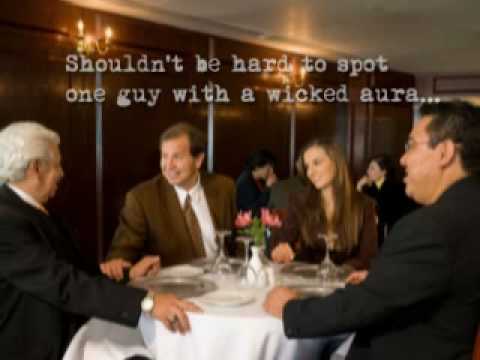
Shouldn't be hard to spot one guy with a wicked aura ...
Unless you've walked right into a bloody Nightshade convention.
And they're more dangerous than you expected.

Now Grace and Luther are trapped in paradise with some of the most dangerous people on Earth.
With only each other to trust, passion and danger are ...
Running Hot

A new Arcane Society Novel
by Jayne Ann Krentz
On sale Dec. 30, 2008

---

From amazon.com:

Running Hot: An Arcane Society Novel
by Jayne Ann Krentz

Series: Arcane Society Novels
Mass Market Paperback: 480 pages
Publisher: Jove; Reprint edition (December 29, 2009)
Language: English
ISBN-10: 0515147389

A heroine who can see dark energy flashes in a villain's aura and a hero who can squelch villainous thoughts before they're put into action go to paradise to find a murderer, but find love, sex and a nest of drug-enhanced evildoers instead in Krentz's latest Arcane Society novel. Librarian Grace Renquist and ex-cop-turned-bartender Luther Malone, both members of the centuries-old Arcane Society, join forces when the psychic investigative agency Jones & Jones hires Grace, with Luther as her bodyguard, to find a killer in Hawaii. Luther quickly realizes Grace is not your normal paranormal, but their hot romance is put (briefly) on hold as they learn that Nightshade, drug-fueled supernatural baddies, are after the same murderer - as is the lethal psychic hunter La Sirene, an opera diva with a killer voice. The plot is fast, steamy and wildly entertaining even if it defies credulity.

---

From barnesandnoble.com:

Luther Malone should have known that even an "easy" assignment from Fallon Jones would have a few unexpected twists. Not only did Jones expect him to work with a complete novice with no field experience, but also Malone's new "partner," Grace Renquist, is a librarian! It's true, she works in the Bureau of Genealogy at the Arcane Society, but Grace knows her talents at aura-reading are every bit as good as Malone's paranormal gift, and she is determined to prove her professional worth while on assignment with this ex-cop with a limp, a fear of guns, and attitude. Of course, the one thing Jones fails to tell either Malone or Grace is that while they conduct a secret investigation in Maui to search for a possible murderer, they are going to have to pretend to be married. Combining a superbly matched pair of protagonists, wonderfully original secondary characters (including a deliciously self-absorbed diva villainess with a "killer" voice), and a cleverly constructed plot, best-selling Krentz works her usual literary alchemy and creates another irresistible, paranormal-flavored novel of sexy romantic suspense to add to her much-loved Arcane Society series.

Friday, July 10, 2015

Case Study No. 2081: Gwendolyne Price

Not just a 50 Shades rip-off
1:21
Yep.
Tags: portia da costa in too deep book review sum 41 maybe try google next time
Added: 2 years ago
From: Dex01
Views: 230

DEX01: Okay, so yesterday I was in a bookstore, and while I was glowering over the fact that "Fifty Shades of Grey" was a real thing and that people love it for some reason, I saw this book called "In Too Deep" by Portia Da Costa.
[an image of the bookjacket appears on screen]
DEX01: With a sticker on it that proudly proclaimed "If you liked Fifty Shades of Grey, you'll love this!" Seeing the name "In Too Deep" kinda, kinda reminded me of something ... very familiar, I just can't quite put my finger on it.
[he trails off, then a clip from the music video for Sum 41's "In Too Deep" plays]

---

From amazon.com:

In Too Deep
by Portia Da Costa

Series: Black Lace
Paperback: 304 pages
Publisher: Virgin Books; 15th Anniversary edition (April 22, 2010)
Language: English
ISBN-10: 0352341971

Librarian Gwendolyne Price starts finding indecent proposals and sexy stories in her suggestion box. Shocked that they seem to be tailored specifically to her own deepest sexual fantasies, she begins a tantalizing relationship with a man she's never met. Soon enough, erotic letters and toe-curlingly sensual emails don't suffice; she has to meet her mysterious correspondent in the flesh.

Tuesday, July 7, 2015

Case Study No. 2071: Val Reed (Wannabe Librarian)

Mobile Library Book Review
1:01
Alex Heminsley reviews Mobile Library by author of "Bed" David Whitehouse. Imaginative whilst quite grown up.
Tags: Review (Media Genre) Book Library (Industry) Bookmobile Bed Book David Whitehouse Mobile Library Hemmo Alex Heminsley 60secbooks 60secreviews Book Review
Added: 6 months ago
From: 60sec Books
Views: 32

[scene opens with a closeup of the book's cover]
ALEX: [in voiceo over] "Mobile Library" is the second novel from David Whitehouse, who wrote the acclaimed and award-winning ... but not kind of a huge sensation--
[cut to a young woman ("Alex Heminsley, @hemmo") speaking directly to the camera]
ALEX: "Bed." This one is kind of "Little Miss Sunshine" meets Roald Dahl. It really really is a book about imagination and childhood and reading, while managing to also be quite a grown-up literary read.
[cut to another shot of the book's cover]
ALEX: [in voice over] It's about a young boy and his friend, who end up on a road trip in a mobile library.
[cut back to Alex speaking directly to the camera]
ALEX: Mobile libraries themselves are sort of slightly kind of an antiquated idea, so there's a kind of nostalgic vibe to the novel anyway. But the escape that's provided by books and reading here, and the connections that a shy boy can make through these relationships are really what hold the book together.
[cut to another shot of the book's cover]
ALEX: [in voice over] It's an absolutely lovely, albeit quite quiet read ...
[cut back to Alex speaking directly to the camera]
ALEX: And the sort of thing you'd really love to give to a friend, as well.

Mobile Library
A classic road trip with a heart.
3/5 stars

---

From amazon.com:

Mobile Library: A Novel
by David Whitehouse (Author)

Hardcover: 272 pages
Publisher: Scribner (January 20, 2015)
Language: English
ISBN-10: 1476749434

"An archivist of his mother," Bobby Nusku spends his nights meticulously cataloging her hair, clothing, and other traces of the life she left behind. By day, Bobby and his best friend Sunny hatch a plan to transform Sunny, limb-by-limb, into a cyborg who could keep Bobby safe from schoolyard torment and from Bobby's abusive father and his bleach-blonde girlfriend. When Sunny is injured in a freak accident, Bobby is forced to face the world alone.

Out in the neighborhood, Bobby encounters Rosa Reed, a peculiar girl whose disability invites the scorn of bullies. When Bobby takes Rosa home, he meets her mother, Val, a lonely divorcee, whose job is cleaning a mobile library. Bobby and Val come to fill the emotional void in each other's lives, but their bond also draws unwanted attention. After Val loses her job and Bobby is beaten by his father, they abscond in the sixteen-wheel bookmobile. On the road they are joined by Joe, a mysterious but kindhearted ex-soldier. This "puzzle of people" will travel across England, a picaresque adventure that comes to rival those in the classic books that fill their library-on-wheels.

At once tender, provocative and darkly funny, Mobile Library is a fable about the intrinsic human desire to be loved and understood—and about one boy's realization that the kinds of adventures found in books can happen in real life. It is the ingenious second novel by a writer whose prose has been hailed as "outlandishly clever" (The New York Times) and "deceptively effortless" (The Boston Globe).

---

From kirkusreviews.com:

A precocious 12-year-old boy joins a cast of quirky characters in this surprising adventure novel.

Whitehouse (Bed, 2012) fills this story with tropes from teen literature. Parents are conspicuously absent; books offer unique comfort; and adults are, by and large, cruel and all-powerful. Bobby Nusku lives with his abusive father and is frequently bullied at school. Since his mother left, Bobby's primary pastime has been tending the meticulous records he keeps while he awaits her return. He has jars of her hair, bottles of her perfume and all of her jewelry stashed away in hiding spots in his room. Over summer vacation, Bobby forms an unlikely friendship with his neighbor Val Reed and her daughter, Rosa. Val, who works at a mobile library, invites Bobby to visit the truck full of books. There, Bobby falls in love with reading. He longs for the promised escape of a happy ending: "He wanted to be in a book, to have an adventure." When vacation ends, Bobby snaps under the pressure of his harsh, lonely life. After a moment of aggression, he finds himself back at Val's house. Rather than confront his wrongdoing, Val decides to give Bobby the adventure he craves, and the three run away in the mobile library. They soon meet Joe, a fellow escapee whom they find in the woods and invite along. The foursome grows predictably close as they drive across the U.K., avoid arrest and discover that "family is where it's found." The whimsical tone and fanciful flourishes - chapter names include "The Ogre" and "The Non-fire Breathing Dragon" - cross into the cartoony in scenes depicting violence and child abuse. The adults in the novel ask shockingly few questions before making irresponsible decisions that, while convenient for the plot, are highly implausible. Bobby's desired happy ending clashes sharply with every foreseeable conclusion. As the novel progresses, it becomes increasingly bewildering to readers accustomed to novels that are grounded in reality.

An offbeat narrative that struggles to gain traction with adult readers.

---

From google.com:

The mobile library was the biggest vehicle Bobby had ever seen. He counted sixteen wheels, a couple of spares stowed above the axles for luck. The cab at the front bore a smile in its grille of silver teeth, and twin horns of exhaust piping curved up into the sky.

"Are you a librarian?" Bobby asked.

"Oh," Val said. "I wish."

They walked to the rear of the truck, where Val twisted the key in the hole and let Rosa press the button. With a loud clunk, the giant steel door burst open and transformed into a staircase that wound down to their feet.

Inside the library, books were stacked on shelves floor to ceiling on three sides. Bobby had never seen so many, or even imagined that they existed in this number. The column of space running through the center of the truck was ribbed with sets of smaller bookcases forming a simple maze leading to the back. The carpet was woven from hostile burgundy fibers, except for an area at the rear where it was thick and woolen. To Bobby it felt equal parts forbidden and mysterious. Already, he didn't want to leave.

Rosa sat down and emptied out the contents of her bag. She took a pen, put the lid in her mouth and forced the curled-up end of her tongue inside it. Then she wrote "Rosa Reed, Val Reed, Bobby Nusku" over and over in her notebook.

Val found cleaning fluids in the cupboard behind the counter, fluorescent and upright like fireworks waiting to be lit. While a bucket filled with hot water, she polished the tops and edges of the two smaller blocks of shelving, Science Fiction and Biography. Once the water had cooled she added a dash of bleach, and Bobby watched as she mopped the stairs. Wrung out, the mop was a perfect length for knocking down the cobwebs that had collected in the high corners around History. Then she cleaned the lavatory.

"Sometimes," she said to nobody in particular, "I worry that life is just the journey between toilets."

Tuesday, June 30, 2015

Case Study No. 2057: Doreen Williamson

"Dancer of Gor" book trailer
1:24
Series: Gorean Saga (Book 22)
Paperback: 556 pages
Publisher: Open Road Media Sci-Fi & Fantasy (May 6, 2014)
Language: English
ISBN-10: 1497643600
ISBN-13: 978-1497643604
Product Dimensions: 8.5 x 5.5 x 1.2 inches
Tags: John Norman Gorean Saga belly dancing
Added: 6 months ago
From: ToonLib
Views: 39

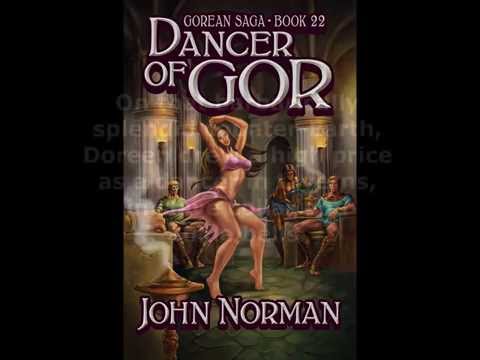
Doreen Williamson
appeared to be
a quiet, shy librarian ...

But in the dark
of the library,
after hours ...

She would practise,
semi-nude,
her secret studies
in belly-dancing.

Until, one fateful night,
the slavers from Gor
kidnapped her.

On that barbarically
splendid counter-Earth,
Doreen drew a high price
as a dancer in taverns,
in slave collar and
ankle bells.

Until each of her owners
became aware that
their prize dancer
was the target
of powerful forces ...

That in the tense climate
of the ongoing war
between Ar and Cos,
two mighty empires,
Doreen was too dangerous
to keep.

---

From amazon.com:

Dancer of Gor
by John Norman

Doreen Williamson is a shy and quiet librarian on Earth. Like many other young women, she is distrustful of her attractions, frightened of men, introverted in manner and sexually inhibited. She lives within a quiet, lonely, dissatisfying, sheltered, frustrated desperation, distant from her true self, her nature denied, her only friends books and her secret thoughts. In the realization and enactment of a profound fantasy, after acute self-conflict, she dares to study a form of dance in which she is at last free to move her body as a female, a form of dance in which she may revel in her beauty and womanhood, a form of dance historically commanded by masters of selected, suitable slaves: belly dance. She must then dance, for the first time, before men. In doing so, she discovers her own desirability and that she may be well bid upon.

Rediscover this brilliantly imagined world where men are masters and women live to serve their every desire.

---

From goodreads.com:

Paperback, 479 pages
Published November 5th 1985 by DAW (first published January 1st 1985)
original title: Dancer of Gor
ISBN: 0886771005 (ISBN13: 9780886771003)
edition language: English
series: Gor #22

In the realization and enactment of a profound fantasy, librarian Doreen Williamson dares to study dancing, a form of dance in which she is at last free to move her body as a female, a form of dance in which she may revel in her beauty and womanhood, a form of dance historically commanded by masters of selected, suitable slaves, belly dance. Thusly may she fantasize her longed-for desirability. This is, of course, her delicious, shameful secret, one which must be concealed from all, one which must be forever carefully guarded. Unbeknownst to herself, however, she has independently come to the attention of skilled assessors of women, of Gorean slavers. While secretly practicing in the library after hours she is surprised by three men. She must then dance, for the first time, before men. For the first, time, too, she discovers her own desirability, and that she is such as may be well bid upon. She will be taken to the beautiful, perilous world of Gor, there, in a collar, to learn her womanhood, and there, at last, to beautifully and profoundly find and fulfill herself.

---

From google.com:

"Yes?" I had asked, looking up from behind the reference desk. My heart had almost stopped beating. He was large, and supple. His hands and arms, long arms, seemed powerful. He was dressed in a dark business suit, with a tie. There seemed, however, something subtly awry with this vesture. He did not seem at ease somehow in this garment. There seemed something alien about him, something foreign. What startled me most about him at first, I think, was his eyes, and how they looked at me. I was not certain I could fathom such a look, but it had terrified me. It was almost, I had inexplicably felt, as though his eyes could see through my clothing. Perhaps, I thought, such a man has looked on many women, and would have difficulty in conjecturing the general nature of my most intimate lineaments. In that instant I had felt, in effect, naked before him. and then he had lifted his head and was glancing about the room, as thought he might understand my apprehension at being beneath a gaze such as him. "Yes?" I repeated, as pleasantly as I could, catching my breath. He looked back at me, swiftly, fiercely. He was not interested in my pretenses, my games. I quickly lowered my head, unable, somehow, to meet that gaze. It is difficult to explain this, but if you meet such a man, you will know it. Before such a man a female can suddenly feel herself nothing. Then I sensed him turning again to one side. Mercifully I knew he had freed me of his gaze. I lifted my eyes a little, but not so much as to risk, should he turn, encountering his.

"Have you Harper's Dictionary of Classical Literature and Antiquities?" he asked.

"Of course," I said, in relief. Suddenly our relationship became explicable and modular. "Its number is in the card catalog," I said.

I sensed him looking at me.

"You can fine the number for it in the card catalog," I told him.

He did not move toward the card catalog.

"Can you recognize it?" I asked.

He was silent. I sensed he might be becoming angry. Did he think I was going to wait on him?

"If you can recognize it," I said, "I can tell you where it is. It is down that aisle, and on the left, toward the end, on the bottom shelf."

"Show me," he said.

"I" m busy," I said.

"No, you are not," he said. To be sure, he was right. I was not really busy. Perhaps he had determined that before he had come to the desk. I had a distinct, uneasy sense, then, that he might be remembering, and keeping an account in some way, of my petty delays.

I rose from behind the desk. He stood back. I would precede him. That was appropriate, of course, as it was I who knew where the book was. To be sure, it made me uneasy to walk before him. No one, or hardly anyone, as far as I knew, incidentally, ever used that book or showed any interest in it. We learn of it, of course, in library science. It is a standard reference work in its area. I knew where it was, from shelf reading. Too, of course, I knew the general range of numbers within which it fell. Indeed, I had had to memorize such things for examinations. I preceded the fellow to the aisle, and down it. It seemed, somehow, now, that the shelves were close on both sides. The space between them seemed somehow narrower, and more wall-like, than usual. The library is well lit. I was very conscious of him behind me. I did not think he was a classics scholar. "Perhaps you want to look up something for a crossword puzzle." I said, lightly. Then I was afraid, again, doubtless foolishly, that he might be keeping an account of such things as my remark. Perhaps it had not pleased him. But what did it matter whether he was pleased or not?

"You are wearing a skirt," he said.

I stopped, frightened. I turned and looked at him, briefly. He was a quite large man anyway, but here, in this enclosed space, the shelves on each side, he seemed gigantic. I felt tiny before him. His bulk, somehow seemingly ungainly in that suit and tie, seemed to fill the space between the shelves. "Is the book here?" he asked. "No," I said. But I felt suddenly, and the thought frightened me, that he knew where the book was, that he knew very well where the book was. I then turned and continued down the aisle. In a moment I had reached its vicinity. I could see it there now, on the bottom shelf.

"It" s there," I said, "on the bottom shelf, that large book. You can see the title."

"Are you a female intellectual?" he asked.

"No," I said, hastily.

"But you are a librarian," he said.

"I am only a simple librarian," I said.

"You have probably read a great deal," he said.

"I have read a little," I said, uncertainly, uneasily.

"Perhaps you are the sort of woman who has read more than she has lived," he said.

"The book is on the bottom shelf," I said.

"But soon perhaps," he said, "books will be behind you."

"It is down there," I said, "on the shelf, on the bottom."

"Are you a modern woman?" he asked.

"Of course," I said. I did not know what else to say. In one sense, of course, I supposed this was terribly false.

"Yes," he said. "I can see that it is true. You are tight, and prissy." I made as though to leave, but his eyes held me where I was, immobile. It was almost as though I was held in place, standing there, before him, by a fixed collar, mounted on a horizontal rod, extending from a wall.

"Are you one of the modern women who are intent upon destroying me?" he asked. I regarded him, startled.

"Are you guilty of such crimes?" he asked.

"I do not know what you are talking about," I said, frightened.

He smiled. "Are you familiar with the book on the bottom shelf?" he asked.

"Not really," I said. It was a standard reference source, but in a limited area. I had never used it.

"There are several such books," he said, "but it is surely one of the finest." "I am sure it is a valuable, excellent reference work," I said.

"it tells of a world, very different from that in which you live," he said, "a world very much simpler, and more basic, a world more fundamental, and less hypocritical, and far fresher and cleaner, in its way, and more alive and wild than yours."

"Than mine?" I said. His voice, now that he spoke at length, seemed to have some trace of an accent. But I could not begin to place it.

"It is a world in which men and women stood closer to the fires of life," he said. "It was a world of tides and gods, of spears and Caesars, of games, and wreathes of laurel, of the clash, detectable for miles, of phalanxes, of the marchings of legions, in measured stride, of the long roads and the fortified camps, of the coming and going of the oared ships, of the pourings of offerings, wine and salt, and oil, into the sea."

I said nothing.

"And in such a world women such as you were bought and sold as slaves," he said. "That world is gone," I said.

"There is another, not unlike it, which exists," he said.

"That is absurd," I said.

"I have seen it," he said.

"The book is here," I said, "on the bottom shelf." I was trembling. I was terribly, frightened.

"Get it," he said.

I lowered myself to my knees. I drew out the book. I looked up at him. I was on my knees before him.

"Open it," he said.

I did so. Within it was a sheet of folded paper.

I opened the sheet of folded paper. On it was writing.

"Read it," he said.

"I am a slave," I read. Then I looked up. He had left. I leaned over, on my knees, bending far over, clutching the paper. I was giddy and faint. Then I looked up once more after him. The aisle was empty. I wondered if he would come back for me. Then I felt suddenly frightened, and ill, and hurried to the ladies" room.

3 The Library

I put the bells about my ankle.

It was dark now in the library, and it was past ten thirty. We had closed more than an hour ago.

The incident in the reference section, that in connection with Harper" s Dictionary of Classical Literature and Antiquities, that in which I had been so frightened, had occurred more than three months ago. In that incident it seemed that I had found myself at the feet of a man. To be sure, it was merely that I was kneeling to draw forth a book. I was a librarian. I was only being helpful, surely. Too, it had seemed that I had, before him, aloud, confessed that I was a slave. But that was an absurd interpretation, surely, of what had occurred. I was only reading the paper I had found in the book. That was all. I had taken the paper home. The next day, after a troubled, restless night, and after hours of anxiety, misery and hesitation, I had suddenly, feverishly, burned it. Thus I had hoped to put it from me, but I knew the thing had happened, that the words had been said, and had had their meaning, that which they had had at the time, and not necessarily that which I might now fervently desire to ascribe to them, and to such a man. That the paper might be burned could not undo what was now transcribed in the reality of the world. The incident, as you might well imagine, had much disturbed me. For days it dominated my consciousness, obsessing me. Then, later, mercifully, when I gradually began to understand how foolish my fears were, I was able to return my attention to the important routines of my life, my duties in the library, my reading, my shopping, and so on. Once in a while, of course, the terrors and alarms of that incident, suddenly, unexpectedly, would rise up, flooding back upon me, but on the whole, I had, it seemed, forgotten about it. I rationally dismissed it, which was the healthy thing to do. The whole thing had been silly. Sometime I wondered if it had even happened. I would recall sometimes the eyes of the man. The thing that had perhaps most impressed me about him, aside from his size, his seeming vigor and formidableness, was his eyes. They had not seemed like the eyes of the men I knew. In them there had seemed an incredible intelligence, a savagery, an uncompromising ferocity. In those eyes, in that fierce gaze, I had been unable to detect reservations, inhibitions, hesitancies or guilt. He seemed to be the sort of man, and the only one of this sort I had ever met, who would do much what he pleased, and take what he wanted. He seemed to carry with him the right of power and lions. I had no doubt that he was totally my superior. There had been, however, I think, one explicit consequence, or residue, of that incident. I think it served, somehow, in some way, to trigger a resolve on my part to do something which for me, if not for other women, required great courage. It brought me to my lessons. For months before, I had toyed with the idea, or the fancy, or fantasy, the idea first having emerged after I had seen myself in the mirror on that incredible night in my room, of taking lessons in dance. I had almost died on the phone, making inquiries about these things, and more than once, suddenly blushing crimson, or, from the feel of it, I suppose so, had hung up the phone without identifying myself. I was not interested, of course, in such forms of dance as ballet or tap. I was interested in a form of dancing which was more basic, more fundamental, more female. The form of dance I was interested in, of course, and this doubtless accounted for my timidity, my hesitation and fear, was ethnic dance, or, if you prefer, to speak perhaps more straightforwardly, "belly dancing." Happily it was always women who answered the phone. I do not think I could have dared to speak to a man of this sort of thing. Like most modern women I was concerned to conceal my sexual needs. To reveal them would have been just too excruciatingly embarrassing. What woman would dare to reveal to a man that she wants to move, would dare to move, before those of his sex in so beautiful and exciting a manner, in a way that will drive them mad with the wanting of her, in a way that shows them that she, too, has powerful sexualneeds, and in her dance, as she presents and displays herself, striving to please them, that she wants them satisfied? Surely no virtuous woman. Surely only a despicable, sensuous slut, the helpless prisoner of her undignified and unworthy passions. In the end I called up the first woman, again, on whom I had, some days ago, hung up. "Have you done belly dancing before?" she asked. "Not really," I said. "You are a beginner?" she asked. "Yes," I said. I had not really thought much about it before, but it seemed there must then be various levels of this form of dance. I found that intriguing. "I understand it is good exercise," I said. "Yes," she said. "New classes begin Monday, in the afternoon and evening. Are you interested?" "Yes," I said. I had said, "Yes." That affirmation I think, did me a great deal of good. I had publicly admitted my interest in this sort of thing. Somehow that made things seem much simpler, much easier. If I had lost status in this admission, it had now been lost, and it was now no longer to be worried about. But the woman did not seem surprised, or offended or scandalized. "What is your name?" she asked. I gave her my name. I was committed. I had taken these lessons now for almost three months, and in more than one course of instruction. I kept my new form of exercise, or my new hobby, if you like, secret from those at the library, and those I knew. It would not do at all for them to know that I was studying ethnic dance. Let them think of me merely as Doreen, their co-worker or friend, the quiet reference librarian. It was not necessary for them to know that sometimes, when we utilized costumes, other than our leotards and scarves, that that quiet Doreen, barefoot, in anklets and bracelets, with whirling necklaces, with her midriff bared, sometimes with her thighs stripped, swirled in fringed halter and shimmering skirt, with tantalizing veils, to barbaric music. I think I was the best in my classes. My teacher, she also with whom I had spoken on the phone, proved to be an incredibly lovely woman. She seemed incredibly pleased with my progress. Often she would give me extra instruction. I was her star pupil. Often, too, she would call to my attention offers or engagements, at parties and clubs, and such. It was natural that she would e contacted with regard to such matters. I always refused to go, of course. "But you would be beautiful, and marvelous," she would encourage me. "No," I would laugh. "No! No! I would be terrible!" One or another of the other girls, then, would be contacted, and they would go. Several, I thought, were wonderful. Women are so beautiful, thusly. Never would I, however, have had the courage to dance publicly. Too, suppose someone had seem me, like that. To be sure my dance, whatever might have been its motivations, conscious or subconscious, did have various lovely accompanying effects. I found myself slimmer and trimmer than before, and more vital than before. Too, I think the dance served some purpose within me, thought I am not sure what it was. Perhaps it helped me get more in touch with my womanhood. To be sure, sometimes it made me sad, as if in some way it seemed incomplete, as though it were only part of a whole, a lovely part of a whole that was not fully available to me. "It would help, of course," my teacher said to me, "if you would perform. It is meant to be seen. You do not know what it is truly like until you have performed." "I would be afraid to perform," I said. "Why?" she asked. I put down my head, not wanting to speak. "Because there are men there?" she asked. I looked up. "Yes," I said. "Do you think these dances are for women?" she said. "That is their purpose." "Please," I protested. "And there would not be one man here, one real man," she said, "who, seeing you half naked in your jewelry and veils, would not want to put a chain on you, and own you." I looked at her, startled. "I see that such thoughts are not new to you," she smiled. "I thought not." How could she have known that I had had such thoughts? Could it be that she,too, had them, as she was a woman? I will recount one further anecdote from my lessons. It occurred yesterday evening. We were in class. We were dancing, twenty of us, in leotards, and shawls or scarves, to the music on the tape recorder. Then suddenly she said to us, scornfully. "What is wrong? You are dancing tonight like free women. You must improve that. You must dance like slaves."

"Like slaves," I said.

"Yes," she said. "Keep dancing, all of you!" In a moment, she said, "That" s better. That" s much better." She walked about, among us. Then she was before me. I was in the front row. "Keep dancing, Doreen," she said, warningly. I was then, for the moment, afraid of her. I kept dancing. "Imagine now," she said to me, "what it would be to do that before a man, Doreen. Suppose, now, there is a man present. He is a strong man. You are before him. Dance! Ah! Good! Good!" I gather I must have danced well. "Good," she said. "Very good. That is very good. Now you are dancing like a slave."

"I am not a slave," I protested.

"We are all slaves," she said, and walked away.

I smiled, hooking the scarlet halter before my belly and then turning it and putting my arms through the straps, pulling it up, adjusting it snugly into place. I am, like most women, amply, but medium-breasted. I ran my thumbs about the interior of my belt, adjusting the drape of the skirt. I have a narrow waist with, I think, sweetly wide hips. My legs were short but shapely, excellent I think for a dancer, or at least a dancer of the sort I was, an ethnic dancer. I put on armlets, bracelets and, opposite the bells on my left ankle, a goldenlike anklet on my right ankle. I put my necklaces about my neck, the five of them. With such an abundance of splendor I thought might strong men bedeck their women. I examined myself in the mirror in the ladies" room at the library. How amusing, and absurd, I thought that my teacher had said that we were slaves. I was ready.

I turned off the light in the ladies" room and emerged into the hall-like way between the interior wall, that enclosing the washrooms and part of the children" s section, and the openings between the shelves on the western side of the library. One of the doors to the children" s section was on the left. The information desk was on the right. I sometimes worked there. I stood for a moment in the hall-like way. It was dark in the library, quite dark. Then I went right, making my way along the hall-like way toward the open, central section of the library, where the information desk was, and there went left, toward the reference section. On my right were the card catalogs and then, later, the xerox machines. On one of the tables in the reference section I had left my small tape recorder. With it were some tapes which I had purchased. There were tapes of a sort suitable for ethnic dancing. I used them often for my private practice. Also, from time to time, I sometimes told myself it was because of the smallness of my apartment, I was in the habit of coming to the library, after hours, of course, to dance. I would let myself in through the staff entrance. This was on the lower level, near the parking lot. I enjoyed dancing here. I do not think, really, that this was all simply a matter of space. Perhaps it amused me to dance her, where I worked, I do not know. Perhaps I enjoyed the contrast, known only to me, between quiet Doreen, the librarian, and Doreen, the secret Doreen of my heart, the dancer, or far worse. Too, there seemed something meaningful, something rich and almost symbolic, perhaps even defiant, about dancing here, in this place where I worked, with its whispers, its sedateness, its cerebral pretensions, to dance here, in this place, as a woman. No, I do not think it was really all a matter of space. How startled my co-workers would have been if they could have seen me, Doreen, barefoot, half naked, belled and bangled, dancing, and such dancing, dancing almost as though she might be a slave! And so it was here, in this private, perfect place, that I presented, in effect, my secret performances, performances which I had, of course, determined to keep wholly to myself, performances which I would never permit anyone to see, here where no one would ever know, where no one would even suspect, here where I was absolutely alone, where I was perfectly secure and safe.

I moved, warming up, preparing my muscles. I was intent, and careful. A dancer, of course, does not simply begin to dance. That can be dangerous. She warms up. It is like an athlete warming up, I suppose. As I warmed up, I could hear the jewelry on me, the tiny sounds of the skirt. Bells, too, marked these movements. I was belled. These I had fastened, in three lines, they fastened on a single thong, about my left ankle. Men, I sensed, somehow, would relish an ornamented woman, perhaps even one who was shamefully belled.

I went to the table where rested the small recorder. I was excited, as I always was, somehow, before I danced. I picked up one tape, put it aside, and selected another. It was to that that I should dance.

Men had always, it seemed, at least since puberty, been more disturbing, and interesting and attractive to me than they should have been to a modern woman, or a real woman. They had always seemed far more important to me than they were really supposed to be. They were only men, I had been taught. But even so, they were men, even if that were all they were. I could never bring myself to think of them, really, as persons. To me they always seemed more meaningful, and virile, than that, even the men I knew. To me, in spite of their cowardice and weakness, they still seemed, in a way, men, or at least the promise of men. Beyond this, after that night, long ago, in my bedroom, that night in which I had admitted to myself my real nature, though I had denied it often enough since, my interest in me had been considerably deepened. After my confession to myself, kneeling before my vanity in the darkness of my room, they had suddenly become a thousand times more real and frightening to me. And this interest in them, and my sensitivity to them, and my awareness of them, had been deepened further, I think, in my experience with dance. I do not think this was simply a matter of a modest reduction in my weight and, connected with this, and the exercise, a noticeable improvement in my figure, helping me to a more felicitous and reassuring self-image, that of a female in clear, lovely contrast to a male, or the dance" s prosaic improvement of such things as my circulation, my body tone, and general health, though, to be sure, it is difficult for a woman to be healthy, truly healthy, and not be interested in men, but what was really important, rather, or especially important, I think, was the nature of the dance itself, the kind of dance it was. In this form of dance a woman becomes aware of the marvelous, profound complementaries of sexuality, that she, clearly, is the female, beautiful and desirable, and that they, watching her, being pleased, their eyes alit, strong and mighty, are different from her, that they are men, and that, in the order of nature, she, the female of their species, belongs to them. It is thus impossible for her, in this form of dance, not to become alertly, deeply, keenly aware of the opposite sex.

Do we truly belong to me, I asked myself. No, I laughed. No, of course not! How silly that is!

I inserted the tape in the recorder.

My finger hesitated over the button. But perhaps it is true, really, I thought. I shrugged. It seemed that men did not want us, or that men of the sort I knew did not want us. If they did want us why did they not take us, and make us theirs? I wondered, then, if there were a different sort of men, somewhere, the sort of men who might want us, truly, and take us, and make us theirs. Surely not. Men did not do what they wanted with women, never. Surely not! Nowhere! Nowhere! But I knew, of course, that men had, and commonly had, in thousands of places, for thousands of years, treated us, or some women, at least, perhaps luckless, unfortunate ones, exactly as they had pleased, holding them and keeping them, as no more than dogs and chattels. How horrifying, I thought. But surely men such as that no longer existed, and my recurrent longing for them, a needful, desperate longing, as I sometimes admitted to myself, must be no more than some pathetic, vestigial residue of a foregone era. Perhaps it was an odd, anachronistic inherited trait, a genetic relic, tragically perhaps, in my case, no longer congruent with its creature" s environment. I wondered if I had been born out of my time. Surely a woman such as I, I thought, might better have thrived in Thebes, or Rome, or Damascus. But I was real, and was as I was, in this time. Did this not suggest then that somewhere, somehow, there might be something answering to my yearnings, my hungers and cries? How was it that I should cry out in the darkness, if, truly, there were no one, anywhere, to hear? Be pleased there isn" t, little fool, I snapped to myself. Of course there wasn" t. I reassured myself. How terrifying it would be if there were. I decided I would now dance. I recalled that the man in the aisle, he in the incident which had taken place some three months ago, that in connection with Harper" s Dictionary of Classical Literature and Antiquities, had spoken of a world like one long past, a world in which, as he had said, women such as myself were bought and sold as slaves. I dismissed the thought immediately from my mind. But I knew there was another reason I had come to the library to dance, one I had seldom admitted to myself. It was here, in this place, over there to my left, where I had found myself kneeling before a man, where I had found myself saying aloud, "I am a slave." I would now dance. I decided, as a pleasant fancy, that I would pretend something naughty, as I occasionally did, that I was truly a slave, on such a world, and that I was dancing before masters. Oh, I would dance well! The masters, as I dreamed of them, of course, and as they figured in my fancies, were not the men of Earth, or, at least, not men like most of those of Earth. No, they would be different. They would be quite different. They would be quite different. They would be such as before whom a girl could quite properly, and, indeed, perhaps even in fear of her life, realistically dance, and dance desperately, hoping to be found pleasing, or acceptable. They would be true men. They would be her masters.

Wednesday, June 24, 2015

Case Study No. 2045: Filomena Magavero

Synopsis | Mrs. Magavero: A History Based On The Life Of An Academic Librarian
1:23
--= THE SYNOPSIS OF YOUR FAVORITE BOOK =---
Where to buy this book?


ISBN: 9780977861750
Book Synopsis of Mrs. Magavero: A History Based on the Life of an Academic Librarian by J B Fitzpatrick


If you want to add where to buy this book, please use the link above:
http://www.justa summary.com/wheretobuy/? param=eyJ1aWRBY2hlQm9vayI6I jIwMTQwOTI0MDQwMzM4 MzA3MzUifQ2

If you are the Author, Publisher or Partner and want to send us a message, use this link:
http://www.justa summary.com/messageaboutthisbook/? param=eyJ1aWRBY2hlQm9vayI6I jIwMTQwOTI0MDQwMzM4 MzA3MzUifQ2


Report an error:
http://www.justa summary.com/reportanerror/? param=eyJ1aWRBY2hlQm9vayI6I jIwMTQwOTI0MDQwMzM4 MzA3MzUifQ2


------- + Share the book of your favorite author + -------


See more at http://www.justa summary.com

Subscribe on our Channel.


Copyright note: this video only use public information about the book:
Public Review, Cover, ISBN number, Author Name and Publisher Name.
All rights belong to their respective owners.

Contact us for any partnership enquiries, content submission or other requests at
http://www.justa summary.com/contactus/? param=eyJ1aWRBY2hlQm9vayI6I jIwMTQwOTI0MDQwMzM4 MzA3MzUifQ2

Contact us for any copyright issues at
http://www.justa summary.com/message aboutthisbook/? param=eyJ1aWRBY2hlQm9vayI6I jIwMTQwOTI0MDQwMzM4 MzA3MzUifQ2

Music from:
http://freemusic archive.org/
https://www.you tube.com/audiolibrary/music


By


ID: BD9780977861750-725571
Tags: Synopsis Book Mrs. Magavero: A History Based on the Life of an Academic Librarian J B Fitzpatrick Library Juice Press 9780977861750
Added: 4 months ago
From: Toshi Scier1971
Views: 1

From amazon.com:

Mrs. Magavero: A History Based on the Life of an Academic Librarian
Jane Brodsky Fitzpatrick (Author)

Paperback: 104 pages
Publisher: Library Juice Press (December 4, 2007)
Language: English
ISBN-10: 0977861759

Filomena Magavero was an academic librarian at SUNY Maritime College in the Bronx, New York, where she contended with a level of sexism that defined professional life for female librarians in the mid 20th century. This book is the story of an "everywoman" of academic libraries and a library history from the perspective of a woman in her position at the time. Included are a very useful literature review on women in mid-20th century librarianship and an oral history interview with Mrs. Magavero.

---

From libraryjuicepress.com:

Mrs. Magavero: A History Based on the Career of an Academic Librarian

Author: Jane Brodsky Fitzpatrick
Price: $15.00
Published: December 2007
ISBN: 978-0-9778617-5-0
Printed on acid-free paper

Filomena Magavero worked for fifty years at the Stephen B. Luce Library at SUNY Maritime College in the Bronx. For twenty five of those years she was the only professional woman on the campus. Mrs. Magavero: A History Based on the Career of an Academic Librarian describes the career of a strong and dedicated librarian in the mid 20th century through an oral history, and uses her story as a window into what was happening in the library profession in the pre-feminist era. Neither the library profession nor society as a whole, during her first two decades at the college, offered any encouragement or support for equal pay or better status.

A very useful review of the library literature relating to the status of women, including articles, surveys and studies by librarians in journals, books and dissertations, focuses on the years Magavero worked at the Maritime College. A brief history of the Maritime College itself, part of a unique group of institutions, is also included. Through this placement of Filomena Magavero’s oral history in the context of what was occurring in the library profession at the time, the reader will see that women librarians were in fact a "Disadvantaged Majority" through this time period. Even the American Library Association (ALA) did not pay serious attention to women's issues until the mid-1970s. Moreover, there was little or no library literature or research focusing on women in the profession. What was written dealt mainly with public librarians, because women were a minority in academic libraries. Women were more prominent in the lower-status libraries and less likely to advance to positions of leadership in academic (higher-status) libraries.

Examining the library profession from a feminist standpoint, for the period roughly corresponding to Magavero's career, from 1949 to 2003, adds to the history of women librarians in the middle of the twentieth century in the United States. With the Second Wave of feminism came an expansion of research into women's history which produced an entirely new method of discovering and understanding women in history. Major texts which redefined historic methodologies from a feminist standpoint, but the history of women in academic libraries remains hidden in archives and special collections. This oral history should stand as another small step towards further research into the hard to find, but existing, women’s history in libraries in the United States in the 20th century, and hopefully will bring more memoirs and biographies into the public eye.

---

From utexas.edu:

Jane: My name is Jane Brodsky Fitzpatrick. I'm 57 years old. Today is November 3rd, 2005, and we are at Grand Central Terminal in New York City, and I was a co-worker with Filomena for about ten years.

Fil: And my name is Filomena Magavero. I'm 83 years old. Today is November 3rd, 2005, and I am at Grand Central Terminal with Jane Fitzpatrick who was my co-worker for ten years.

Jane: Fil, librarianship, as we know, is historically a profession dominated by women. Can you tell me when you decided to go to graduate school and particularly to library school?

Fil: Okay, I went to Columbia after World War II. I had always worked in libraries, my high school library, and my college library. But when I went to Hunter to get my Bachelor's Degree, I thought I wanted to be a teacher. When I did teacher training in my last year at Hunter, I was disenchanted. I graduated from Hunter in 1943--World War II--I graduated in January of '43, so World War II had already been going for over a year, and I thought at that time, "I really don't want to go into teaching, I want to do something in the war effort like everybody else was doing at that time," so I looked for a job that would make me happy doing something other than teaching.
And one of my teachers recommended that I try doing some work with translating, because my major in college was Romance Languages, and I was quite proficient in Italian and French, which I was hoping to teach. But I never got there. So I looked for something that would do that for me, and I found out that The Office of Censorship was looking for translators.
What they were doing, they were looking to intercept mail coming out of enemy countries at the time, and reviewing the mail to see whether they could obtain any intelligence in those countries before our troops invaded, or whatever.
So I applied for the job, and it took a little while before the job came through, and in the meantime I looked for my great love [laughs]--I looked for a job at The New York Public Library until I was called by The Office of Censorship. And it didn't take long, maybe, maybe about six months, and I was called by The Office of Censorship, and I worked there until 1945 when the war was over.
And at that time I decided it was--I was pretty sure by then that what I needed to do was to get a degree in a librarianship. So I went to Columbia, and I was admitted, and I started in Columbia, and I guess it must have been September of '45, graduated in June of '46, and my first job as a librarian was at King's Point. And I went there as an assistant cataloger.
King's Point is to this day the Federal Merchant Marine Academy. Fort Schuyler is the state school for merchant marine studies. At King's Point I was not the only woman professional. The head cataloger, who was a Navy--she had been in the Navy, so she had some expertise with naval personnel and she knew how to handle herself quiet well with them. And they respected her very highly. And I was her assistant, and it was fine.
I enjoyed that very much; it was a beginning job. I wasn't being paid much, I think it was something like--oh, I don't know, very little. Because I stayed there for about a year and a half or so, and was offered a job at Hunter College, for what I thought was a monumentally high [laughs] salary, eighteen hundred dollars a year. And the librarian at the time said, "You have to take it, Fil, you can't give that up." And it was head of the catalog department at Hunter College. And even though I was reluctant to leave King's Point, because I enjoyed working there, I liked the atmosphere and everything, and--but I did go to Hunter, and I stayed there about fifteen months because I didn't like the atmosphere [laughs].
But while I was there I met Terry Hoverter. And Terry Hoverter was the librarian at Fort Schuyler, which in those days was called The New York State Nautical School. So he was looking for a cataloger, and he said, "You know I'm going to have a vacancy pretty soon, would you like to consider coming to Fort Schuyler?" and I said, "Yes, I might," and I told him that I had worked at King's Point. And I said it's my understanding that the curriculum is very similar, and I do have cataloging background from King's Point, and also from Hunter. So he said, "Well, why don't you come out for an interview," and so I did that.
I went out there in the middle of a snowstorm [laughs] and I thought, "God, I'm never going to do this everyday," because there was no transportation. Fort Schuyler is on a peninsula of Throg's Neck. Throg's Neck is a section of Bronx, New York, and Fort Schuyler is on a peninsula way out into Long Island Sound, really. And we had just had a terrible snowstorm, and I had to walk from where the bus dropped me off to the fort which is easily about close to a mile walk, and in snowdrifts and all of that, and--but I did it, and you know he was happy to see me [laughs] arrive. And we had a nice meeting, and he said, "You know if you want the job you can have it." He said, "I'm really--I really need somebody, and my cataloger is leaving," so I said, "Yes, I'll take it. I'll take it." So we agreed that I would start on March 1st, 1949, which I did.
Now in those days, Fort Schuyler was really a male bastion, and I was coming on as the only professional woman. They had women as clerks, but I was the only professional woman. And the library was manned by the director, Mr. Hoverter, and I was the only other professional person in the library at the time. And I was interested because I was familiar with the book collection; it was very similar to King's Point, and I felt I could handle it without, you know, too much indoctrination. And I thought, "You know, I'll take it." And the most important thing of course was again the salary was higher than I was getting at Hunter. And all these things, you know, made it easy for me to make a decision. So I took it, and I didn't realize what I was really in for. [laughs] But it was okay; as I said I knew what I was getting into, and so I started on March 1st, 1949.
Now I went in with graduate studies. In those days Columbia was not giving you a Master's for the Library Degree, but still it was a graduate degree, I mean it was beyond your baccalaureate. So, I arrived there, and if you check, and this is something that can be checked very easily, if you check the catalogs of the era you will notice that one-third of the faculty at the time had degrees--not degrees--had had their studies only at the schoolship level.
Maritime College started on a schoolship. It started on the Saint Mary's in 1874. The Saint Mary's was kept until 1908. In 1908 we got the Newport, and then these people that I encountered there--and those were two-year courses on the Saint Mary's and the Newport. They were two-year courses-- they were professional courses in seamanship and marine engineering-- no academic studies at all. Now a lot of the faculty at that time, one-third, which is a considerable number, one-third of the faculty had their education only on the schoolship--two years. They [laughs] were high and mighty people. And here I am, with much more education, and I was hired as a clerk. Now I questioned that of the librarian at the time, you know. I thought, "Why should I be in the clerical line?" He said, "Well, there's nothing I could do, you know this is the way it is," and you know I accepted. As I said the money was better than I had before, so I took it.
But I didn't realize that these people [laughs] would start treating me like a clerk, and always did, and were mean-spirited about it, you know they really were. I had no restroom facilities. I had to walk two blocks outside of my office. In the winter I had to put on a coat, a hat, and boots to go and wash my hands [laughs]. And these men had--what they used to call them 'heads'--in the navy, a bathroom is a 'head.' They had 'heads' one on top of the other on two separate levels in the fort, and I had to walk two blocks outside, you know, and it was a little ridiculous. I thought that was kind of mean that they couldn't see it my way, but they never did. They just you know continued to--you know--one of--I call--I shouldn't even call them professors, they really weren't, [laughs] but they would come over and throw a piece of paper at me and say, "Type this," you know and I would say, "But, I don't type" --you know [laughs], that kind of thing.
And so I was--I coped with it for thirteen years. Believe it or not, for thirteen years I was in a clerical line. And as I said to Jane earlier, "In a way I think I did an injustice to the profession, not only to myself, but to the profession." Because I wasn't an activist. I really didn't know how to handle those guys. You know macho-ism was exuding [laughs] all over the place, and I just didn't know how to handle it. I used to go home and I used to tell my husband [laughs]--I used to cry on his shoulder, and he used to say, "There's nothing I could do for you. If you can't take it, leave, you don't have to stay there." But I said, "They're not going to run me out. I like my job."
I loved my job. My job was so--was just so fantastic. I went there as a cataloger, but, I took over the duties of government documents. I took over the duties of periodicals. I was the first periodicals librarian. I collected archival material, wherever I could find it. I did all of that. It was so--it was so varied, it was so interesting, I just loved it, and I thought, you know, "I'm not going to let these guys run me out of here, just because they want to treat me as clerk." So the way I handled it was to just ignore them; I just totally ignored them. I had nothing to do with them. I didn't have a single friend on the faculty, and I didn't care, it didn't bother me because I was busy with my work, and happy with my work. And that was really--that was for thirteen years.
Then in nineteen--in the 1960s, I think it was, that The Higher Education Act was passed. I'm not sure exactly what it was called, but it was something like that. And things began to change. But I have to say one other thing; librarians all around the university, all around SUNY, didn't have it much better than me. The only difference was that in my case, on top of not getting equal pay [laughs], for [laughs] for what they doing, there was sex discrimination, really. That's what it really amounted to, and they didn't have that. They didn't have that because you know they didn't have the situation that we did, an all-male faculty.
But in the 1960s then, with The Higher Education Act passed, and things began to change. We got a lot; our budget increased by leaps and bounds. We were able to get much more money to do a lot of things that we were doing by hand. We were writing out the [laughs] catalog card--the subject headings on catalog cards, we were writing them in hand, you know, and now all of a sudden you know we could get printed cards, and so you know it was really-- things had--were really changing drastically. And at that time too the librarians all around the university were beginning to feel like maybe they had some clout because there was much more money around, so they formed an association, The State University of New York Library Association, and so of course we were--I felt like I was a charter member of that because I really wanted to get in on something.
And so that began to change things, and I think it was around nineteen-I don't know maybe '61 or '62, we were all told that we could go into a 'professional line,' rather than a clerical line if we wanted to. So again, [laughs] I was called into the office, and the business officer said to me, "You really want to do this? You really want to get out of a clerical line? You have protection as a clerk, you know, civil service protects you," he said, "but if you go into a professional line, you work at the pleasure of the president." And I said, "Well, I don't care. I mean I'm doing my job, I know I'm doing my job, and I'm doing it well, so I'm not afraid of working at the pleasure of the president." So I said, "I'll take my chances." Oh, he was very-- you know he really was trying to discourage me. But I think he was doing it--I think he had my best interest at heart, I really believe that. I think he just was afraid that maybe you know the president [laughs] might get up on the wrong side of the bed one day and decide to get rid of a librarian. But anyway I did go along with it, and I went over to the professional line, and that was the end of my stay as a clerk--well I wasn't a clerk, but in a clerical line.
But just to point out some of the--you know mean spirited things that happened at that time. One time, for instance, I had to sit in for the librarian at a meeting where they were expecting a visitor from Albany, and all the department chairs were supposed to attend that meeting, and [Terry] could not go for some reason--he asked me to go. Well I went to the--I knew I was going to be miserable, but I figured I had to go, he asked me to go, and when I get there, [laughs] they all look at me and one of them finally said, "What are you doing here?" And you know I just ignored him. I knew I was going to say the wrong thing, whatever I was going to say, so you know they're looking at each other kind of laughing, and again he said, "What are you doing here?" So I said, "Well, I'm sitting in for Terry," and that's all. I could barely eat. [laughs] I remember that meal; I'll never forget it. [laughs] I could barely eat. I thought this is hard. I don't know what went on at that meeting. Afterwards, when Terry said, "Well, what happened?" I said, "I don't know. I just don't know what happened. I wasn't listening to a thing." [laughs] I was so miserable.
But that was the kind of thing, you know, I had to put up with. And you know I didn't have-as I said we didn't have restroom facilities at all, and it was only because one day we had--we received a gift--and if anybody knows anything about gifts that you get from somebody's attic or basement, it was moldy, and dusty. And I think I had to put on my hat and my coat to go to the restroom, really just to wash my hands, maybe four or five times that day, because the material I was working with was so dirty. So that by late afternoon, when I made maybe the fourth trip, I just walked into the admiral's office--because in those days the president of the Maritime College was not called 'president,' he was called, 'admiral' all the time. So I walked into the admiral's office, with my black hands, [laughs] and I held them in his face, and I said, "You know I've made this trip here, maybe four times today, just to wash my hands," and he saw I was practically in tears, so he said, "Sit down, Fil."
And so and I explained what happened, I said, "You know we don't have a washroom in the fort for the women." And I said, "that's awful." So he said, "Okay, I'll do something about it." So the next day-- was a man of his word, I must say, that was Admiral Durgin--the next day, he came over, he took me into the men's head, and he said, "What if we covered the urinals?" [laughs] So I said, "I don't care what you do. You could leave them just the way they are, just put a latch on the door, and when I'm in there, I'll lock myself in." So he said, "No, we'll fix it up, and this will be your Ladies Room." And he did. So I finally got a ladies room, after two years, after two years, I finally got a ladies room [laughs] which was good [laughs].

Jane: No, this is fine. This is exactly what I wanted to hear and the stories that we need to know about what it was like to be the only woman on campus, I just...

Fil: No, but one of the main things, of course, about library work back then, when you had a small staff, you know a librarian really was a jack of all trades, I don't mean--I mean professionally. As I said, I did everything there, everything, and I was involved in all of the professional collections that we had. And for--even to the very end--but--and the other thing was that when we had a vacancy, when we finally had a vacancy, in--oh, I forgot one very important thing. I started in March of 1949. In June of 1949 Mr. Hoverter hired a reference librarian, but he was male, so he came in as a professional. He came in as a professional. And I questioned that, I said, "You know, Terry, I was here before him." [laughs.]" He said, "There's nothing I could do about it. There's nothing I could do about it." So, Fred O'Hara, was an officer, got a bigger salary, was part of the 'club,' [laughs] was a 'member of the club,' [laughs], and there I was [laughs]--no but that was interesting.
But, I got off the point. I was going to say something else about the work, but--but no it was--it was a real challenge, but as I said, if I didn't enjoy it as much as I did I never--I never could have done it. And only because I have to give my husband a lot of credit, because you know he was--he was really so much support for me. You know as I said he was the only one I could complain to, and he always said, "You don't have to do it. Get out of there if you can't take it." And you know I--but it was really--it really was you know mean, because it wasn't necessary. I wasn't looking for their jobs, you know, and I just wanted, you know, respect? I hate to use that word. It sounds so old-fashioned, but I wanted to be treated the way I thought I should have been treated. And as I said I had more education than one-third of them at least, but they couldn't accept that, they just couldn't.
And in those days the school was so military. They all wore uniforms, you know, and so rank was so important to them. You know if you were clerk you were a clerk, and that's all there is to it. You could never aspire [laughs] to be anything else. But that was too bad. That was really too bad.
But, you know, that passed. Like everything else, things change. And in 1973 the college changed totally, because up until then even the student body was all male. And in 1973 we finally got our first female cadets, so things relaxed even a lot more at the college. And you know it was really--it's really a different school than it was when I first started there.
The thing about our library--I really ought to say--put in a plug for the library--the library developed over the years one of the finest maritime collections in the country. We had-- that was another thing I enjoy so much--that we had researchers from all over the country corresponding with us, you know looking for information on ships, all kinds of ships, not just ocean-going vessels, but sailing ships as well because our periodicals collection went back to the 1800s, and you know they were so--you know they were so complete that people did--now of course with computers you can get this information anywhere, but it was fun without computers because you know it really brings out the sleuth in you [laughs].
I used to love digging into those things, you know trying to find an elusive fact that they wanted to know about a particular vessel, and we can do it because we had the resources. And after awhile you know people knew that and it was fun to get a phone call asking for me by name, you know because I had done something for somebody else, you know? But it was really great fun. I was sorry when the computers came in. [laughs]

Jane: Now when did they hire other women librarians in the library and what was the ...

Fil: In the library? Alvina came in 1969.

Jane: Oh, and she was the first woman in the library?

Fil: She was the first other one.

Jane: And there was faculty rank already at that point? When did you get faculty rank about?

Fil: I would say in the '60's probably.

Jane: So before then it was an all-male, even in the library, except for you?

Fil: Oh, yeah. Oh, yeah.

Jane: I know there were not many library directors, because they lasted for a long time, and they were always ...

Fil: They were--well there were a couple of women upstate, there were a couple of women upstate, but those are the big colleges, you know like Binghamton, and Albany, where they had a staff of you know maybe fifty-sixty people. You know their situation was really entirely different than what we experienced in the little places, you know like Fort Schuyler, where you know as I said--you know for a long time I was the only one.

Jane: Now were you head of reference services, did you...?

Fil: Well--all right I was cataloger for thirteen years. Then when one of the reference librarians left--oh, this is another thing [laughs] that's interesting. When the reference librarian left I asked to--I figured, you know, it would be fun to try something else. So I asked if I could be transferred to be a reference librarian. And let me tell you what he did. [laughs] This was not Mr. Hoverter, this was Dr. Whitten. He went around canvassing all the department chairs, "What would you think if we put Fil Magavero at the reference desk." I mean shouldn't she be behind the scenes as a cataloger for the rest of her life? You know, that kind of thing, that kind of stupidity. You know when I think of it now, nobody else would have taken [laughs] it as long as I did, but I was too chicken. [laughs]. But it's fun to look back on it. You know what? I outlived all of them, that's all I can say. [laughs] They're all gone, [laughs] and I was still there. [laughs]

Jane: But you had a very long commute. You never wanted to...

Fil: I did--no...

Jane: ...work in a library closer to home?

Fil: No, and I never got a car either, I never got a car.

Jane: I know that. [laughs]

Fil: No, you know, well I learned what to do on my commute too. I always had something I had--could read, you know, and so no that didn't bother me, I got used to that. But I was always the first one in, I always got there by 7:30, and I was probably always the last one out [laughs]. But, no that was okay, I really loved the job, I really did. And I loved working with the cadets, I really did, I still have people calling me. Just the other day Bill Steffenhagen called me from Oregon, [laughs], and Frank Critelli, from Washington, D.C., calls me.
You know I really--I think I helped a lot of them, because in those early years we didn't have--we never--I don't know whether we have a psychiatrist on campus now, but in those days I was certainly not a psychiatrist, but I was an advisor, let me call it that, I was an advisor. I was the only one--they had no liberty during the week, they only had liberty on weekends and only if they didn't have demerits could they leave on a weekend. So they were really tied to the campus, and if they had problems, whether they were physical, financial, social, whatever, they--I knew so many of them well, they worked in the library, or I knew them because I worked with them on research problems, or you know whatever. So they would come and they would tell me their sad tales, and I tried to help them as much as I could, and that was another thing, that was another one of my jobs [laughs], you know but--which I enjoyed doing if I could help them.
Some of them--you know in those days those first--in the '50s--most of those kids were first in their families to go to college, and most of them were from blue-collar families. And I identified with them, I knew exactly where they were coming from. And I thought, "Boy, they need help, they need help." Even if only to listen to them, you know? And in those days too the school was so regimented, it was so military. You know if you were caught cheating it was an automatic dismissal. If you--you know if you told a lie--you know that kind of thing. And I remember one kid, I'll never forget him, his name was Jim Conklin, and he came to me one day and he said, "I have a serious problem." I said, "What?" He said, "The kid next to me in the last exam was cheating." I said, "Are you sure?" He said, "Oh, I'm sure, and I have proof." I said, "What do you mean you have proof?" So he said, "He copied every word from my paper, and I know that because at one point he asked me what a particular word I had written down was."
So I said, "Well, Jim, if you have proof, you know what you have to do." He said, "I know, but I don't know if I could do it." He had to turn him in, because if you caught somebody cheating and you didn't turn him in, you were considered as much a cheat. And he said, "If I don't turn him in, I'm going to flunk this course, because how can I prove otherwise that I didn't cheat from him." So, I said, "Well, I'm not going to tell you what to do, you know what to do, those are the rules."
But you know it was very difficult, and those were the kinds of things that kids needed, they really did, they couldn't go to a teacher because they knew, you know, that they were going to get their 'F' right off the bat, so they needed somebody to kind of you know lead them along.
And there were so many other problems. This one kid who was married--they couldn't be married at the time, but this one kid, Joe Cook, was married with a couple of kids. "What am I going to do? I have to make some money, and I have to make the cruise, and I have to go on the cruise, so how am I going to make money to support my family?" And I said, "Well, you can't have it both ways. You're going to either have to ask your family to help you out, or you're going to have to fess up, you're going to have to come out and say what happened." [laughs] You know there was so many of these social problems that they went through, and they were all, you know pretty much--I mean in today's world you'd have to say that they were poor kids, poor, you know financially poor. And this was there first shot as trying to do something good for themselves, and some of them were botching it up, and you know what could you do?

Jane: No, I think The Maritime College is still--has a lot of students like that.

Fil: Oh, I'm sure they do, I'm sure they do.

Jane: One more question? Do we have time. Just kind of to sum up, there were like SUNYLA- other library associations, and I know you said you talked to your husband when you were having all these problems, did you ever talk to other librarians in other libraries, or in any of these associations about--

Fil: We never had any travel money. I never knew librarians from other campuses in those days. It wasn't until SUNYLA came out [to the Maritime College campus], that was already, thirteen- fifteen years later that I was able to make contact with librarians from other parts of SUNY.

Jane: And do you have any friends in libraries in other parts of New York City, or--

Fil: Oh, yeah, and most of them were in special libraries though, because those are the libraries I dealt with mostly. Our collection, even though we were a four-year college, we dealt with a great many people in the industry, and so our collection, even though we had all of the--all of the necessary English literature, and American literature texts and all of that, our most important collection was what we had in the maritime industry.
And so most of the libraries I dealt with were special libraries, and they had different problems entirely. They were considered--you know--like secretaries more, I guess, I don't know, I really don't know, but their collections were really so--so specialized. No it was--as I said it wasn't until the '60s that we really began to mingle with other libraries in SUNY, or CUNY even.

Jane: Well, I think whether on purpose, or by circumstance, you were a pioneering woman in that man's world of a maritime college, and I'm just glad that you were able to...

Fil: [Is laughing] That wonderful world--[laughs]

Jane:...to share all those experiences with us, because although a lot of that still exists there, I think things have--you know--changed.

Fil: I don't know, does it still exist to that extent? I mean, I hope not.

Jane: Not to that extent, no. I certainly didn't have that when I was a librarian there.

Fil: No, it was kind of--yeah--it was foolish, it really was foolish when you think of it.

Story Corps staff member: Do you resent it still? Do you have...

Fil: No I don't. No I don't, because I learned to cope with it, I really did. I turned them off completely, I really did. I really ignored them. They ignored me of course [laughs]. That's how it all started, but I learned how to ignore them too, so it really wasn't--no I didn't resent it. I thought to myself I probably never should have done it knowing I couldn't handle it, you know in a more forceful way--I just didn't know how to do it, and I probably shouldn't have gotten into that. As I said in some ways I feel that maybe I did a disservice to the profession, because had I been--you know more of an activist, had I been more forceful, and--not demanding, but in speaking out about what I wanted, it might have made things easier for other librarians, but I didn't do it.

Jane: Well, that was a tough nut to crack at Maritime, you know.

Fil: Well, it was for me, it really was for me. But as I said I didn't--I never felt like I wanted to leave, because I meant--I don't know whether I said that in the piece, but I think I mentioned it to you, earlier, I never felt that I was harassed physically, I never felt that, I never felt that they were going to [laughs] trip me when I was walking along the street or anything like that. But I did feel that they were--that they were mean, that's the word that really comes to mind all the time. I always used to think, "That's so mean," [laughs], but they were mean, they really were, and they didn't have to be, but...

Jane: But you stayed in touch with so many of them anyway, and you were always very dedicated to...

Fil: Not with them. Not with them, because a lot of them are gone now. But some that--I only made two friends on the faculty really, one was Joe Longobardi, and the other was Norm Wennagel. They were the only two that I really became friendly with, but otherwise I never did make friends with any of them, because I just felt--I really didn't think--if they offered me friendship I really didn't think it was sincere, I think they were just--you know--"Well, let's be nice to Fil, because now she's on the faculty," [laughing] kind of thing. I really didn't think it was friendship. But those two guys were really good.

Jane: And did it change at all when they started hiring female faculty as teachers?

Fil: Well, I don't know. Maybe it did. As I said, I never really got close to any of them. It probably did for some of them. And then you know they had the cruises. That was another thing, and in the early days women weren't allowed to make the cruise. By the time women were allowed to make the cruise I was already in my sixties, you know, so I wasn't going to go on a cruise then. And--but all those things you know that you couldn't do, and you could do, and so--Finito?

Jane: Thank you very much, that was a wonderful group of stories that you told us.