Showing posts with label Theater. Show all posts

Thursday, July 23, 2015

Case Study No. 2107: Staff of Unnamed Library (La Biblioteca)

La Biblioteca
1:31
A play by Carlos Maggi
Tags: librarians broadway biblioteca
Added: 6 months ago
From: ToonLib
Views: 1

Don Schopenhauer Perez, aggressive and authorative, is the library's new Director.
However, his staff leaves a lot to be desired.
Don Esteban Fattori, the library's Subdirector, is known to all as the Old Goat.
Senora de Luppi, the library's Secretary, can't seem to keep his appointments straight.
Achilles, the library's Janitor, is fixated on locating a spitoon.
Monteiro and Martinez spend more time mocking him than doing work.
How is this new library ever going to get off the ground?

---

From wikipedia.org:

Carlos Maggi (born August 5, 1922 in Montevideo, Uruguay) is a Uruguayan lawyer, playwright, journalist and writer.

He is one of the last surviving members of the Generation of 45, a Uruguayan intellectual and literary movement.

Works
* La trastienda [The Back Room], (Teatro Verdi, 1958)
* La biblioteca [The Library], (Teatro del Pueblo, 1959)
* La noche de los angeles inciertos [The Night of Uncertain Angels], (Teatro del Pueblo, 1960)
* La gran viuda [The Great Widow], (Teatro Solis, 1961)

---

From google.com:

Uruguayan dramatist Maggi opens this play in 1917, with the young library director (the Director) fulminating over his speech on the laying of the new library's cornerstone, a speech to be attended by the Secretary General. He is also in a dither over a poem on which he is working, "The Low Blow of the Oboe," for a literary magazine and worries whether his frock coat will be ready for his weekend wedding. In the midst of these claims on his attention, he interviews a woman who wants to work in the library. "I love books!" she exults. "I've got one at home."

When the next act begins, set ten years later, the new library has not yet been built. Decades more pass, and still the "new" library remains a figment of the staff's imagination. They stumble through their pointless work as makeshift adjustments in the old library solidify into permanent features. The formerly young Director is pushing into middle age and not liking it. "My life's become meaningless, bitter," he complains. "I'm wasting my life, throwing it away on one stupidity after another." He can't stand his family. He hates his wife. "Life is so wonderful," he says, "I've thought of killing myself."

In the end, when the library is about to undergo demolition and the collection is in dead storage, a literary scholar engages the Director in a nonsensical, pompous argument over obtaining a manuscript. With the library about to come down around his ears, the Director laments, "All the days of my life. Coming to the same place, seeing the same people. And what for? For nothing. Absolutely nothing."

A play of merciless futility and hope that exists only to be defeated, The Library initially offers some space for laughter, but the joyless, bureaucratic absurdity that accumulates throughout leaves room for little but despair and pity.

Thursday, July 16, 2015

Case Study No. 2094: Ellen Scott

I Thought I Heard a Rustling
1:03
A play by Alan Plater
Tags: librarians broadway I thought I heard a rustling
Added: 9 months ago
From: ToonLib
Views: 1

An ex-miner turned poet is appointed writer-in-residence at Eastwood branch library.
Ellen, senior librarian, soon realizes the feckless but charming Geordie is no poet.
Despite this she finds him highly entertaining, much to the disgust of Nutley, an earnest young man who covets the writer-in-residence role.
These three find themselves an unlikely but united strike group when the Libraries sub-committee proposes demolishing the library.

---

From amazon.co.uk:

I Thought I Heard a Rustling
by Alan Plater

I Thought I Heard a Rustling is a comedy – about a very serious topical dilemma: would you rather live in a town with twenty-seven supermarkets and one library, or a town with twenty-eight supermarkets and no library? With passing swipes at Professional Northerners and pompous local councillors, Alan Plater's play is a Celebration of the Written Word, suggesting as a basis for negotiation that Books are a Good Idea. First seen at the Theatre Royal, Stratford East, in January 1991 starring Annette Crosbie and Paul Copley. (Cast 3m, 2f)

---

From google.com:

Unpublished "writer"-in-residence and alleged former coal miner Bill Robson is presented at a pitiful press conference in the Eastwood Road branch library on the edge of London. Ellen Scott is head librarian, and she realizes immediately that the poems Robson submitted in his application for the position are plagiarized.

Ensuing scenes in the library between Scott and Robson are most amusing. Scott is an ironice quipster and lover of literature who finds Robson's brazen naivete baffling and outrageous. Robson sloughs off his task of criticizing would-be writers' amateurish bilge onto Scott but lines up solidly with her to defend the library against the town council's plan to sell the building to make room for a supermarket. Robson helps her save the library; if it takes a pack of lies to do the job, it is still a job well done.

Scott is a strong character who likes her work and treats it as a calling: "Art and Beauty and Truth are the only things that matter a damn. I try to put it into practice in a tatty little branch library patronised by deaf old women and short-sighted old men." It's a funny and even inspiring play. (The title constitutes a running joke in the work.)

---

From cops.org.uk:

For anyone like me who has greatly admired Alan Plater's other work, I Thought I Heard a Rustling is a big disappointment. Yes, the old skill with dialogue is still there, and some good jokes, but apart from that it's very thin stuff. The central situation, a con man pulling the wool over the eyes of a staggeringly inept local authority, might have been more interesting had the fraud been more ingenious, the prize of greater value than a stint as writer-in-residence at a moribund public library, and the consequences of discovery more serious than endangering a local councillor's re-election. And we might have been more firmly gripped if the dénouement had been of greater moment than the saving of a branch library which even the notorious Borough of Hackney would have long since closed down as a waste of public money. This one-woman branch seemed to have about three customers, yet our sympathies were supposed to be engaged by the preposterous notion that the place needed an extension!

Which leaves only the interaction between the two main characters to rescue us from a potentially mind-numbing evening's theatre. Even here, Plater seems to have deliberately tried to make things more difficult for himself. Sparks are hard to strike between Ellen and Bill when she so quickly falls in with his deception and he so rapidly succumbs to the arcane joys of library cataloguing. Nor is there any sexual attraction between them to spice the dish. As for the final moral dilemma she faces, when she has to decide whether to go along with a pack of lies in order to save her "little palace of truth", she gives in far too easily to make the problem appear anything like the weighty issue we're invited to believe it is.

All in all then, a piece that might just about succeed if the two main characters were played by a couple of starry charmers like (say) Judi Dench and a younger James Bolam - the kind of actors whose charisma and brilliant technique so often deceive us into thinking some piece of theatrical fluff is more weighty than it appears on the page.

Well, that's what I thought after reading the script and before seeing the CoPS production. The greatest compliment I can pay the company is that I had an enjoyable evening despite the shortcomings of the play, though their undoubted skill didn't make me revise my basic opinion of the piece. Having now seen it as well as read it, I'm not sure anyone could have done that, not even Dame Judi.

Carol Monzeglio, as librarian Ellen, and Andy Kirtley, as the fraudulent "poet" Bill, both gave excellent performances which convinced us we were seeing real people. They worked together very well, and both had mastered the difficult art of appearing to be really listening to what the other was saying, without the kind of exaggerated reactions that less experienced actors sometimes stoop to in pursuit of that aim. Most important of all, they (and indeed all the cast) got the comedy right. I didn't spot a single joke that flopped, which is pretty unusual on the amateur stage. It's fair to say that between them they made the evening. I thought though that Bill could have smiled a bit more, and Ellen a bit less; a more coolly ironic demeanour, especially at the beginning, would have made her eventual capitulation more effective. The only other general criticism I have of them applies to some extent to all the actors: not enough was thrown away; too much emphasis was sometimes applied to lines that would have benefited from a more casual approach. You have a wonderfully intimate space at COPS, which allows you a subtlety denied to those who act in bigger theatres. There were several occasions when a lighter touch would have worked better.

Mark James, who played the journalist and unpublished novelist Nutley, is an excellent comic actor who added a lot to the success of the main partnership. I particularly enjoyed his embarrassed reaction after proposing "I love you" as one of the routine lies used in everyday life, a nice bit of business that was exaggerated enough to be funny but not so much as to jeopardise its truthfulness. But he should beware of over-exploiting his marvellously mobile face: his reaction to Bill's hatchet job on his trilogy sacrificed truth for comic effect, and the director should have reined him in at that point.

Councillor Graham, played by Claudia McKelvey, is a one-dimensional and relatively unrewarding role. The only way to play such a caricature is with the utmost earnestness, which Claudia did to great effect, getting all the laughs to which she was entitled. As did Stephen Warren, a promising young actor in the cameo role of trainee surveyor Bernard. He too has learned the important lesson that straight-faced gravity is the surest route to comic success. There were only two minor faults in his performance: the pauses before he spoke were often as funny as intended, but occasionally he prolonged them beyond the bounds of reality; secondly, it was impossible to believe that even as dim a lamp as Bernard would have been quite so inept at measuring a room. When an actor has to appear to be doing some job of work on stage, even doing it badly, the audience will instantly distinguish the real from the sham. If you're meant to be writing a letter, for example, there's no alternative but to write out the damned thing in full, because the audience will instinctively know if all you're doing is making random scribbles on the paper. In this case he should have set out each night to produce a dimensioned sketch plan of the room, and stuck to his task through thick and thin. On that subject, Ellen really seemed to be doing the cataloguing, whilst Bill looked as though he was just pretending. I will leave others to judge whether this subtlety was intended or accidental.

It was a good set, with one important reservation: it had fewer books in it than any library work room I've ever seen, and I worked in public libraries for ten years. Given the plot-line emphasis on the lack of space, that was an unfortunate failing. More bookshelves, especially downstage right, would have given Ellen an excuse to get up from her desk more often than she did. A filing cabinet up-stage left would also have been useful for the same reason. I thought it a pity that the tabs were left partly open for the scenes in the civic centre, but I'm not familiar with the restrictions imposed by your stage, so that may be unfair comment. The placing of the two desks could have been improved - I would have put Bill's nearer the down-stage left corner and Ellen's nearer the up-stage right, which would have opened up the centre of the stage and also given a diagonal line between Bill and Ellen when they were both seated, always a more interesting arrangement than the almost straight-across line we actually got.

Props were excellent, and I particularly liked the trilogy, which was both funny and authentic looking. Most impressive of all was the match between the book titles mentioned by Ellen and the actual volumes she was holding. Nothing is more irritating than seeing a book used on stage which perfectly obviously can't be the one a character is referring to, but it's a distressingly common fault.

The music was well chosen, and the lighting - well, as someone who has in the past designed and operated lights, I will only say that I didn't notice it. No lighting designer can hope for higher praise.

Experienced directors know well that if a play flops it's their fault, whereas if it succeeds it's all down to the actors. I've pointed out the things I thought could have been better, but I haven't praised the directors for the much greater number of things that were absolutely right. So let me say in conclusion that I thought this an excellent production of a curate's egg of a play, and I'm certain that good direction had a great deal to do with the enjoyment I and the rest of the audience got from it.

Wednesday, July 8, 2015

Case Study No. 2076: Staff of the Lebanon Public Library

Library Open Hours
0:49
A play by Susan Welty
Tags: librarians broadway library open hours
Added: 6 months ago
From: ToonLib
Views: 1

A community ravaged by the Great Depression.
A librarian suffering from both disease and the loss of his wife.
A mysterious intruder in the library basement.
What other maladies can infect the Lebanon Public Library?

---

From uiowa.edu:

Welty, Susan Fulton. Library Open Hours. A one-act play. Published in 100 Non-royalty One-act Plays, comp. by William Kozlenko, 1940

---

From google.com:

One cold winter afternoon during the Great Depression, Mr. Charles (elderly head of the Lebanon Public Library) comes in to work in spite of his recent influenza. Mr. Charles is a kind man and good-humored, although his wife's death is often near the front of his thoughts. Times are hard in Lebanon: Mr. Charles receives only a dollar a day for his work.

This brief play's crisis concerns the apparent discovery by the assistant librarian (the shrill Mrs. Jay) that someone has been sleeping overnight in the library basement. It's an effective Depression vignette.

Monday, July 6, 2015

Case Study No. 2070: Unnamed Female Librarian (The Idealist)

The Idealist
0:50
A play by Aleksandr Volodin
Tags: librarians broadway idealist
Added: 6 months ago
From: ToonLib
Views: 3

Our library traces its genealogy from 1926.
It's true, at that time we weren't located in this building, but a little way from here, in a little old church.
However, it was a library in name only.
They gave me the key for the church door.
When I came here the first time, the books were piled up so high that the door couldn't be opened.
No catalog, no forms ... nothing.

The Idealist - A Soviet librarian's work and life
by Aleksandr Volodin

---

From google.com:

In a work that reads more like a short story than a play, the narrator (an unnamed Soviet librarian) reflects on her life and work in her small library from the 1920s to the present. To illustrate her durability, both on the job and in her thinking, the author presents her meeting with one of her first patrons at various times in his career, from student to postwar persona non grata with the authorities to present-day prominent scholar.

In a nice conclusion, the librarian greets the scholar's adolescent son, who has come to use the library. The boy is "self-confident about what he doesn't understand ... and at the same time knows what I don't knwo and can barely hope to learn."

The librarian observes that, in hard times, she could have "lost faith in everything," but she did not; her quotation of Pushkin ("Greetings, young, unknown generation!") suggests why she did not.

Monday, June 29, 2015

Case Study No. 2053: Hazel Evans/Isabel

No Sweet Revenge
0:56
A play by Franklin Hensinger
Tags: librarians broadway no sweet revenge
Added: 6 months ago
From: ToonLib
Views: 2

She is in her middle thirties and speaks with a becoming Southern drawl.
She wears a loose-fitting summer housedress and uses make-up very sparingly.
She is Hazel, a librarian by profession, and appears to have managed her personal and business routine with restraint.

But who is Isabel?
Isabel is never a librarian.
Sometimes she's a secretary ... or a waitress ... or a music teacher.

And when Keith arrives with the truth about Isabel, how will this "restrained librarian" react to her secret being revealed?

---

From google.com:

Hazel Evans, in her mid-30s, "is a disciplined spinster." In this two-character play, Keith Brady (her no-good former lover of sorts) stops in fresh from New Orleans. He ribs Hazel about her work as a librarian in a southern town. She assures him she finds "great satisfaction" in the job.

For a long time she was bound to the town while she cared for her invalid mother. Keith calls her a "mistress of books - but never one in bed." Hazel admits, with Keith's prodding, that she leads something of a double life: When loneliness sets in, she goes to a nearby park, adopts the name Isabel, and strikes up conversations with strangers - male strangers, chiefly.

This potentially embarrassing information in hand, Keith attempts to blackmail Hazel. Her response to his effort is the main focus of the play.

---

From worldcat.org:

Two for a happening; a dramatic duo in three acts.
Author: Clay Franklin
Publisher: New York, S. French [1969]
Note: Six one-act plays.
Contents: Suddenly last Friday -- Small victory -- Bold decision -- Western lament -- No sweet revenge -- The daffy world of Daphne De Witt.

Friday, June 12, 2015

Case Study No. 2022: Analytikos

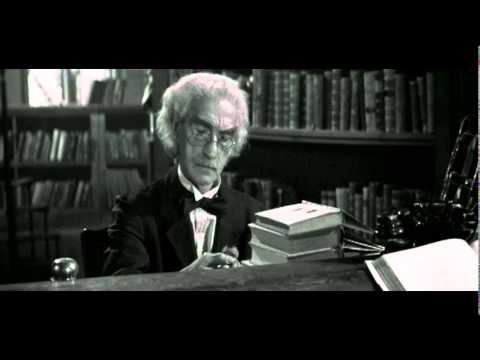
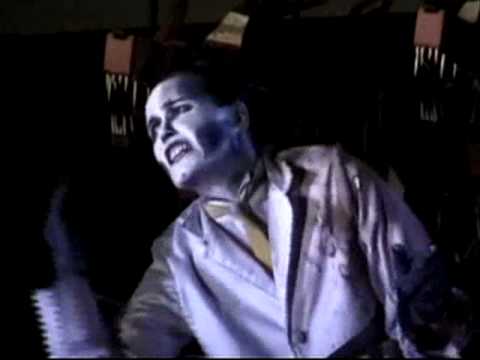
Helena's Husband
0:56
A play by Philip Moeller
Tags: librarians broadway Helena's Husband helen of troy
Added: 5 months ago
From: ToonLib
Views: 8

It's a tale told throughout the ages.
Menelaus, king of Sparta, is married to the most beautiful woman in the world.
But when she runs off with the prince of Troy, he is hesitant to take action.
In order to seek vengeance, he must turn to ... the royal librarian?

---

From one-act-plays.com:

HELENA'S HUSBAND
a historical comedy in one-act

by Philip Moeller

[From Washington Square Plays. New York: Doubleday, Page & Co., 1922]

In the temple-like room of Helen of Troy, Paris met and fell in love with the wife of the King of Sparta.

---

From google.com:

Helena's Husband is a curious little play set in ancient Greece, depicting Helena's departure with Paris for Troy, leaving her husband Menelaus behind.

King Menelaus's librarian, the aged Analytikos, urges Menelaus to vengeance and war in the wake of Helena's faithlessness. The last speech in the play belongs to Analytikos, who rallies the Spartan masses with hatred of the Trojans as the peace-loving Menelaus cringes in a corner at the frenzied cheers of the blood-thirsty crowd.

---

From bygosh.com:

[ANALYTIKOS comes in from the library.]

ANALYTIKOS. Your Majesty, are we to read no longer to-day?

HELENA. I have something to say to the King. [ANALYTIKOS goes toward the library. MENELAUS anxiously stops him.]

MENELAUS. No. Stay here. You are a wise man and will understand the wisdom of the Queen.

ANALYTIKOS [bowing to HELENA]. Helena is wise as she is beautiful.

MENELAUS. She is attempting to prove to me in a thousand words that she's a silent woman.

ANALYTIKOS. Women are seldom silent. [HELENA resents this.] Their beauty is forever speaking for them.

HELENA. The years have, indeed, taught you wisdom. [TSUMU enters.]

TSUMU. The almond water awaits Your Majesty.

HELENA. I hope you haven't forgotten the chiropodist.

TSUMU. He has been commanded but he's always late. He's so busy.

HELENA [in a purring tone to MENELAUS]. Moo Moo.

[MENELAUS, bored, turns away.]

HELENA [to TSUMU]. I think after all I'll wear my Sicily blue.

[She and TSUMU go into the QUEEN'S apartment.]

ANALYTIKOS. Shall we go back to the library?

MENELAUS. My mind is unhinged again -- that woman with her endless protestations.

ANALYTIKOS. I am sorry the poets no longer divert you.

MENELAUS. A little poetry is always too much.

ANALYTIKOS. To-morrow we will try the historians.

MENELAUS. No! Not the historians. I want the truth for a change.

ANALYTIKOS. The truth!

MENELAUS. Where in books can I find escape from the grim reality of being hitched for life to such a wife? Bah!

ANALYTIKOS. Philosophy teaches ----

MENELAUS. Why have the Gods made woman necessary to man, and made them fools?

ANALYTIKOS. For seventy years I have been resolving the problem of woman and even at my age ----

MENELAUS. Give it up, old man. The answer is -- don't.

ANALYTIKOS. Such endless variety, and yet ----

MENELAUS [with the conviction of finality]. There are only two sorts of women! Those who are failures and those who realize it.

ANALYTIKOS. Is not Penelope, the model wife of your cousin Ulysses, an exception?

MENELAUS. Duty is the refuge of the unbeautiful. She is as commonplace as she is ugly. [And then with deep bitterness.] Why didn't he marry Helen when we all wanted her? He was too wise for that. He is the only man I've ever known who seems able to direct destiny.

ANALYTIKOS. You should not blame the Gods for a lack of will.

MENELAUS [shouting]. Will! Heaven knows I do not lack the will to rid myself of this painted puppet, but where is the instrument ready to my hand?

[At this moment a SHEPHERD of Apollonian beauty leaps across the rail of the balcony and bounds into the room. MENELAUS and ANALYTIKOS start back in amazement.]

ANALYTIKOS. Who are you?

PARIS. An adventurer.

ANALYTIKOS. Then you have reached the end of your story. In a moment you will die.

PARIS. I have no faith in prophets.

ANALYTIKOS. The soldiers of the King will give you faith. Don't you know that it means death for any man to enter the apartments of the Queen?

PARIS [looking from one to the other]. Oh! So you're a couple of eunuchs.

[Though nearly eighty this is too much for ANALYTIKOS to bear. He rushes to call the guards, but MENELAUS stops him.]

PARIS [to ANALYTIKOS]. Thanks.

ANALYTIKOS. You thank me for telling you your doom?

PARIS. No -- for convincing me that I'm where I want to be. It's taken me a long while, but I knew I'd get here. [And then very intimately to MENELAUS.] Where's the Queen?

MENELAUS. Where do you come from?

PARIS. From the hills. I had come down into the market-place to sell my sheep. I had my hood filled with apples. They were golden-red like a thousand sunsets.

MENELAUS [annoyed]. You might skip those bucolic details.

PARIS. At the fair I met three ancient gypsies.

MENELAUS. What have they to do with you coming here?

PARIS. You don't seem very patient. Can't I tell my story in my own way? They asked me for the apple I was eating and I asked them what they'd give for it.

MENELAUS. I'm not interested in market quotations.

PARIS. You take everything so literally. I'm sure you're easily bored.

MENELAUS [with meaning]. I am.

PARIS [going on cheerfully]. The first was to give me all the money she could beg, and the second was to tell me all the truth she could learn by listening, and the third promised me a pretty girl. So I chose ---- [He hesitates.]

ANALYTIKOS. You cannot escape by spinning out your tale.

PARIS. Death is the end of one story and the beginning of another.

MENELAUS. Well! Well! Come to the point. Which did you choose?

PARIS [smiling]. Well, you see I'd been in the hills for a long while, so I picked the girl.

ANALYTIKOS. It would have been better for you if you had chosen wisdom.

PARIS. I knew you'd say that.

ANALYTIKOS. I have spoken truly. In a moment you will die.

PARIS. It is because the old have forgotten life that they preach wisdom.

MENELAUS. So you chose the girl? Well, go on.

PARIS. This made the other cronies angry, and when I tossed her the apple one of the others yelped at me: "You may as well seek the Queen of Sparta: she is the fairest of women." And as I turned away I heard their laughter, but the words had set my heart aflame and though it costs me my life, I'll follow the adventure.

ANALYTIKOS [scandalized]. Haven't we heard enough of this?

MENELAUS [deeply]. No! I want to hear how the story ends. It may amuse the King. [He makes a sign to ANALYTIKOS.]

PARIS. And on the ship at night I looked long at the stars and dreamed of possessing Helen. [ANALYTIKOS makes an involuntary movement toward the balcony but MENELAUS stops him.] Desire has been my guiding Mercury; the Fates are with me, and here I am!

ANALYTIKOS. The wrath of the King will show you no mercy.

PARIS [nonchalantly]. I'm not afraid of the King. He's fat, and -- a fool.

ANALYTIKOS. Shall I call the guards? [MENELAUS stops him.]

MENELAUS [very significantly]. So you would give your life for a glimpse of the Queen?

PARIS [swiftly]. Yes! My immortal soul, and if the fables tell the truth, the sight will be worth the forfeit.

MENELAUS [suddenly jumping up]. It shall be as you wish!

PARIS [buoyantly]. Venus has smiled on me.

MENELAUS. In there beyond the library you will find a room with a bath. Wait there till I call you.

PARIS. Is this some trick to catch me?

MENELAUS. A Spartan cannot lie.

PARIS. What will happen to you if the King hears of this?

MENELAUS. I will answer for the king. Go.

[PARIS exits into the library.]

ANALYTIKOS [rubbing his hands]. Shall I order the boiling oil?

MENELAUS [surprised]. Oil?

ANALYTIKOS. Now that he is being cleaned for the sacrifice.

MENELAUS. His torture will be greater than being boiled alive.

ANALYTIKOS [eagerly]. You'll have him hurled from the walls of the palace to a forest of waiting spears below?

MENELAUS. None is so blind as he who sees too much.

ANALYTIKOS. Your Majesty is subtle in his cruelty.

MENELAUS. Haven't the years taught you the cheapness of revenge?

ANALYTIKOS [mystified]. You do not intend to alter destiny.

MENELAUS. Never before has destiny been so clear to me.

ANALYTIKOS. Then the boy must die.

MENELAUS [with slow determination]. No! He has been sent by the Gods to save me!

ANALYTIKOS. Your majesty! [He is trembling with apprehension.]

MENELAUS [with unbudgeable conviction]. Helena must elope with him!

ANALYTIKOS [falling into a seat]. Ye Gods!

MENELAUS [quickly]. I couldn't divorce the Queen. That would set a bad example.

ANALYTIKOS. Yes, very.

MENELAUS. I couldn't desert her. That would be beneath my honor.

ANALYTIKOS [deeply]. Was there no other way?

MENELAUS [pompously]. The King can do no wrong, and besides I hate the smell of blood. Are you a prophet as well as a scholar? Will she go?

ANALYTIKOS. To-night I will read the stars.

MENELAUS [meaningfully]. By to-night I'll not need you to tell me. [ANALYTIKOS sits deep in thought.] Well?

ANALYTIKOS. Ethics cite no precedent.

MENELAUS. Do you mean to say I'm not justified?

ANALYTIKOS [cogitating]. Who can establish the punctilious ratio between necessity and desire?

MENELAUS [beginning to fume]. This is no time for language. Just put yourself in my place.

ANALYTIKOS. Being you, how can I judge as I?

MENELAUS [losing control]. May you choke on your dialectics! Zeus himself could have stood it no longer.

ANALYTIKOS. Have you given her soul a chance to grow?

MENELAUS. Her soul, indeed! It's shut in her rouge pot. [He has been strutting about. Suddenly he sits down crushing a roll of papyrus. He takes it up and in utter disgust reads.] "The perfect hip, its development and permanence." Bah! [He flings it to the floor.] I've done what I had to do, and Gods grant the bait may be sweet enough to catch the Queen.

ANALYTIKOS. If you had diverted yourself with a war or two you might have forgotten your troubles at home.

MENELAUS [frightened]. I detest dissension of any kind -- my dream was perpetual peace in comfortable domesticity with a womanly woman to warm my sandals.

ANALYTIKOS. Is not the Queen ----?

MENELAUS. No! No! The whole world is but her mirror. And I'm expected to face that woman every morning at breakfast for the rest of my life, and by Venus that's more than even a King can bear!

ANALYTIKOS. Even a King cannot alter destiny. I warn you, whom the Gods have joined together ----

MENELAUS [in an outburst]. Is for man to break asunder!

ANALYTIKOS [deeply shocked]. You talk like an atheist.

MENELAUS. I never allow religion to interfere with life. Go call the victim and see that he be left alone with the Queen. [MENELAUS exits and ANALYTIKOS goes over to the door of the library and summons PARIS, who enters clad in a gorgeous robe.]

PARIS. I found this in there. It looks rather well, doesn't it? Ah! So you're alone. I suppose that stupid friend of yours has gone to tell the King. When do I see the Queen?

ANALYTIKOS. At once. [He goes to the door of the QUEEN'S apartment and claps his hand. TSUMU enters and at the sight of her PARIS recoils the full length of the room.]

PARIS. I thought the Queen was a blonde!

ANALYTIKOS. Tell Her Majesty a stranger awaits her here. [TSUMU exits, her eyes wide on PARIS.] You should thank the Gods for this moment.

PARIS [his eyes on the door]. You do it for me. I can never remember all their names.

[HELENA enters clad in her Sicily blue, crowned with a garland of golden flowers. She and PARIS stand riveted, looking at each other. Their attitude might be described as fatalistic. ANALYTIKOS watches them for a moment and then with hands and head lifted to heaven he goes into the library.]

[...]

HELENA [gloriously]. My prince of poetry. My deliverer!

PARIS [divinely]. My queen of love!

[They go out, TSUMU looking after them in speechless amazement. Suddenly she sees the papyrus on the shield, runs over and reads it and then rushes to the door of the library.]

TSUMU [calling]. Analytikos. [She hides the purse in her bosom. ANALYTIKOS enters, scroll in hand.]

ANALYTIKOS. Has the Queen summoned me?

TSUMU [mysteriously]. A terrible thing has happened.

ANALYTIKOS. What's the matter?

TSUMU. Where's the King?

ANALYTIKOS. In the library.

TSUMU. I have news more precious than the gold of Midas.

ANALYTIKOS [giving her a purse]. Well! What is it?

TSUMU [speaking very dramatically and watching the effect of her words]. The Queen has deserted Menelaus.

ANALYTIKOS [receiving the shock philosophically]. Swift are the ways of Nature. The Gods have smiled upon him.

TSUMU. The Gods have forsaken the King to smile upon a prince.

ANALYTIKOS. What?

TSUMU. He was a prince.

ANALYTIKOS [apprehensively]. Why do you say that?

TSUMU [clutching her bosom]. I have a good reason to know. [There is a sound of voices below in the courtyard. MENELAUS rushes in expectantly. TSUMU falls prostrate before him.] Oh, King, in thy bottomless agony blame not a blameless negress. The Queen has fled!

MENELAUS [in his delight forgetting himself and flinging her a purse]. Is it true?

TSUMU. Woe! Woe is me!

MENELAUS [storming]. Out of my sight, you eyeless Argus!

ANALYTIKOS [to TSUMU]. Quick, send a messenger. Find out who he was. [TSUMU sticks the third purse in her bosom and runs out.]

MENELAUS [with radiant happiness, kneeling before the bust of Zeus]. Ye Gods, I thank ye. Peace and a happy life at last. [The shouts in the courtyard grow louder.]

ANALYTIKOS. The news has spread through the palace.

MENELAUS [in trepidation, springing up]. No one would dare stop the progress of the Queen.

TSUMU [rushes in and prostrates herself before the KING]. Woe is me! They have gone by the road to the harbor.

MENELAUS [anxiously]. Yes! Yes!

TSUMU. By the King's orders no man has dared gaze upon Her Majesty. They all fell prostrate before her.

MENELAUS. Good! Good! [Attempting to cover his delight.] Go! Go! You garrulous dog. [TSUMU gets up and points to shield. ANALYTIKOS and the KING look toward it. ANALYTIKOS tears off the papyrus and brings it to MENELAUS. TSUMU, watching them, exits.]

MENELAUS [reading]. "I am not a bad woman. I did what I had to do." How Greek to blame fate for what one wants to do. [TSUMU again comes tumbling in.]

TSUMU [again prostrate before the KING]. A rumor flies through the city. He -- he ----

ANALYTIKOS [anxiously]. Well? Well?

TSUMU. He -- he ----

MENELAUS [furiously to ANALYTIKOS]. Rid me of this croaking raven.

TSUMU. Evil has fallen on Sparta. He ----

ANALYTIKOS. Yes -- yes ----

MENELAUS [in a rage]. Out of my sight, perfidious Nubian. [Sounds of confusion in the courtyard. Suddenly she springs to her feet and yells at the top of her voice.]

TSUMU. He was Paris, Prince of Troy!

[They all start back. ANALYTIKOS stumbles into a seat. MENELAUS turns pale. TSUMU leers like a black Nemesis.]

ANALYTIKOS [very ominously]. Who can read the secret of the Fates?

MENELAUS [frightened]. What do you mean?

ANALYTIKOS. He is the son of Priam, King of Troy.

TSUMU [adding fuel]. And of Hecuba, Queen of the Trojans. [She rushes out to spread the news.]

ANALYTIKOS. That makes the matter international.

MENELAUS [quickly]. But we have treaties with Troy.

ANALYTIKOS. Circumstances alter treaties. They will mean nothing.

MENELAUS. Nothing?

ANALYTIKOS. No more than a scrap of papyrus. Sparta will fight to regain her Queen.

MENELAUS. But I don't want her back.

ANALYTIKOS. Can you tell that to Sparta? Remember, the King can do no wrong. Last night I dreamed of war.

MENELAUS. No! No! Don't say that. After the scandal I can't be expected to fight to get her back.

ANALYTIKOS. Sparta will see with the eyes of chivalry.

MENELAUS [fuming]. But I don't believe in war.

ANALYTIKOS [still obdurate]. Have you forgotten the oath pledged of old, with Ulysses and Agamemnon? They have sworn, if ever the time came, to fight and defend the Queen.

MENELAUS [bitterly]. I didn't think of the triple alliance.

ANALYTIKOS. Can Sparta ask less of her King?

MENELAUS. Let's hear the other side. We can perhaps arbitrate. Peace at any price.

ANALYTIKOS. Some bargains are too cheap.

MENELAUS [hopelessly]. But I am a pacifist.

ANALYTIKOS. You are Menelaus of Sparta, and Sparta's a nation of soldiers.

MENELAUS [desperately]. I am too proud to fight!

ANALYTIKOS. Here, put on your shield. [A great clamor comes up from the courtyard. ANALYTIKOS steps out on the balcony and is greeted with shouts of "The King! The King!" Addressing the crowd.] People of Sparta, this calamity has been forced upon us.

[MENELAUS winces.] We are a peaceful people. But thanks to our unparalleled efficiency, the military system of Sparta is the most powerful in all Greece and we can mobilize in half an hour.

[Loud acclaims from the people. MENELAUS, the papyrus still in hand, crawls over and attempts to stop ANALYTIKOS.]

ANALYTIKOS [not noticing him]. In the midst of connubial and communal peace the thunderbolt has fallen on the King.[MENELAUS tugs at ANALYTIKOS' robe.] Broken in spirit as he is, he is already pawing the ground like a battle steed. Never will we lay down our arms! We and Jupiter! [Cheers.] Never until the Queen is restored to Menelaus. Never, even if it takes ten years.

[MENELAUS squirms. A loud cheer.]

HELENA'S HUSBAND

Even now the King is buckling on his shield.
[More cheers. ANALYTIKOS steps farther forward and then with bursting eloquence.] One hate we have and one alone! [Yells from below.]
Hate by water and hate by land,
Hate of the head and hate of the hand,
Hate of Paris and hate of Troy
That has broken the Queen for a moment's toy.
[The yells grow fiercer.]
Zeus' thunder will shatter the Trojan throne.
We have one hate and one alone!

[MENELAUS sits on the floor dejectedly looking at the papyrus. A thunder of voices from the people.]

We have one hate and one alone. Troy! Troy!

[Helmets and swords are thrown into the air. The cheers grow tumultuous, trumpets are blown, and the curtain falls.]

Wednesday, June 3, 2015

Case Study No. 2001: Denmark

Found In The Ground by Howard Barker
3:48
Extracts from Found In The Ground by Howard Barker, The Wrestling School's 21st aniversary theatre production at Riverside Studios October 2009 London UK
Tags: Howard Barker New Theatre Writing Thewrestlingschool
Added: 4 years ago
From: thewrestlingschool
Views: 2,378

The Wrestling School
Found in the Ground
by Howard Barker

[various scenes from the play are shown, including a young male librarian (brown curly hair, glasses, grey shirt, black pants) speaking to a young woman]
DENMARK: But they're wholly redundant! And all this reciprocated passion for some ...
BURGTEATA: Yes yes, oh yes!
DENMARK: Fatuous condition of matrimony.
BURGTEATA: [pause] How well you know me ...
DENMARK: How well I know you? Yes.
BURGTEATA: It's uncanny! How old are you?
DENMARK: You know perfectly well--
BURGTEATA: How old, I said!
DENMARK: Nineteen.
[more scenes from the play are shown, then the screen fades to black]

---

From thewrestlingschool.co.uk:

Found In The Ground
Wrtten & Directed by Howard Barker

Found In The Ground is Howard Barker's most experimental and innovative play conceived for the stage.

A dying former Nuremberg judge consigns his priceless library to the bonfire. As he rejoices in this wilful barbarism, his delinquent daughter discovers a bizarre obsession and his executed victims appear in unexpected forms. His passionate desire to meet the arch criminal who evaded his prosecution is at last satisfied when Adolf Hitler arrives... to discuss painting.

A cast of 16 including a chorus of sadistic nurses and 3 snarling dogs created a surreal, startling and compelling kaleidoscope of images, ideas, movement and powerfully poetic language.

Howard Barker on "Found In The Ground"

We've had to wait a while to be able to do this play as its scale was beyond our resources until now. It is a play of images and echoes from the Hitler period to the more recent past. At the centre of it is an ex-Nuremberg judge whose contempt for his own culture compels him to destroy his priceless library. His librarian and his daughter struggle to make sense of these actions, moving from love to hatred and back again.

Found In The Ground is entirely impressionistic, with a cascading number of scenes, all related but not always consecutive. So it operates differently from all other plays of mine, by breaking down the narrative that has always been at the centre of theatre in my and nearly all dramatic text.

It is not a tragedy. The characters don't pass through the ordeal of their experiences, they react spontaneously, or carve out places for themselves in which to live. I would call this a play of landscape rather than identity.

Hitler makes an appearance towards the end of the play. Of course it is impossible to put Hitler on stage in any historical sense. But I didn't intend to do that. I take a fragment of him, entirely imaginary. He is a visitor to the place that he has (and the twentieth century has) created.

The production marks 21 years of The Wrestling School. In 1988 we were simply satisfied to be mounting a large play at all. Now it stands for something, an aesthetic which is controversial of course, but international in reputation. I couldn't have foreseen that. I couldn't have foreseen how many enemies we would make, nor how many friends. The Company's methods have developed, its aesthetic is refined, and I think its identity is now so distinctive I never think of it being in the theatre at all. It's somewhere else...

---

From georgehunka.com:

Found in the Ground by Howard Barker.
Directed by the author.
Set design: Tomas Leipzig.
Costume design: Billie Kaiser.
Lighting design: Helen Morley.
Sound design: Paula Sezno.
Dog automata maker: Keith Newstead.
With Vanessa Faye-Stanley (Macedonia), Gerrard McArthur (Toonelhuis), Suzy Cooper (Burgteata), Kyle Soller (Denmark), Nigel Hastings (Workman), Julia Tarnoky (Knox), Michael Vaughan (Lobe), Alan Cox (Hitler), and Georgie Alexander, Megan Hall, Charlotte More and Leah Whitaker (the Nurses).
Running time: 100 minutes, no intermission.
A Wrestling School production.
At Riverside Studios, Crisp Road, Hammersmith, London.
Reviewed at the 3 October performance.

Irony, that facile and usually unhelpful trickster, had me reading Edward Bond's The Hidden Plot the afternoon before I saw Howard Barker's Found at the Ground, the Wrestling School's 21st production, this past weekend. In "Language," one of the early essays in the book, Bond takes up the idea of justice. "Theatre has only one subject," Bond writes: "justice. Our minds are the site of imagination because we listen as well as speak. Imagination creates our world. It is as if each of us were a sculptor who created an image out of the raw stone of the world. The image is either just or corrupt. Theatres are the site of public imagination where the distinction between speaking and listening is dissolved. Neither love nor religion can do that. Yet it is essential to our shared humanity, for how else shall we learn to live justly? But now our alchemy corrupts our imagination, and if it succeeds in this we will lose our human language. No previous culture has achieved that extreme of nihilism."

Ironic because the idea of justice in the post-Auschwitz post-Hiroshima world is precisely the subject of Found in the Ground, a play which whispers, in contradistinction to Bond, that "the image is neither just nor corrupt," renouncing such moral definitions in a considered musical meditation of imagination and justice. And it is a multidimensional image of considerable depth, one of Barker's "more 'musical' plays in which elements of expressionism and surrealism contribute to linguistically and pictorially poetic forms," as David Ian Rabey defined one stream of Barker's work in his recent book on the dramatist.

A landscape-with-figures play like Found in the Ground doesn't offer a plot or narrative as such, but a situation to be excavated. In this case, the situation is centered on Toonelhuis (Gerrard McArthur), a judge at Nuremburg now retired to some distant retreat and cared for (if these are the words for such ambivalent casual dismissal) by his intensely loyal and ancient servant Lobe (the caustically disdainful Michael Vaughan) and four bitterly uncaring nurses. He also retains a naive young librarian, Denmark (Kyle Soller), to oversee the burning of his large library, a burning that the idealist librarian despises. Toonelhuis' expansively sexual daughter Burgteata (Suzy Cooper) teases Denmark, who nonetheless remains impotent and is prone to sexual degradation. Meanwhile, in his memory, Toonelhuis is haunted by the spirits of the Nazi leaders whom he sentenced to death at Nuremburg, spirits personified by Knox ("the spirit of a war criminal," according to the text), who here is lithely and darkly performed by Julia Tarnoky in a bizarre black-and-white outfit and makeup: a nightmare Harlequin. Knox is finally able to summon Hitler (Alan Cox), a melancholic now given to disquisitions on art, continually fascinated by the spectacle of death.

Toonelhuis spends his last days on earth ingesting the remains of his, and of justice's, victims – mud and ashes now, as much mud and ashes as the remains of the Nazis' victims at Auschwitz or the atomic bomb's victims at Hiroshima, his fingers playing in the flesh of the corpses. He is as much a victim of the conflicting claims of justice as the three dogs that he keeps, vicious mechanical creatures that once served as fearsome guards (in the camps) and now as fearsome protectors (surrounding the judges) – and in this production they are marvellous mechanical creations by Keith Newstead. Their ominous barking constitutes one of the motifs of the play's soundscape; at the end of the play, as Lobe gently cuts their throats, they are released from the bizarre uses to which humankind has put them, as death releases Toonelhuis also from his tortured physical self-awareness.

But this is a 21st century play – "new writing," as Aleks Sierz might put it – and in the contemporary scenes the relationship of idealism to tragic history, and especially idealism that leads to such tragic history, forms much of the foreground to this landscape. Denmark may well be a Toonelhuis-in-training, which may explain his employment by the judge: an idealist who finds more significance in books than in body, as human justice finds more significance in law than in landscape; it was, after all, justice in the name of idealism that led the Nuremburg court to pass sentences of death on the Nazi war criminals. This idealism leads Denmark to toss himself on top of the pyre of burning books, sacrificing his body to his ideals; but again, irony, our facile and unhelpful trickster, makes this a failed suicide. It is his denial of desire, Hamletesque trepidation in the face of a proferred ecstasy, that leads to his pain: his sexual prostration between the legs of his female lovers, his degredation, is of his own making. In his naivete, Denmark stands in for 21st century culture, unwilling to absorb and accept its responsibility in tragic history and therefore quite ready to repeat its horrors once again, and willing to deny the fulfillment of the body's significance, condemning it to ashes and mud rather than life. (For it must be remembered that the Nazis, those promulgators of racial purity and a utopian Thousand Year Reich, were idealists too.)

This was the first time I've seen one of Barker's own productions. It was not surprising to find the extraordinary precision of his texts reflected in the precision of his scenography: this is a production with sharp, piercing edges that wound, from the metal teeth of the mechanical dogs to the clarity of the costume and set design (and long-time Wrestling School designers Billie Kaiser and Tomas Leipzig are joined for the first time by sound designer Paula Sezno, a graduate of the Sopron Academy of Theatre Arts; her "favourite sound sources are industrial processes, a taste she describes as 'pure nostalgia,'" her program biography says; her sounds, too, like Kaiser's exquisitely sensual dresses and Leipzig's uncompromisingly hard and cold sets and props, pierce the invisible scrim between performer and auditor. Needless to add, Helen Morley's light design sculpts the dark beautifully). It was surprising, however, to see just how ... well, the comic, for want of a better word, abuts the tragic in the stage production, for much of this is light and fast; the bitter dogs appeal in their toy-like qualities; Gerrard McArthur's Toonelhuis is particularly wry; and there's Alan Cox's Hitler, who seems uncomfortable in being called back from the dead in a nuanced and quiet performance; if anything, he is slightly embarrassed, and those who surround him treat him with a casual and amusing contempt (one of the Nurses thrusts an unneeded tray into his arms as she hurries out to catch a bus, leaving poor Hitler slightly bereft and comically burdened). He is only transfixed by projected images of the concentration camps – as transfixed like many others before repeated images of the events of 9/11 and other contemporary disasters.

If the audience is held complicit through holding onto its last shreds of idealism, so is the artist. "Critical moments in the history of a culture," Hitler prosaically muses (and in the text Hitler is the only character to speak in prose; the others speak almost exclusively in verse), "frequently require swift and violent actions the elimination of old values the fall of monasteries the tidal rush of some purifying river naturally this wounds us in some obscure place some spiritual cul-de-sac but all the same this gnawing pain should not be interpreted as a reason for inaction on the contrary we take pride in conquering this pain in rendering it the melancholy music which accompanies all." Denmark interrupts him with, "I like melancholia." Responds Hitler (now in verse):

Do you?
Me too
It is the temperament of artists
Rembrandt
And the nameless students who deface his works
Melancholy
All
[he looks around him, the tray still in his arms]
I'll put it down shall I

Not the same as pessimism, this melancholia, and for its humor Found in the Ground, the play and production, is melancholic, and a challenge to the audience to seek a perhaps impossible redemption in their own bodies, and in love and imaginative desire: to avoid the prostration and sexual self-degradation of idealists like Hitler and Denmark, to consider even the justice of a Toonelhuis as provisional, as the judge himself finds it at the end of his life. It is the melancholia of complicity in a bizarre human justice, a parody of the justice found, perhaps, only in the dead – in the "ground" of the title of the play.

---

From cix.co.uk:

FOUND IN THE GROUND
Riverside Studios, London W6
Opened 1 October, 2009
**

The Wrestling School, the company dedicated to the plays of Howard Barker, is celebrating 21 years of existence "in the teeth of critical and bureaucratic hostility". After the shock of my first exposure to Barker I have grown to respect and admire much of his work, with its unflinching moral rigour and stark refusal to let an audience off the hook for even an instant. However, it has been a few years since I last crossed paths with the company, and on this showing he has refined his approach almost out of existence. The trademarks are all present: visual and aural astringency, a world in shards (usually during or after a grisly war), an enclosed environment with a number of vicious and irresolvable personal discords within it. But beyond that, nothing: no events, no dilemmas, nothing except the unremitting condition of devalued desire, articulated depravity and a kind of elegant apocalypse. The (wonderful) mechanical dogs, (curiously coy) quartet of urinating nurses and (challengingly low-key) late appearance of Hitler neither relieve matters nor add any kind of form or shape to them.

In some ways this is Barker's take on Beckett's Endgame: a wheelchair-bound domestic tyrant ordering his household around in the aftermath of, effectively, everything. In this case, former war crimes judge Lord Toonelhuis appears to exist on a diet of the mortal remains of middle-ranking Nazis, and employs a librarian to oversee not the cataloguing of the rare book collection he has painstakingly built up but its immolation, in A to Z order. Librarian, servants, nurses and a bunch of undefined women (including one who periodically walks across upstage topless in a hat which conceals her face, declaiming, "I am all the Anne Franks!") get on each other's nerves for nearly an a hour and a half, then Toonelhuis dies and things take another half-hour to grind to a halt.

There are numerous lapidary pronouncements on life, art and culture, and a whole raft of Nazi imagery and allusions, but none of them seem to connect with anything either within the world of the play or beyond it. Barker seems increasingly to believe that the more dissatisfaction he elicits, the more he must be doing something right; he might do well to recollect that this isn't especially valid as a general principle and to question why he thinks he might be an exceptional case.

---

From theguardian.com:

Well, this is a challenge, and a gruelling one. Howard Barker gives little away in his latest vision of hell on earth, one of those theatrical experiences where everyone around you seems to be genuflecting at the altar of radical theatre, while you are left scratching your head and feeling like a bear of very little brain.

There are no bears here, but there are three howling mechanical dogs that belong to a senile judge who once presided over the execution of 38 war criminals at Nuremburg and who now appears to be consuming their body parts for lunch. His only regret is that he didn't get to meet Hitler.

So he whiles away the time before death in burning the books in his vast library. The teenage librarian makes feeble protest, has sex with the judge's daughter and contracts a spine-twisting disease as if he has assumed the physical manifestation of this distorted world. The smoke rises from a pit as if from hell itself, and so far they are only up to G in the burning. It takes two hours (no interval) to get to Z and fulfill the judge's ambition to chat with Hitler.

A case of undoubted, indeed mesmerising style over meaning, the show has a cool catwalk shimmer and some very doubtful sexual politics in its portrayal of women: the urinating nurses seem to have stepped straight out of a Carry On film; there is a half-naked headless woman; and the judge's daughter is a raving nymphomaniac.

The whole thing reeks brilliantly of sex and death and, as ever, Barker prods at the worm of private desires eating away at the public face of history. It feels both monumental and unassailable, like a vast piece of theatrical granite. If only Barker would allow us near.

Wednesday, May 27, 2015

Case Study No. 1984: Marjorie Hendershott

Chester, You Owe My Bird an Apology
1:17
A play by John Lazarus
Tags: librarians broadway chester you owe my bird an apology
Added: 5 months ago
From: ToonLib
Views: 8

Life is tough for poor Chester.
He's middle aged and living with his sister Hattie.
She's overbearing and malicious, but that's nothing compared to her obnoxious pet cockatoo Belladonna.

But one day, Chester meets a lovely librarian named Marjorie.
She makes him feel as if his life may finally be worth living.
And yet, when Chester attempts to introduce his new lady friend to his sister, snide remarks and sparks fly.

---

From amazon.com:

Babel rap ; Chester, you owe my bird an apology : two one-act plays
by John Lazarus

Playwrights Co-op, 1972 - 102 pages

A hen-pecked, middle-aged man is driven to distraction by his nagging sister and her loud-mouthed cockatoo.

---

From google.com:

Librarian Marjorie Hendershott visits her friend, 47-year-old Chester, and Chester's dominating older sister, Hattie. Shortly after their introduction, Hattie tells Marjorie "it doesn't take much in the way of brains to be a librarian."

Marjorie, described as "elegant" and "poised," possessing "a youthful energy, enthusiasm and sense of humor," does her best to help Chester break free from bondage to his harpy sister and her repulsive pet cockatoo.

Tuesday, May 5, 2015

Case Study No. 1937: Cecily Carruthers

Travesties: Sara Topham
3:18
Take one part Wilde, a touch of Lenin, a dash of Dada, a pinch of Joyce and you've got Tom Stoppard's absurdly hilarious Travesties. Prepare to be delighted as Stoppard (Rosencrantz and Guildenstern Are Dead, Shakespeare in Love) spins you into a dazzling medley of literature, philosophy, politics, and history. The wildest revolutionary minds of the 20th century come alive in this romantic and achingly funny modern masterpiece.

TRAVESTIES runs from March 13 - April 1.
Tags: McCarter Theatre Travesties Tom Stoppard Sara Topham Cecily
Added: 3 years ago
From: McCarterTheatre
Views: 4,743

[scene opens with a young woman speaking directly to the camera]
SARA: I'm Sara Topham, and I'm playing Cecily.
["Travesties by Tom Stoppard" appears on screen, then cut back to the woman speaking directly to the camera]
SARA: Cecily is the librarian at the library in Zurich, and she's very very proud of this.
[cut to Sara rehearsing as the librarian (pushing a book cart across the stage)]
SARA: [in voice over] She enjoys being a librarian.
[cut back to Sara speaking directly to the camera]
SARA: She loves the books, and she loves people who love books. So when Lenin comes to hang out at the library, because he loves books and being around books and using books to do his work, she's very enamoured of him. I think initally because of the books!
[she smiles]
SARA: And she kind of gets drawn into his political world, and completely takes that on. She's somebody who throws herself entirely into the thing that she's decided to espouse. Um, which is great, it's really fun.
[cut to Sara rehearsing another scene as the librarian]
SARA: [in voice over] It means she's quite extreme.
[cut back to Sara speaking directly to the camera]
SARA: And that's a really fun thing to play.
[cut to another shot of Sara speaking directly to the camera]
SARA: I guess the thing that drew me to the play is ... A, Tom Stoppard. Who I love, and I've never been in a play of his, so it's quite exciting to get to do that. Um, and also, I love "The Importance of Being Earnest."
[cut to a still image of Sara in a scene from the Roundabout Theatre Company's production of "The Importance of Being Earnest"]
SARA: [in voice over] I played Gwendolen twice, in similar productions in two different places.
[cut back to Sara speaking directly to the camera]
SARA: And, uh, so I spent kind of two years of my life living in "The Importance of Earnest." So to get to do this play, which is such a kind of ... it's sort of a love letter and a decapitation of "The Importance of Being Earnest," and that's reall fun.
[she smiles]
SARA: And also to be playing Cecily, who has the other ... she has the sort of different plotline in this, um, than Gwendolen does, obviously. And it's fun to kind of look at the play from that angle.
[cut to another shot of Sara speaking directly to the camera]
SARA: I have parts of the play that scare me, um, because I think they require a lot of you as an actor to really serve them. Uh, so that the audience can really receive what it is that Stoppard's trying to do. I think a lot of the stuff that is connected with his kind of musical jokes is tricky. The tea scene ...
[cut to Sara rehearsing another scene as the librarian]
SARA: [in voice over] The equivalent of Oscar Wilde's tea scene between Cecily and Gwendolen, is going to be a lot of fun but really hard until we get it!
[cut back to Sara speaking directly to the camera]
SARA: Uh, and then hopefully once we get it, it will still be difficult and require a lot of concentration, but will be enjoyable to do. Um, and I get to do a strip tease to--
[she laughs]
SARA: Words about the Russian Revolution and modern art. Um, which is, I think, going to be a lot of fun once we figure out what it is. So those two things both excite me and terrify me a little bit, so we'll find out how that turns out.
[cut to another shot of Sara speaking directly to the camera]
SARA: You should come and see for yourself ... uh, hear for yourself, experience for yourself the crazy wonderful kind of mosaic that this play is.
[cut to another shot of Sara speaking directly to the camera]
SARA: I feel like it's like one of those, um, things you used to get in the cereal box with the lines on it, and you put the red transparency over top and suddenly the picture appears! It's a bit like that, so you'll just have to trust us to provide the transparency, and that all will be clear in the end.

Travesties

By Tom Stoppard
Directed by Sam Buntrock

Cast
Fred Arsenault
Demosthenes Chrysan
Christian Coulson
Susannah Flood
Everett Quinton
Lusia Strus
Sara Topham
James Urbaniak

Set and Costume Design
David Farley

Lighting Design
David Weiner

Sound Design
Fitz Patton

Composer
David Shire

Dialect Coach
Deborah Hecht

Movement Consultant
Daniel Stein

Casting Director
Laura Stanczyk, CSA

Production Stage Manager
Cheryl Mintz

Producing Director
Mara Isaacs

Director of Production
David York

---

From talkinbroadway.com:

Difficult to Penetrate McCarter Production of Tom Stoppard's Travesties

Even under ideal conditions, Tom Stoppard's fast-paced, verbally and intellectually playful 1974 vaudevillian lark Travesties requires most viewers to work almost as hard as its thespian interpreters to follow its fractured verbal high jinks. However, when a production makes it nigh on to impossible for a capable and cooperative audience to succeed in its efforts, the theatrical funhouse which Stoppard has constructed ceases to provide much in the way of fun. Even the best efforts of a lively, adept cast and light-fingered director are of little avail to overcome the foggy abyss which separates most of the McCarter Matthews Theatre audience from the wit and whimsy of Tom Stoppard.

Sitting in his Zurich drawing room in 1974, Henry Carr remembers back to his days as a minor British consular official, sharing with us his activities in Zurich in 1917. The World War I settings are the Zurich Public Library and the same drawing room from which Carr is relating his clearly clouded memories. Carr boastfully tells us of his interactions with the Romanian (later French) poet-playwright-journalist Dadaist pioneer Tristan Tzara; modernist Irish novelist James Joyce; and Russian political and social revolutionary Vladimir Lenin. Also on the scene are Gwendolyn, Carr's younger sister, who assists Joyce in translating "Ulysses" and is courted by Tzara; Cecily, who is a librarian and is courted by Carr; and Nadya, Lenin's wife. Finally, there is Bennett, Carr's acerbic manservant.

Somehow, the plot of, as well as lines from, Oscar Wilde's The Importance of Being Earnest is worked into the middle of all this business, with Travesties' Cecily and Gwendolyn sitting in for Wilde's, and Carr and Tzara for Jack Worthing and Algernon Moncrieff.

Stoppard has stated that his inspiration for Travesties was his discovery that, although they never met Tzara, Joyce and Lenin were all living in Switzerland in 1917. There was also a real British consulate official name of Henry Carr, who played Moncrieff in an English Players production of Earnest produced by Joyce, and ended up being sued by Joyce. Although the latter events are included in the play, it is a work of fiction, parody, farce, comedy, sketches, whimsy, musical tidbits, vaudeville. It is arbitrary, nonsensical and frequent shifts in style.

The prologue, which is played atop and on the sides of the box-like stage-center set for Carr's drawing room, is set in a dark public library, and is spoken in a mixture of Russian, English, French, German, nonsense resembling English and Lord knows what else. It begins with Lenin and Joyce writing and Joyce dictating to Gwen. Tzara, who has been writing, cuts up his papers with scissors and puts them in his hat, and then reconstructs them in some other order. From the eighth out of about 23 rows on the aisle (J-1), because of the low volume and a slight echo, when the characters speak, it was too difficult to pick up on the words, so that, rather than enjoy the word and sound play of the dialogue, I spent the scene worrying about what I was supposed to understand, but could not quite make out rather than possibly enjoying the humor of what Tzara has written:

Eel ate enormous appletzara
key dairy chef's hat he'll learn comparah!
Ill raced alas whispers kill later nut east,
noon avuncular ill day Clara!

Trying hard to understand that which was not intended to be understandable, I missed the important moment when Gwen puts down the folder that she received from Joyce, and Cecily puts down the identical looking folder which she received from Lenin, and then each picks up and leaves with the wrong folder. I did follow when Nadya, Lenin's wife, came in to inform Lenin that the Tsar had been overthrown. Cecily keeps "shushing" everyone, leading to a funny little poem from Joyce which I could not clearly discern amid the hubbub. Joyce closes the scene singing, "If You Ever Go Across the Sea to Ireland," causing me to be further misdirected as the second scene begins.

Next comes the first scene which is set in Carr's drawing room in 1974. The lighting is extremely low. Director Sam Buntrock will not light this set fully until after the end of the scene when the action reverts to 1917. While this is a readily understandable artistic decision, in tandem with the small box shaped drawing room set with the stage space above it and at its sides in darkness, the scene appears more distant from the viewer than it otherwise might. James Urbaniak as Carr now reads a 1600-word monologue with a simulated tired and strained old man's voice at breakneck speed. It was essentially indecipherable from my pew. Less than halfway through this monologue, just a few minutes into the performance, I become aware of increasingly heavy snoring from seat K-1. It was such an appropriate response to the circumstances that I found myself richly amused by the gentlemen's (I could not help myself from turning around to see who was snoring) rapid critical acuity.

With the very fast paced dialogue, the extreme archness of the applied accents, and the often tricky and/or quick witted writing and changes in style, not to mention the box like drawing room set, following the details of Stoppard's writing was a chore rather than a treat.

I've spoken with a colleague who at this point in the performance felt even more shut out from Travesties than I. Furthermore, there was little laughter, a clue to which someone should have paid attention.

Now here's the kicker. Although it was by now too late for me to become fully engaged, the second act of Travesties played very differently from fourth row center of the orchestra (D-110). Suddenly, the liveliness of the performance and the clarity and humorous intonations of the line readings were now apparent. There could be no question, but that director Sam Buntrock and his strong cast had carefully considered the text and were interpreting it with style and attention to its shifting modes. The sound was still not all that it should be, and I would have better enjoyed Cecily and Gwendolyn's parody of the famous signature song of the vaudeville act of "(Mr.) Gallagher and (Mr.) Shean" if I could have more clearly and easily heard the lyrics.

James Urbaniak is particularly lively and inventive as Carr. Everett Quinton as his manservant Bennett has a deft comic touch. Most effective is Stoppard's portrait of Lenin. Coiffed and bearded to bear a striking resemble to the Soviet dictator, Demosthenes Chrysan brings to the role a mock seriousness that highlights the dangers of an all powerful government. Lusia Strus makes a good match for Chrysan as Lenin's Nadya.

Christian Coulson is a dashing and roguish Tristan Tzara. The joke here may be the chasm between Stoppard's Tzara and the grim Dadaist that Tzara was. Susannah Flood (Gwendolyn) and Sara Topham (Cecily) bring a light, very winning touch to their Earnest style roles.

Travesties is not the most accessible of Stoppard's light, vaudevillian plays (Hapgood and Jumpers are those). Thus, it is not often produced. If you want to take advantage of this opportunity to see Travesties by the brilliant Stoppard, you should by all means do so. Just make it a point to obtain a seat as close to the stage as you are able.

Travesties continues performances (Evenings.: Thursday 7:30 pm/ Friday, Saturday 8 pm/ Matinees: Saturday 3 pm/ Sun. 2 pm) through April 1, 2011 at at the McCarter Theatre Center (Matthews Theatre), 91 University Place, Princeton 08540. Box Office: 609-258-2787; online: www.mccarter.org.

Travesties by Tom Stoppard; directed by Sam Buntrock

Cast
Henry Carr ... James Urbaniak
Tristan Tzara ... Christian Coulson
James Joyce ... Fred Arsenault
Lenin ... Demosthenes Chrysan
Bennett ... Everett Quinton
Gwendolyn ... Susannah Flood
Cecily ... Sara Topham
Nadya ... Lusia Strus

---

From google.com:

"Ssssssh!" is the first we hear from Cecily Carruthers, the young librarian in this play featuring Lenin, James Joyce, and the Dadaist Tristan Tzara, living in Zurich during World War I - and who gather here in the Zurich public library. Cecily is shushing Joyce and Lenin. "Cecily does not approve of garrulity in the Reference Section," observes Tzara. He further notes that although Cecily is rather pretty, her views on poetry are old-fashioned and her knowledge of poets eccentric, owing to her habit of reading them in alphabetical order.

Cecily assumes major importance in Act II, which she opens with a lecture on Marx and Lenin. She comments that with her reference help, Lenin is writing his book on "Imperialism, the highest stage of capitalism." She has a long argument with another historical character, Henry Carr, about the nature of socialism. Cecily also has an opportunity to recite simple verse, including a lament for the Bolsheviki bound for Petrograd.

In the end, she appears as her 80-year-old self, still argumentative after all these years about who did what and when during the old days in Zurich. It's an ingenious, funny, provocative play, and Cecily is definitely a figure to be reckoned with.

Wednesday, April 22, 2015

Case Study No. 1909: Staff of Road's End Branch Library

Night of the Dunce
1:24
A play by Frank Gagliano
Tags: librarians broadway night of the dunce
Added: 3 months ago
From: ToonLib
Views: 2

A small, bitter, apparently personal battle is going on inside a rather deserted public library.
The full-time assistant is falling in love with the girl at the check-out desk.
But there is a part-time assistant prowling about the place, buttering up the Head Librarian and gradually persuading her to sack the chap above him.

Miss Vickers, a lonely widow, is on the point of falling prey to the young interloper's blandishments.
She may sack the really loyal employe at any moment.
The girl at the check-out desk is wiser.
In fact, she is so certain that the soft-soap artist who is on his way up in the world is a fraud, cheat, and braggart ...
That she arranges to leave the library intercom open so that Miss Vickers, in her private office, can hear how he carries on in her absence.

---

From worldcat.org:

Night of the dunce, a play.
Author: Frank Gagliano
Publisher: [New York] Dramatists Play Service [1967]
Summary: Roads End Branch of the public library is a decaying, ominous place, where no one comes to borrow books any more, despite the efforts of the staff to keep it a going concern. But the tension that hangs in the air affects them too, and they bicker among themselves, egged on by the scheming young temporary staff member who has wormed his way into the head librarian's confidence. Then mysterious phone calls are received, shadowy figures lurk outside, and a pair of unknown young men drop in and prowl aimlessly about the stacks. The head librarian, Mrs. Vickers, is willing to believe that their interest is reading - until the moment of seizure suddenly threatens, and the two young men turn out to be members of a gang of toughs calling themselves the Dunces. Their purpose is to take over the library and destroy it. Surrounded and besieged, Mrs. Vickers and her staff wage a seesaw battle to protect what they have and hold back the tide of ugliness which threatens to engulf them. In the end the night of threatened evil continues unresolved, but the courage and resourcefulness which have come forth to stave off destruction remain resolute as the lights dim and the defenders wait uncertainly for the attack which is sure to come.
Subjects:
Public libraries -- Drama.
Gangs -- Drama.

---

From google.com:

Night of the Dunce is set one dreadful night in the decrepit old Road's End Branch Library in an anonymous city. Mattie Vickers is the 60-year-old, fashionably dressed branch director. As the play opens, she is determined to sack her assistant librarian, Malcolm Supley. Though a good librarian, Supley has violated one of Vicker's edicts by speaking to the city commissioner.

The play takes a quick, sinister turn with the introduction of David, a young part-time staff member who has manipulated Vickers into firing Supley. He wants Supley's job. Davis is nasty to Supley and another library assistant while toadying reprehensibly to Vickers.

As the unpleasantness continues into the evening, local oddball Max Kupreef takes Vickers aside and tells her what he thinks: "I've seen you change from a driving force in the community to some kind of hesitant, hat-wearing, hair-tinted, carefully made-up widow."

Vickers breaks, then, and pours out her fears for the future of the library. She admits taht she has been falsifying reports to the city commissioner, indicating a larger number of patrons than reality has provided, afraid that the library will not only be closed but demolished should the truth about tis emptiness become known.

Demolition is on order, but from an unexpected source: a gang of punks, the Dunces, terrorize the library staff and threaten to destroy the place. "Christ, we're librarians," shouts Vickers at the punk assault (which the punks dub Project Library Raid), determined to stop it.

It's a frightening vision of society going to hell, with the library crew (at road's end for certain) about to take the rsmparts in a defense of reason that is clearly doomed.

Thursday, April 9, 2015

Case Study No. 1882: Staff of Unnamed Library (Alphabetical Order)

Alphabetical Order
2:29
The Library office of the provincial newspaper. A scene of permanent and utter confusion-the cluttered chaos of the room is matche The Library office of the provincial newspaper. A scene of permanent and utter confusion-the cluttered chaos of the room is matched by the general life of its manageress, Lucy, and her associates: but it is also a scene of warmth and easy, if somewhat juvenile and irresponsible, light-heartedness. Enter Leslie, a new young assistant with a passion for organization. In a very short while she transforms both the office and the lives of it inhabitants and visitors into something orderly and neat-and also arid and colorless. An announcement that the paper is to close, leads (in Leslie's absence) to a revitalizing and glorious orgy of destruction and return to chaos: but Leslie can coolly cope with even this crisis- and Lucy is left smiling wryly in the end.

Fort Collins High School
Black Box Mini Theater
Sept. 20-23rd and 27-29th
Tix are $5
Doors at 7pm, Show at 7:30
Tags: KLYD FCHS Fort Collins High School Theater Promo Michael Frayne Alphabetical Order asgannen
Added: 7 years ago
From: Asgannen
Views: 1,261

[scene opens with various shots of file cabinets and messy desks]
NARRATOR: The library office of the provincial newspaper! A scene of permanent and utter confusion!
[cut to a young female librarian (hair tied back, pink business suit) cradling a phone between her chin and her shoulder while frantically flipping through papers in a folder]
NARRATOR: The cluttered chaos of the room is matched by the general life of its manageress, Lucy, and her associates ...
[cut to a couple of male employees talking to each other]
NARRATOR: But it is also a scene of warmth and easy, if somewhat juvenile and irresponsible, light-heartedness.
[cut to another young librarian (short brown hair, black sweater, long pink skirt) entering the room]
NARRATOR: Enter Leslie, a new young assistant with a passion for organization!
[cut to Leslie moving around some papers]
NARRATOR: In a very short, while she transforms both the office and the lives of it inhabitants and visitors into something orderly and neat ...
[cut to various shots of the previously messy library turning into a tidy working environment]
NARRATOR: And also arid and colorless.
[cut to the employees looking bored]
NARRATOR: An announcement that the paper is to close leads, in Leslie's absence ...
[cut to the employees suddenly throwing papers around the room]
NARRATOR: To a revitalizing and glorious orgy of destruction, and return to chaos!
[cut to Leslie entering the room as papers continue to fly through the air]
NARRATOR: But Leslie can coolly cope with even this crisis ...
[cut to Lucy as she smiles and throws papers around the room with the others]
NARRATOR: And Lucy is left smiling wryly in the end.
[cut to one of the performers (a male high school student) speaking directly to the camera]
NICK HOLMES: Hi, I'm Arnold ... uh, and the show is called "Alphabetical Order," and you should come because it's the funniest thing you've ever seen in your life. Uh, and you should also come because it's one of my last shows.
[cut to another male student speaking directly to the camera]
MITCH TODD: So I'm Wally, and ... well, actually, my real name is Mitch Todd. But my character's Wally. And, uh, it's a pretty good show. Like, it's not a lotta money, so it's worth your money. So it's pretty good, though.
[cut to a female student speaking directly to the camera]
LAUREN DISTELKAMP: Hi, I'm Lauren. I play Leslie in "Alphabetical Order," and you should come see it because it's really funny and my character's funny and we have some great people on the show, so come see it.
[cut to another male student speaking directly to the camera]
TRYSTEN CAIN: Hey, I'm Trysten Cain. I am playing John, big mouth ... uh, talks a lot. You're not gonna understand half of what he says, it's kinda funny. Uh, the show is gonna be crazy. It's quick, it's fast paced, it's British humor, so you know it's gonna be good. So definitely check it out, because it'll be like nothing you've ever seen.

Alphabetical Order
Tix On Sale
Box Office
4-6th Period
Only $5

September
20-22nd
27-29th
Doors at 7pm
Show at 7:30pm

---

From amazon.com:

Winner of the Evening Standard Best Comedy Award after its long run at the Hampstead Theatre and on the West End in 1975, Alphabetical Order is set in the library of a provincial newspaper where battle is joined between the forces of order and chaos, between arid organisation in the person of the new library assistant, Leslie, and humane confusion in the person of Lucy, the much-loved resident librarian. Drawing on his experience as a journalist, Frayn draws his gallery of characters with the hilarious accuracy which can only come from first-hand experience.

---

From samuelfrench.com:

Alphabetical Order
Michael Frayn

Alphabetical Order takes place in the library office of a provincial newspaper a scene of permanent and utter confusion. The cluttered chaos of the room is matched by the life of its manager Lucy and her associates. It is a scene of warmth and easy if somewhat juvenile and irresponsible light heartedness until Leslie, a new young assistant with a passion for organization, enters. In a short time, she has transformed both the lives of its inhabitants and visitors into something orderly, neat, arid and colorless. An announcement that the paper is to close leads in Leslie's absence to a revitalizing and glorious orgy of destruction and return to chaos. But Leslie can coolly cope with even this crisis and Lucy is left smiling wryly at the second, and final, end of the play.

---

From google.com:

Leslie, the new assistant librarian in the newspaper library, is "a shy, clever, violent" young woman. The librarian, Lucy, is an affable sort in her mid-30s. Everyone likes her because of her sympathetic attitude toward her staff and toward other newspaper employees. Lucy presides over an office that is anything but as neat as alphabetical order. It is a study in chaos, yet Lucy and her crew get the job done.

When Leslie appears for her first day on the job, all do their best to impress her with their loony charm and lopsided wit. Lucy sees that Leslie is not amused; the newcomer is more interested in pigeonholing everyone according to a few simple personality traits. In short order, Leslie whips the library into a state of frightening efficiency, and she moves in on John, Lucy's new live-in mate, with the idea that she's doing him a favor. He needs to be "pinned down." "Preferably withoutanesthetics," notes Lucy.

When the paper folds, Lucy and her staff return to their habit of comical anarchy, but they seem ready to follow the determined Leslie when she tries to rally them to keep the paper going on their own.

The play has moments of mirth in the reading, although it is too sketchy to achieve any real character development.

Tuesday, September 23, 2014

Case Study No. 1592: Staff of the Fordham Law School Library

Fordham Follies: Libraria
3:46
An original video created by the cast of Fordham Follies 2011 at Fordham Law School. Come see our show March 24 & 25, 2011 at the Pope Auditorium in the Fordham University Lincoln Center campus.
Tags: Libraria Disturbia law revue Fordham Law School Rihanna parody Law Students gunner gunners library above the law law school stack 7 zombies law school musical goth sexy hot law school hot NOS energy drink psychotic law students
Added: 3 years ago
From: FordhamFollies
Views: 8,152

[scene opens with a female student (black hair, glasses, blue sweater) studying in the Fordham Law School Library, then cut to the stacks area where a young female librarian (black hair in a bun, cardigan sweater) is taking a book off of the shelf]
[cut back to the student, then to another female librarian (brown hair in a ponytail, blue cardigan sweater) at the front desk typing on her computer]
[cut back to the student (as the camera focuses on a can of NOS Energy Drink sitting next to her), as she starts to nod off, so she reaches for the can ... but finds it empty]
[cut to a quick shot of the student (now wearing a tight black dress and milky-white contacts, with a drop of blood in the corner of her mouth) sitting at the desk surrounded by zombies, then back to the student (in her normal outfit) as music begins to play]
STUDENT 1: What's wrong with me?
[cut to another shot of the "zombie" student, then back to her in her normal outfit]
STUDENT 1: Why do I feel like this?
[cut to another shot of the "zombie" student, then back to her in her normal outfit (as she rubs her forehead)]
STUDENT 1: I'm going crazy now ...
[the scene fades out, then cut to the "zombie" student dancing and singing in the library, with two female students in similar "goth" outfits and two male students (with ripped white t-shirts and blood dripping out of their mouths) providing backup]
CHORUS: No more NOS energy drink, can't get my brain started! How 'bout one espresso sip, don't even think about it!
[cut to another shot of the group dancing]
CHORUS: On my life, on my head, don't wanna think about it!
[cut to a closeup of one of the female zombies]
STUDENT 2: Feels like I'm going insane, yeah!
[cut back to the group doing the "Thriller" zombie dance]
CHORUS: Like a thief in the night, anxiety grabs you! It can creep up inside you, and consume you! A disease of the mind, it can control you! Exams too close for comfort ...
[cut to a male student studying in the library, when the two male zombies emerge from the stacks behind him]
CHORUS: Put on your thinking cap, you're in a class full of gunners!
[cut to the zombies in a study room, clawing at the windows]
CHORUS: Gunners won't play nice ... watch out, you might just go under!
[cut back to the two male zombies in the library, as they drag the student's body back into the stacks]
CHORUS: Better think twice, your train of thought will be altered!
[cut back to the zombies in the study room]
CHORUS: So if you must falter, be wise ...
[cut to another shot of the male student's body being dragged along the floor]
CHORUS: Your mind's in Libraria, it's like the darkness is the light!
[cut back to the zombies dancing]
CHORUS: Libraria, we'll be staying up all night!
[cut to another shot of the zombies dancing]
CHORUS: Libraria, ain't college easy type ... Libraria, Libraria!
[cut to one of the female zombies dancing through the stacks]
CHORUS: Bum bum be dum, bum bum bum be dum dum!
[cut to one of the male zombies dancing through the stacks]
CHORUS: Bum bum be dum, bum bum bum be dum dum!
[cut to the other female zombie dancing through the stacks]
CHORUS: Bum bum be dum, bum bum bum be dum dum!
[cut to the other male zombie dancing through the stacks]
CHORUS: Bum bum be dum, bum bum bum be dum dum!
[cut to a closeup of one of the female zombies]
STUDENT 2: Faded law books on the wall ...
[cut to the zombies dancing in the library]
CHORUS: Feels like they're talking to me!
[cut to a closeup of the other female zombie]
STUDENT 3: Disconnecting on Stack Three ...
[cut back to the zombies dancing in the library]
CHORUS: The wi-fi don't even work!
STUDENT: I gotta get out, or figure this shit out! Exams too close for comfort, ohhh whoa whoa ...
[cut to black and white footage of the zombies shambling around the stacks]
CHORUS: Like a thief in the night, anxiety grabs you! It can creep up inside you, and consume you! A disease of the mind, it can control you! Exams too close for comfort ...
[cut to color footage of the librarian at the computer, struggling in fear as she is handcuffed to the desk and two of the female zombies stand over her (one holds another pair of handcuffs while the other has a roll of duct tape)]
CHORUS: Put on your thinking cap, you're in a class full of gunners!
[cut to the other female librarian sitting at her desk reading ... unaware that the other female zombie is pouring Drano into her cup]
CHORUS: Gunners won't play nice ... watch out, you might just go under!
[cut back to the first librarian (now unconscious with her mouth covered in duct tape), as the female zombies stand over her]
CHORUS: Better think twice, your train of thought will be altered!
[cut to the other librarian, as the female zombie stands behind her and slowly reaches for her neck]
CHORUS: So if you must falter, be wise ...
[cut back to the zombies in the study room]
CHORUS: Your mind's in Libraria, it's like the darkness is the light!
[cut back to the zombies dancing in the library]
CHORUS: Libraria, we'll be staying up all night!
[cut to another shot of the zombies dancing]
CHORUS: Libraria, ain't college easy type ... Libraria, Libraria!
[cut to the zombified student writhing around on top of a table]
CHORUS: Bum bum be dum, bum bum bum be dum dum!
[cut to one of the female zombies dancing through the stacks]
CHORUS: Bum bum be dum, bum bum bum be dum dum!
[cut to one of the male zombies handcuffed to a chair]
CHORUS: Bum bum be dum, bum bum bum be dum dum!
[cut to the other female zombie smiling at the camera as she spins around in her chair]
CHORUS: Bum bum be dum, bum bum bum be dum dum!
[cut to the other male zombie dancing through the stacks, then cut to the zombified student calmly reading a book (as the other zombies surround her), when the scene fades to black]

Zombies/Singers
Lori Bennett
Alessandra Carcaterra
Joe De Metro
Derek Morales
Sara Yood

Victims
Domna Antoniadis
Colleen J. Hibbert
Jere Keys

Additional Vocals by
Jere Keys
Karen Wahl

Directed by
Jere Keys

Choreography by
Alessandra Carcaterra

Makeup by
Eydie Marie
www dot eydiemarie dot com

Music adapted from "Disturbia"
written by Andre Merritt, Chris Brown, Brian Kennedy & Robert Allen

Special thanks to
Fordham Law School Library Staff

Fordham Follies 2011
March 24 & 25
8pm - Pope Auditorium - $12

---

From fordham.edu:

Fordham Follies is a comedic musical review written, directed, and performed by your fellow law students (often referred to as "Law Revue" at other law schools). The production follows the experience of a student throughout the three years of law school- from your acceptance letter, through finals, and on to graduation. Writing of the show takes place during the fall semester, while casting, rehearsals, and the production take place during the spring semester.