Wednesday, June 24, 2015

Case Study No. 2045: Filomena Magavero

Synopsis | Mrs. Magavero: A History Based On The Life Of An Academic Librarian
1:23
--= THE SYNOPSIS OF YOUR FAVORITE BOOK =---
Where to buy this book?


ISBN: 9780977861750
Book Synopsis of Mrs. Magavero: A History Based on the Life of an Academic Librarian by J B Fitzpatrick


If you want to add where to buy this book, please use the link above:
http://www.justa summary.com/wheretobuy/? param=eyJ1aWRBY2hlQm9vayI6I jIwMTQwOTI0MDQwMzM4 MzA3MzUifQ2

If you are the Author, Publisher or Partner and want to send us a message, use this link:
http://www.justa summary.com/messageaboutthisbook/? param=eyJ1aWRBY2hlQm9vayI6I jIwMTQwOTI0MDQwMzM4 MzA3MzUifQ2


Report an error:
http://www.justa summary.com/reportanerror/? param=eyJ1aWRBY2hlQm9vayI6I jIwMTQwOTI0MDQwMzM4 MzA3MzUifQ2


------- + Share the book of your favorite author + -------


See more at http://www.justa summary.com

Subscribe on our Channel.


Copyright note: this video only use public information about the book:
Public Review, Cover, ISBN number, Author Name and Publisher Name.
All rights belong to their respective owners.

Contact us for any partnership enquiries, content submission or other requests at
http://www.justa summary.com/contactus/? param=eyJ1aWRBY2hlQm9vayI6I jIwMTQwOTI0MDQwMzM4 MzA3MzUifQ2

Contact us for any copyright issues at
http://www.justa summary.com/message aboutthisbook/? param=eyJ1aWRBY2hlQm9vayI6I jIwMTQwOTI0MDQwMzM4 MzA3MzUifQ2

Music from:
http://freemusic archive.org/
https://www.you tube.com/audiolibrary/music


By


ID: BD9780977861750-725571
Tags: Synopsis Book Mrs. Magavero: A History Based on the Life of an Academic Librarian J B Fitzpatrick Library Juice Press 9780977861750
Added: 4 months ago
From: Toshi Scier1971
Views: 1

From amazon.com:

Mrs. Magavero: A History Based on the Life of an Academic Librarian
Jane Brodsky Fitzpatrick (Author)

Paperback: 104 pages
Publisher: Library Juice Press (December 4, 2007)
Language: English
ISBN-10: 0977861759

Filomena Magavero was an academic librarian at SUNY Maritime College in the Bronx, New York, where she contended with a level of sexism that defined professional life for female librarians in the mid 20th century. This book is the story of an "everywoman" of academic libraries and a library history from the perspective of a woman in her position at the time. Included are a very useful literature review on women in mid-20th century librarianship and an oral history interview with Mrs. Magavero.

---

From libraryjuicepress.com:

Mrs. Magavero: A History Based on the Career of an Academic Librarian

Author: Jane Brodsky Fitzpatrick
Price: $15.00
Published: December 2007
ISBN: 978-0-9778617-5-0
Printed on acid-free paper

Filomena Magavero worked for fifty years at the Stephen B. Luce Library at SUNY Maritime College in the Bronx. For twenty five of those years she was the only professional woman on the campus. Mrs. Magavero: A History Based on the Career of an Academic Librarian describes the career of a strong and dedicated librarian in the mid 20th century through an oral history, and uses her story as a window into what was happening in the library profession in the pre-feminist era. Neither the library profession nor society as a whole, during her first two decades at the college, offered any encouragement or support for equal pay or better status.

A very useful review of the library literature relating to the status of women, including articles, surveys and studies by librarians in journals, books and dissertations, focuses on the years Magavero worked at the Maritime College. A brief history of the Maritime College itself, part of a unique group of institutions, is also included. Through this placement of Filomena Magavero’s oral history in the context of what was occurring in the library profession at the time, the reader will see that women librarians were in fact a "Disadvantaged Majority" through this time period. Even the American Library Association (ALA) did not pay serious attention to women's issues until the mid-1970s. Moreover, there was little or no library literature or research focusing on women in the profession. What was written dealt mainly with public librarians, because women were a minority in academic libraries. Women were more prominent in the lower-status libraries and less likely to advance to positions of leadership in academic (higher-status) libraries.

Examining the library profession from a feminist standpoint, for the period roughly corresponding to Magavero's career, from 1949 to 2003, adds to the history of women librarians in the middle of the twentieth century in the United States. With the Second Wave of feminism came an expansion of research into women's history which produced an entirely new method of discovering and understanding women in history. Major texts which redefined historic methodologies from a feminist standpoint, but the history of women in academic libraries remains hidden in archives and special collections. This oral history should stand as another small step towards further research into the hard to find, but existing, women’s history in libraries in the United States in the 20th century, and hopefully will bring more memoirs and biographies into the public eye.

---

From utexas.edu:

Jane: My name is Jane Brodsky Fitzpatrick. I'm 57 years old. Today is November 3rd, 2005, and we are at Grand Central Terminal in New York City, and I was a co-worker with Filomena for about ten years.

Fil: And my name is Filomena Magavero. I'm 83 years old. Today is November 3rd, 2005, and I am at Grand Central Terminal with Jane Fitzpatrick who was my co-worker for ten years.

Jane: Fil, librarianship, as we know, is historically a profession dominated by women. Can you tell me when you decided to go to graduate school and particularly to library school?

Fil: Okay, I went to Columbia after World War II. I had always worked in libraries, my high school library, and my college library. But when I went to Hunter to get my Bachelor's Degree, I thought I wanted to be a teacher. When I did teacher training in my last year at Hunter, I was disenchanted. I graduated from Hunter in 1943--World War II--I graduated in January of '43, so World War II had already been going for over a year, and I thought at that time, "I really don't want to go into teaching, I want to do something in the war effort like everybody else was doing at that time," so I looked for a job that would make me happy doing something other than teaching.
And one of my teachers recommended that I try doing some work with translating, because my major in college was Romance Languages, and I was quite proficient in Italian and French, which I was hoping to teach. But I never got there. So I looked for something that would do that for me, and I found out that The Office of Censorship was looking for translators.
What they were doing, they were looking to intercept mail coming out of enemy countries at the time, and reviewing the mail to see whether they could obtain any intelligence in those countries before our troops invaded, or whatever.
So I applied for the job, and it took a little while before the job came through, and in the meantime I looked for my great love [laughs]--I looked for a job at The New York Public Library until I was called by The Office of Censorship. And it didn't take long, maybe, maybe about six months, and I was called by The Office of Censorship, and I worked there until 1945 when the war was over.
And at that time I decided it was--I was pretty sure by then that what I needed to do was to get a degree in a librarianship. So I went to Columbia, and I was admitted, and I started in Columbia, and I guess it must have been September of '45, graduated in June of '46, and my first job as a librarian was at King's Point. And I went there as an assistant cataloger.
King's Point is to this day the Federal Merchant Marine Academy. Fort Schuyler is the state school for merchant marine studies. At King's Point I was not the only woman professional. The head cataloger, who was a Navy--she had been in the Navy, so she had some expertise with naval personnel and she knew how to handle herself quiet well with them. And they respected her very highly. And I was her assistant, and it was fine.
I enjoyed that very much; it was a beginning job. I wasn't being paid much, I think it was something like--oh, I don't know, very little. Because I stayed there for about a year and a half or so, and was offered a job at Hunter College, for what I thought was a monumentally high [laughs] salary, eighteen hundred dollars a year. And the librarian at the time said, "You have to take it, Fil, you can't give that up." And it was head of the catalog department at Hunter College. And even though I was reluctant to leave King's Point, because I enjoyed working there, I liked the atmosphere and everything, and--but I did go to Hunter, and I stayed there about fifteen months because I didn't like the atmosphere [laughs].
But while I was there I met Terry Hoverter. And Terry Hoverter was the librarian at Fort Schuyler, which in those days was called The New York State Nautical School. So he was looking for a cataloger, and he said, "You know I'm going to have a vacancy pretty soon, would you like to consider coming to Fort Schuyler?" and I said, "Yes, I might," and I told him that I had worked at King's Point. And I said it's my understanding that the curriculum is very similar, and I do have cataloging background from King's Point, and also from Hunter. So he said, "Well, why don't you come out for an interview," and so I did that.
I went out there in the middle of a snowstorm [laughs] and I thought, "God, I'm never going to do this everyday," because there was no transportation. Fort Schuyler is on a peninsula of Throg's Neck. Throg's Neck is a section of Bronx, New York, and Fort Schuyler is on a peninsula way out into Long Island Sound, really. And we had just had a terrible snowstorm, and I had to walk from where the bus dropped me off to the fort which is easily about close to a mile walk, and in snowdrifts and all of that, and--but I did it, and you know he was happy to see me [laughs] arrive. And we had a nice meeting, and he said, "You know if you want the job you can have it." He said, "I'm really--I really need somebody, and my cataloger is leaving," so I said, "Yes, I'll take it. I'll take it." So we agreed that I would start on March 1st, 1949, which I did.
Now in those days, Fort Schuyler was really a male bastion, and I was coming on as the only professional woman. They had women as clerks, but I was the only professional woman. And the library was manned by the director, Mr. Hoverter, and I was the only other professional person in the library at the time. And I was interested because I was familiar with the book collection; it was very similar to King's Point, and I felt I could handle it without, you know, too much indoctrination. And I thought, "You know, I'll take it." And the most important thing of course was again the salary was higher than I was getting at Hunter. And all these things, you know, made it easy for me to make a decision. So I took it, and I didn't realize what I was really in for. [laughs] But it was okay; as I said I knew what I was getting into, and so I started on March 1st, 1949.
Now I went in with graduate studies. In those days Columbia was not giving you a Master's for the Library Degree, but still it was a graduate degree, I mean it was beyond your baccalaureate. So, I arrived there, and if you check, and this is something that can be checked very easily, if you check the catalogs of the era you will notice that one-third of the faculty at the time had degrees--not degrees--had had their studies only at the schoolship level.
Maritime College started on a schoolship. It started on the Saint Mary's in 1874. The Saint Mary's was kept until 1908. In 1908 we got the Newport, and then these people that I encountered there--and those were two-year courses on the Saint Mary's and the Newport. They were two-year courses-- they were professional courses in seamanship and marine engineering-- no academic studies at all. Now a lot of the faculty at that time, one-third, which is a considerable number, one-third of the faculty had their education only on the schoolship--two years. They [laughs] were high and mighty people. And here I am, with much more education, and I was hired as a clerk. Now I questioned that of the librarian at the time, you know. I thought, "Why should I be in the clerical line?" He said, "Well, there's nothing I could do, you know this is the way it is," and you know I accepted. As I said the money was better than I had before, so I took it.
But I didn't realize that these people [laughs] would start treating me like a clerk, and always did, and were mean-spirited about it, you know they really were. I had no restroom facilities. I had to walk two blocks outside of my office. In the winter I had to put on a coat, a hat, and boots to go and wash my hands [laughs]. And these men had--what they used to call them 'heads'--in the navy, a bathroom is a 'head.' They had 'heads' one on top of the other on two separate levels in the fort, and I had to walk two blocks outside, you know, and it was a little ridiculous. I thought that was kind of mean that they couldn't see it my way, but they never did. They just you know continued to--you know--one of--I call--I shouldn't even call them professors, they really weren't, [laughs] but they would come over and throw a piece of paper at me and say, "Type this," you know and I would say, "But, I don't type" --you know [laughs], that kind of thing.
And so I was--I coped with it for thirteen years. Believe it or not, for thirteen years I was in a clerical line. And as I said to Jane earlier, "In a way I think I did an injustice to the profession, not only to myself, but to the profession." Because I wasn't an activist. I really didn't know how to handle those guys. You know macho-ism was exuding [laughs] all over the place, and I just didn't know how to handle it. I used to go home and I used to tell my husband [laughs]--I used to cry on his shoulder, and he used to say, "There's nothing I could do for you. If you can't take it, leave, you don't have to stay there." But I said, "They're not going to run me out. I like my job."
I loved my job. My job was so--was just so fantastic. I went there as a cataloger, but, I took over the duties of government documents. I took over the duties of periodicals. I was the first periodicals librarian. I collected archival material, wherever I could find it. I did all of that. It was so--it was so varied, it was so interesting, I just loved it, and I thought, you know, "I'm not going to let these guys run me out of here, just because they want to treat me as clerk." So the way I handled it was to just ignore them; I just totally ignored them. I had nothing to do with them. I didn't have a single friend on the faculty, and I didn't care, it didn't bother me because I was busy with my work, and happy with my work. And that was really--that was for thirteen years.
Then in nineteen--in the 1960s, I think it was, that The Higher Education Act was passed. I'm not sure exactly what it was called, but it was something like that. And things began to change. But I have to say one other thing; librarians all around the university, all around SUNY, didn't have it much better than me. The only difference was that in my case, on top of not getting equal pay [laughs], for [laughs] for what they doing, there was sex discrimination, really. That's what it really amounted to, and they didn't have that. They didn't have that because you know they didn't have the situation that we did, an all-male faculty.
But in the 1960s then, with The Higher Education Act passed, and things began to change. We got a lot; our budget increased by leaps and bounds. We were able to get much more money to do a lot of things that we were doing by hand. We were writing out the [laughs] catalog card--the subject headings on catalog cards, we were writing them in hand, you know, and now all of a sudden you know we could get printed cards, and so you know it was really-- things had--were really changing drastically. And at that time too the librarians all around the university were beginning to feel like maybe they had some clout because there was much more money around, so they formed an association, The State University of New York Library Association, and so of course we were--I felt like I was a charter member of that because I really wanted to get in on something.
And so that began to change things, and I think it was around nineteen-I don't know maybe '61 or '62, we were all told that we could go into a 'professional line,' rather than a clerical line if we wanted to. So again, [laughs] I was called into the office, and the business officer said to me, "You really want to do this? You really want to get out of a clerical line? You have protection as a clerk, you know, civil service protects you," he said, "but if you go into a professional line, you work at the pleasure of the president." And I said, "Well, I don't care. I mean I'm doing my job, I know I'm doing my job, and I'm doing it well, so I'm not afraid of working at the pleasure of the president." So I said, "I'll take my chances." Oh, he was very-- you know he really was trying to discourage me. But I think he was doing it--I think he had my best interest at heart, I really believe that. I think he just was afraid that maybe you know the president [laughs] might get up on the wrong side of the bed one day and decide to get rid of a librarian. But anyway I did go along with it, and I went over to the professional line, and that was the end of my stay as a clerk--well I wasn't a clerk, but in a clerical line.
But just to point out some of the--you know mean spirited things that happened at that time. One time, for instance, I had to sit in for the librarian at a meeting where they were expecting a visitor from Albany, and all the department chairs were supposed to attend that meeting, and [Terry] could not go for some reason--he asked me to go. Well I went to the--I knew I was going to be miserable, but I figured I had to go, he asked me to go, and when I get there, [laughs] they all look at me and one of them finally said, "What are you doing here?" And you know I just ignored him. I knew I was going to say the wrong thing, whatever I was going to say, so you know they're looking at each other kind of laughing, and again he said, "What are you doing here?" So I said, "Well, I'm sitting in for Terry," and that's all. I could barely eat. [laughs] I remember that meal; I'll never forget it. [laughs] I could barely eat. I thought this is hard. I don't know what went on at that meeting. Afterwards, when Terry said, "Well, what happened?" I said, "I don't know. I just don't know what happened. I wasn't listening to a thing." [laughs] I was so miserable.
But that was the kind of thing, you know, I had to put up with. And you know I didn't have-as I said we didn't have restroom facilities at all, and it was only because one day we had--we received a gift--and if anybody knows anything about gifts that you get from somebody's attic or basement, it was moldy, and dusty. And I think I had to put on my hat and my coat to go to the restroom, really just to wash my hands, maybe four or five times that day, because the material I was working with was so dirty. So that by late afternoon, when I made maybe the fourth trip, I just walked into the admiral's office--because in those days the president of the Maritime College was not called 'president,' he was called, 'admiral' all the time. So I walked into the admiral's office, with my black hands, [laughs] and I held them in his face, and I said, "You know I've made this trip here, maybe four times today, just to wash my hands," and he saw I was practically in tears, so he said, "Sit down, Fil."
And so and I explained what happened, I said, "You know we don't have a washroom in the fort for the women." And I said, "that's awful." So he said, "Okay, I'll do something about it." So the next day-- was a man of his word, I must say, that was Admiral Durgin--the next day, he came over, he took me into the men's head, and he said, "What if we covered the urinals?" [laughs] So I said, "I don't care what you do. You could leave them just the way they are, just put a latch on the door, and when I'm in there, I'll lock myself in." So he said, "No, we'll fix it up, and this will be your Ladies Room." And he did. So I finally got a ladies room, after two years, after two years, I finally got a ladies room [laughs] which was good [laughs].

Jane: No, this is fine. This is exactly what I wanted to hear and the stories that we need to know about what it was like to be the only woman on campus, I just...

Fil: No, but one of the main things, of course, about library work back then, when you had a small staff, you know a librarian really was a jack of all trades, I don't mean--I mean professionally. As I said, I did everything there, everything, and I was involved in all of the professional collections that we had. And for--even to the very end--but--and the other thing was that when we had a vacancy, when we finally had a vacancy, in--oh, I forgot one very important thing. I started in March of 1949. In June of 1949 Mr. Hoverter hired a reference librarian, but he was male, so he came in as a professional. He came in as a professional. And I questioned that, I said, "You know, Terry, I was here before him." [laughs.]" He said, "There's nothing I could do about it. There's nothing I could do about it." So, Fred O'Hara, was an officer, got a bigger salary, was part of the 'club,' [laughs] was a 'member of the club,' [laughs], and there I was [laughs]--no but that was interesting.
But, I got off the point. I was going to say something else about the work, but--but no it was--it was a real challenge, but as I said, if I didn't enjoy it as much as I did I never--I never could have done it. And only because I have to give my husband a lot of credit, because you know he was--he was really so much support for me. You know as I said he was the only one I could complain to, and he always said, "You don't have to do it. Get out of there if you can't take it." And you know I--but it was really--it really was you know mean, because it wasn't necessary. I wasn't looking for their jobs, you know, and I just wanted, you know, respect? I hate to use that word. It sounds so old-fashioned, but I wanted to be treated the way I thought I should have been treated. And as I said I had more education than one-third of them at least, but they couldn't accept that, they just couldn't.
And in those days the school was so military. They all wore uniforms, you know, and so rank was so important to them. You know if you were clerk you were a clerk, and that's all there is to it. You could never aspire [laughs] to be anything else. But that was too bad. That was really too bad.
But, you know, that passed. Like everything else, things change. And in 1973 the college changed totally, because up until then even the student body was all male. And in 1973 we finally got our first female cadets, so things relaxed even a lot more at the college. And you know it was really--it's really a different school than it was when I first started there.
The thing about our library--I really ought to say--put in a plug for the library--the library developed over the years one of the finest maritime collections in the country. We had-- that was another thing I enjoy so much--that we had researchers from all over the country corresponding with us, you know looking for information on ships, all kinds of ships, not just ocean-going vessels, but sailing ships as well because our periodicals collection went back to the 1800s, and you know they were so--you know they were so complete that people did--now of course with computers you can get this information anywhere, but it was fun without computers because you know it really brings out the sleuth in you [laughs].
I used to love digging into those things, you know trying to find an elusive fact that they wanted to know about a particular vessel, and we can do it because we had the resources. And after awhile you know people knew that and it was fun to get a phone call asking for me by name, you know because I had done something for somebody else, you know? But it was really great fun. I was sorry when the computers came in. [laughs]

Jane: Now when did they hire other women librarians in the library and what was the ...

Fil: In the library? Alvina came in 1969.

Jane: Oh, and she was the first woman in the library?

Fil: She was the first other one.

Jane: And there was faculty rank already at that point? When did you get faculty rank about?

Fil: I would say in the '60's probably.

Jane: So before then it was an all-male, even in the library, except for you?

Fil: Oh, yeah. Oh, yeah.

Jane: I know there were not many library directors, because they lasted for a long time, and they were always ...

Fil: They were--well there were a couple of women upstate, there were a couple of women upstate, but those are the big colleges, you know like Binghamton, and Albany, where they had a staff of you know maybe fifty-sixty people. You know their situation was really entirely different than what we experienced in the little places, you know like Fort Schuyler, where you know as I said--you know for a long time I was the only one.

Jane: Now were you head of reference services, did you...?

Fil: Well--all right I was cataloger for thirteen years. Then when one of the reference librarians left--oh, this is another thing [laughs] that's interesting. When the reference librarian left I asked to--I figured, you know, it would be fun to try something else. So I asked if I could be transferred to be a reference librarian. And let me tell you what he did. [laughs] This was not Mr. Hoverter, this was Dr. Whitten. He went around canvassing all the department chairs, "What would you think if we put Fil Magavero at the reference desk." I mean shouldn't she be behind the scenes as a cataloger for the rest of her life? You know, that kind of thing, that kind of stupidity. You know when I think of it now, nobody else would have taken [laughs] it as long as I did, but I was too chicken. [laughs]. But it's fun to look back on it. You know what? I outlived all of them, that's all I can say. [laughs] They're all gone, [laughs] and I was still there. [laughs]

Jane: But you had a very long commute. You never wanted to...

Fil: I did--no...

Jane: ...work in a library closer to home?

Fil: No, and I never got a car either, I never got a car.

Jane: I know that. [laughs]

Fil: No, you know, well I learned what to do on my commute too. I always had something I had--could read, you know, and so no that didn't bother me, I got used to that. But I was always the first one in, I always got there by 7:30, and I was probably always the last one out [laughs]. But, no that was okay, I really loved the job, I really did. And I loved working with the cadets, I really did, I still have people calling me. Just the other day Bill Steffenhagen called me from Oregon, [laughs], and Frank Critelli, from Washington, D.C., calls me.
You know I really--I think I helped a lot of them, because in those early years we didn't have--we never--I don't know whether we have a psychiatrist on campus now, but in those days I was certainly not a psychiatrist, but I was an advisor, let me call it that, I was an advisor. I was the only one--they had no liberty during the week, they only had liberty on weekends and only if they didn't have demerits could they leave on a weekend. So they were really tied to the campus, and if they had problems, whether they were physical, financial, social, whatever, they--I knew so many of them well, they worked in the library, or I knew them because I worked with them on research problems, or you know whatever. So they would come and they would tell me their sad tales, and I tried to help them as much as I could, and that was another thing, that was another one of my jobs [laughs], you know but--which I enjoyed doing if I could help them.
Some of them--you know in those days those first--in the '50s--most of those kids were first in their families to go to college, and most of them were from blue-collar families. And I identified with them, I knew exactly where they were coming from. And I thought, "Boy, they need help, they need help." Even if only to listen to them, you know? And in those days too the school was so regimented, it was so military. You know if you were caught cheating it was an automatic dismissal. If you--you know if you told a lie--you know that kind of thing. And I remember one kid, I'll never forget him, his name was Jim Conklin, and he came to me one day and he said, "I have a serious problem." I said, "What?" He said, "The kid next to me in the last exam was cheating." I said, "Are you sure?" He said, "Oh, I'm sure, and I have proof." I said, "What do you mean you have proof?" So he said, "He copied every word from my paper, and I know that because at one point he asked me what a particular word I had written down was."
So I said, "Well, Jim, if you have proof, you know what you have to do." He said, "I know, but I don't know if I could do it." He had to turn him in, because if you caught somebody cheating and you didn't turn him in, you were considered as much a cheat. And he said, "If I don't turn him in, I'm going to flunk this course, because how can I prove otherwise that I didn't cheat from him." So, I said, "Well, I'm not going to tell you what to do, you know what to do, those are the rules."
But you know it was very difficult, and those were the kinds of things that kids needed, they really did, they couldn't go to a teacher because they knew, you know, that they were going to get their 'F' right off the bat, so they needed somebody to kind of you know lead them along.
And there were so many other problems. This one kid who was married--they couldn't be married at the time, but this one kid, Joe Cook, was married with a couple of kids. "What am I going to do? I have to make some money, and I have to make the cruise, and I have to go on the cruise, so how am I going to make money to support my family?" And I said, "Well, you can't have it both ways. You're going to either have to ask your family to help you out, or you're going to have to fess up, you're going to have to come out and say what happened." [laughs] You know there was so many of these social problems that they went through, and they were all, you know pretty much--I mean in today's world you'd have to say that they were poor kids, poor, you know financially poor. And this was there first shot as trying to do something good for themselves, and some of them were botching it up, and you know what could you do?

Jane: No, I think The Maritime College is still--has a lot of students like that.

Fil: Oh, I'm sure they do, I'm sure they do.

Jane: One more question? Do we have time. Just kind of to sum up, there were like SUNYLA- other library associations, and I know you said you talked to your husband when you were having all these problems, did you ever talk to other librarians in other libraries, or in any of these associations about--

Fil: We never had any travel money. I never knew librarians from other campuses in those days. It wasn't until SUNYLA came out [to the Maritime College campus], that was already, thirteen- fifteen years later that I was able to make contact with librarians from other parts of SUNY.

Jane: And do you have any friends in libraries in other parts of New York City, or--

Fil: Oh, yeah, and most of them were in special libraries though, because those are the libraries I dealt with mostly. Our collection, even though we were a four-year college, we dealt with a great many people in the industry, and so our collection, even though we had all of the--all of the necessary English literature, and American literature texts and all of that, our most important collection was what we had in the maritime industry.
And so most of the libraries I dealt with were special libraries, and they had different problems entirely. They were considered--you know--like secretaries more, I guess, I don't know, I really don't know, but their collections were really so--so specialized. No it was--as I said it wasn't until the '60s that we really began to mingle with other libraries in SUNY, or CUNY even.

Jane: Well, I think whether on purpose, or by circumstance, you were a pioneering woman in that man's world of a maritime college, and I'm just glad that you were able to...

Fil: [Is laughing] That wonderful world--[laughs]

Jane:...to share all those experiences with us, because although a lot of that still exists there, I think things have--you know--changed.

Fil: I don't know, does it still exist to that extent? I mean, I hope not.

Jane: Not to that extent, no. I certainly didn't have that when I was a librarian there.

Fil: No, it was kind of--yeah--it was foolish, it really was foolish when you think of it.

Story Corps staff member: Do you resent it still? Do you have...

Fil: No I don't. No I don't, because I learned to cope with it, I really did. I turned them off completely, I really did. I really ignored them. They ignored me of course [laughs]. That's how it all started, but I learned how to ignore them too, so it really wasn't--no I didn't resent it. I thought to myself I probably never should have done it knowing I couldn't handle it, you know in a more forceful way--I just didn't know how to do it, and I probably shouldn't have gotten into that. As I said in some ways I feel that maybe I did a disservice to the profession, because had I been--you know more of an activist, had I been more forceful, and--not demanding, but in speaking out about what I wanted, it might have made things easier for other librarians, but I didn't do it.

Jane: Well, that was a tough nut to crack at Maritime, you know.

Fil: Well, it was for me, it really was for me. But as I said I didn't--I never felt like I wanted to leave, because I meant--I don't know whether I said that in the piece, but I think I mentioned it to you, earlier, I never felt that I was harassed physically, I never felt that, I never felt that they were going to [laughs] trip me when I was walking along the street or anything like that. But I did feel that they were--that they were mean, that's the word that really comes to mind all the time. I always used to think, "That's so mean," [laughs], but they were mean, they really were, and they didn't have to be, but...

Jane: But you stayed in touch with so many of them anyway, and you were always very dedicated to...

Fil: Not with them. Not with them, because a lot of them are gone now. But some that--I only made two friends on the faculty really, one was Joe Longobardi, and the other was Norm Wennagel. They were the only two that I really became friendly with, but otherwise I never did make friends with any of them, because I just felt--I really didn't think--if they offered me friendship I really didn't think it was sincere, I think they were just--you know--"Well, let's be nice to Fil, because now she's on the faculty," [laughing] kind of thing. I really didn't think it was friendship. But those two guys were really good.

Jane: And did it change at all when they started hiring female faculty as teachers?

Fil: Well, I don't know. Maybe it did. As I said, I never really got close to any of them. It probably did for some of them. And then you know they had the cruises. That was another thing, and in the early days women weren't allowed to make the cruise. By the time women were allowed to make the cruise I was already in my sixties, you know, so I wasn't going to go on a cruise then. And--but all those things you know that you couldn't do, and you could do, and so--Finito?

Jane: Thank you very much, that was a wonderful group of stories that you told us.

Case Study No. 2044: Staff of Unnamed Library (Huntley Film Archives)

Public Lending Library, 1940's - Film 405
0:47
Public lending library.
Interiors. People browse shelves of books. A woman librarian puts books away on the shelf. A man leafs through a book. The library is quite busy. A librarian stamps books for people to take out. Close up of the 'Public Lending Library' sign outside.
Tags: Film footage archive material 1940's library lending public
Added: 2 years ago
From: HuntleyFilmArchives
Views: 46

From huntleyarchives.com:

Film: 405
Entertainment + Leisure | 1940 | Silent | B/W
Public lending library

ABOUT US:
Huntley Film Archives is one of the largest independent film libraries in the UK, with a collection of more than 80,000 titles and more added every day.

We are a commercial archive, providing film clips to broadcasters and other production companies.

John Huntley and his daughter Amanda established the company in 1984, and the archive continues to grow as we discover more hidden gems in the new collections that we represent.

Tuesday, June 23, 2015

Case Study No. 2043: "Librarians, a Research Song"

Librarians: A Research Song
3:33
IMPORTANT: TURN ON ANNOTATIONS IF LYRICS ARE IMPORTANT TO YOU. If not then, don't, I guess.

So I had to write a research paper for a class, and I chose to do librarians. And the rest should be explained in the song.

The idea for the "Topic!" part comes from my friend, who when told I was writing a song about librarians, immediately said, "So you're gonna be like 'topic dadadadadada'."

Also: it is very hard to rhyme big long lists of non-rhyming words. You should be proud I made the effort.
Tags: Librarian (Profession) Song (Composition Type)
Added: 4 months ago
From: Thalia Tyler-Lovegood
Views: 37

I had no idea we'd be presenting
I had no inkling it was in anyone's plan
So I decided to write (quickly)
A song about librarians

And it goes like
Topic (dadadadadada)
Now let's actually get on topic

Librarians are people who
Went to ALA-accredited schools
And they got their master's degree
In the science of libraries

The ALA is the American Library Association
They're spread out all across the nation
According to the ALA, librarians are professionals
Who organize and preserve information and knowledge
They also provide library and information services
And last, but not least, deliver information products

Topic (dadadadadada)
Now let's actually get on topic

Librarians typically help patrons find the information they need
They read book reviews and catalogs to see what is available
They train and direct library staff
And index databases of materials
They organize books to make them easy to find
The plan programs like children's story time
They choose new books and materials
And plan the library budget
I know it seems like a lot, but it's their job to do it

Topic (dadadadadada)
Now let's actually get on topic

There are four typical types of librarian
School, public, academic, and special
Specialized librarians can work anywhere with information
Like universities, law firms, museums, and even hospitals

The three most common types of nonspecialized librarians
Are user, technology, and administrative services
User services librarians are the ones you see the most
They help patrons with library resources and check out books
Technology services librarians work mostly behind the scenes
They get, prepare, and classify all those new materials
Admin services librarians manage the library
They hire and supervise staff
Negotiate contracts for more materials
Budget
And sometimes conduct library fundraisers

Topic (dadadadadada)
Now let's actually get on topic

Did you know that there are such jobs as music librarians
They are, as you might have guessed, a type of special librarian
They're basically just librarians that archive music more often than books
Music librarians can work at
Academic libraries, radio and TV stations
Music publishers and dealers, music archives
And even bands and orchestras
Many of these music librarians
Also have a part-time career as a performer
Seems like a good fit for me
I mean, come on
I wrote a research song

So topic (dadadadadada)
Topic (dadadadadada)
I hope you learned something from this song

Case Study No. 2042: Staff of Beckinsale Library

The Library - Official Teaser Trailer
1:02
'The Library' is a riveting suspense thriller with intense shades of psychological horror. Despite being warned, Lucy Clarke starts work at the mysterious Beckinsale Library. She not only meets strange and colourful characters, but also finds herself confronted by the dark secrets that lay hidden behind the buildings walls. The Library doesn't want Lucy there and before long it unleashes a chain of terrifying events to drive her out for good.
Tags: Teaser Campaign Trailer Horror Mystery Thriller Library (Building Function) Film
Added: 1 year ago
From: Cine Soda
Views: 6,468

[scene opens with an exterior shot of Beckinsale Library, then cut to a young man talking to a young woman]
GREGROY: [whispers] If you're not careful, this place can get inside your head ...
[cut to a little girl staring at the camera, then back to the young man talking in the library]
GREGROY: [whispers] Y'know, I don't believe in ghosts or stuff like that ... but this place is ancient.
[cut to various scenes from the movie, which stop on an image of a newspaper with the headline "Was Claire's Murder an Occult Slaying? Police Probe Ritual Link to Library Killing"]
[cut to the young woman walking through the library at night, as she turns towards the sounds of whispers coming from off camera]
["The Library" appears on screen]
GREGORY: [in voice over] Who knows if half the things they say happened here ... actually happened?
["Coming soon" appears on screen]
GREGORY: [in voice over] If you think about it too much, it'll drive you mad ...

---

From imdb.com:

The Library (2013)
90 min - Horror | Thriller - 3 May 2014 (UK)

After starting work at the mysterious Beckinsale Library, the brutal murder of young English student Claire draws Lucy into a dangerous battle to survive.

Director: Daljinder Singh
Writer: Daljinder Singh

Steven Bellamy ... English Lecturer
Sibylle Bernardin ... Lucy
Bradley Carpenter ... Gregory
Leann O'Kasi ... Claire

---

From tumblr.com:

'The Library' has been an ambitious project from the start. The film has been made possible by the commitment and hard work by a number of local people from the Doncaster area. A very talented cast and crew were put together to make the film. Over a number of weeks we filmed at a number of locations across the locality and wrapped up the shoot in 3 weeks. After the shoot a whole new team of extremely talented individuals joined the team in order to see the film through Post Production.

'The Library' follows the story of Lucy who gets a job at the mysterious and creepy Beckinsale Library. Before long she finds herself confronted with its dark secrets and enters a desperate race to escape it's terrifying grasp. Will she survive or will she become another victim of 'The Library'?

The film will see a number of screenings as well as a generous online VOD release. Keep posted for information.

For those who wish to put to join us for the Grand Premiere in Doncaster - you can get your tickets via Visit Doncaster (TIC) either in person or on the phone 01302 734309. Tickets are only £12.

Join us on Twitter and Facebook over the coming weeks and learn more about the film as well as interesting exclusive offers.

'The Library' will premiere at Doncaster Minster on Saturday 26th October at 7pm.

---

From blogspot.com:

The Library

Director: Daljinder Singh
Writer: Daljinder Singh
Producer: Daljinder Singh
Cast: Sibylle Bernardin, Bradley Carpenter, Kathryn Walker
Country: UK
Year: 2014
Reviewed from: Distrify

The Library is an admirable - and reasonably successful - attempt at a traditional British ghost story. Though it suffers from limited production values (of course) and a script that could have maybe borne one more trip through the rewrite mill, a combination of a good cast, some fine photography and a sincere, non-jokey approach creates a worthwhile movie and one that shows promise for the future work of Daljinder Singh.

The library in question is a small public library in a Victorian building, represented by the 1869 library at Hall Cross Academy in Doncaster. Scottish actor Sibylle Bernardin, affecting a somewhat transient transatlantic accent, is Lucy, a postgraduate fine arts student who takes a part-time job at the library to make ends meet. What she didn't realise, because she had been out of the country for several months, is that the library was the scene of a brutal murder and in fact she has taken on the job of the victim.

There are two other staff: stern Mary (Kathryn Walker) and slightly creepy Gregory (Bradley Carpenter). The former is an efficient schoolmarm with no time for shilly-shallying, the latter may just be socially awkward around women of his own age. Either or both may know more than they're saying.

Over the course of a (slightly too long) 90 minutes, Singh introduces a series of bizarre and disturbing events into Lucy's life but cleverly combines these with real life problems and stress (not least that she is this close to failing her degree). A sequence in the toilets of a deserted late-night bus station is particularly effective, with taps and hand-dryers all coming on and then, as Lucy exits the room, a simultaneous closing of all the stall doors. There is also a spooky scene later on when Lucy sees a mysterious and creepy small girl in the library (Madisson-Ann O'hara, presumably daughter, niece or sister of make-up/hair artist Julie Ann O'hara). This has both a rational explanation and a supernatural extension, simultaneously leaving us both sure that something unearthly is at play and certain that this is all happening in Lucy's head.

And there, I realised after musing over the film which at first pass I found a little dull, lies the strength of The Library. Many of the best ghost stories leave the viewer/reader in doubt as to whether the events therein are genuinely supernatural or have a psychological explanation (or both or neither…). It is possible to watch this film as a slice of fantastique, a genuine haunting. But it is equally possible to read the movie as the descent into madness of a disturbed young woman, her overactive imagination tripped over the edge by finding herself stepping into the professional shoes of a murder victim.

On the one hand, sure, those taps really came on, those toilet doors really closed (and Lucy wasn't even in the room then). That's solid evidence of a ghostly manifestation, right there. But if we approach the film narrative as an unreliable narrator, then perhaps those taps only turned on in Lucy's head, maybe she only imagined that the doors closed after she left the room. There are some definite clues in the later part of the film that Lucy is suffering from psychological issues which all point to a rational explanation for what she sees and experiences, without taking away from the supernatural possibility. Such ambiguity is the mark of a fine ghost story.

In particular (and this only occurred to me after the event), a scene towards the end implies that Lucy might be in the deserted, locked library when an intercut scene shows her working on a painting in the local art gallery. When she leaves the gallery (which has no other visitors) she simply leaves her easel and paints where they are, which seems odd. Perhaps she's in the library and only imagining that she's in the art gallery then running through the night to the library? (This would also provide a get-out for day-night continuity problems in this scene!)

Less successful than the visions and physical manifestations is the recurring use of 'something's watching' handheld POV shots of Lucy, tweaked into negative imagery and accompanied by indeterminate, breathy whispering. Lucy later confesses to feeling she's being watched but for the most part she shows no reaction to this and it doesn't really add anything to the film. Maybe one or two of these might add to the overall creepy frisson but the effect is overused.

Along the way there are all sorts of clues, red herrings, non sequiturs and distractions which add greatly to the overall sense of unease. Was the previous victim, Claire, actually found "disembowelled and drained of blood"? (Incidentally, I know it's a common phrase in vampire stories, but I'm not convinced it's actually possible to drain the blood from a body.) An old local newspaper headline questions whether Claire's death was some sort of ritual killing, but if she was found as described, then obviously it was. There are also passing mentions of cults, of ouija boards, of dark arts. But are these real, or just jokes, or even just things that Lucy thinks she hears people mention in her increasingly fractured reality?

There's also an antique charm which Claire found and fastened to her library keys, now in the possession of Lucy. Does this have significance, or even an occult power? Or does Lucy merely think it does? And - I really think this is significant - at one stage Gregory says that Claire "went mad" which Lucy picks him up on: "She didn't go mad, she was murdered."

The Library definitely improves as it goes along and could benefit from some tighter editing in the first act. For example, we don't need to watch Lucy pick out art materials, take them to the check-out and have her credit card declined in order to know she needs money. Just the credit card moment would suffice: two or three seconds instead of the best part of a minute that doesn't really progress the plot. There is also an introductory voice-over which is presumably supposed to be a local radio report on Claire's murder which should definitely be snipped. It's not written like a radio report (far too dry and descriptive), plus the actress reading it is completely wooden. First impressions count and this makes the film look like it will be both badly written and badly acted, neither of which is true. More saliently, we simply don't need to be told about the murder at this point. The story works much better if we find out later at the same time that Lucy does.

But by the second half of the film, things are progressing well with both plot and characters and indeed the final 10-15 minutes is genuinely scary and horrific, whether it's happening inside or outside Lucy's head. These scenes are helped greatly by the work of ace DP Matthew Thomas who uses a low blue light to achieve what many bigger productions singularly fail to do, which is show us clearly what is happening while convincing us that it's actually almost pitch black. The sound design is also commendable, with clear dialogue and effective use of Samuel Allen's music.

Truth be told, the film doesn't really have an ending. I was initially disappointed by the lack of resolution and the pat epilogue but on reassessment, like much else in the film, this non-ending raises questions which actually benefit the story as a horror tale, feeding the ambiguity about what precisely is going on and how real any of it is.

My other slight area of disappointment was that the building itself never comes across as anywhere near the level of spookiness which is ascribed to it. And this is a real shame because Hall Cross Academy Library is a fine piece of gothic revival architecture designed in 1869 by Sir Gilbert Scott, the man who also gave us the St Pancras Hotel and the Albert Memorial. It has wooden beams, stained glass windows and a good number of memorial plaques, making it more like a church than a library, not to mention the assorted old antique volumes on some shelves. But hardly any of this is seen except briefly in establishing shots. A few insert shots of some of the gothic detailings would have added greatly to the film's atmosphere.

The above notwithstanding, I enjoyed Daljinder Singh's debut feature and, crucially, have enjoyed it more the more I thought about it as I mulled this review over in my head (and indeed, sitting here typing the thing). The solid lead cast is ably supported by Leann O'Kasi (who was in an episode of Rab C Nesbit, credited here as Leann O Kasi) as Claire in flashbacks and a voice-over of a blog. Mention must also be made of Aimee-Louise McKee (credited as Aimee McKee) who makes a great role of Jenna, Lucy's bubbly, extrovert friend, a part which in other hands could simply have been incidental and forgettable.

Faridah Rimmer (Four Lions, episodes of Emmerdale) and Stephen Bellamy (who played Nick Clegg on stage!) are college lecturers. Jay Martin (episodes of Silent Witness and Corrie) gives a suitably cold, calculating performance as a reporter for the local paper, helped by a location shoot in the actual Doncaster Free Press offices. Louella Chesterman is an old lady who may have clues for Lucy or may just be senile, and Jade Hamilton is the student in the epilogue.

JennyAnn Spencer-Parry (possibly JennyAnne or Jenny-Anne) designed the hair and make-up including some particularly icky injuries in the final sequence. Jessica Reed handled the costumes; I'm assuming she's not the Philadelphia-based costume designer Jessica Reed only because The Library was entirely shot in Darlington. Phil Johnson and Joe Dawe are credited with VFX. Lincoln-based band The Lounge Crusade provide a song over the end credits. A company called Vista Films was involved with the post-production.

After a slightly shaky start, The Library proves to be a well-handled, eminently watchable, thought-provoking and spooky ghost story in the great English tradition. Worth seeking out – in fact, why not watch it here right now?

MJS rating: B

Case Study No. 2041: Alice Ellis

Audiobook: Duplicate Keys by Jane Smiley
2:51
Choose 1 Free Audiobook out of 60,000 titles when you sign up for Audible free trial at http://foudak.com/audible-free-trial/

DRM Free Audiobook at eMusic
http://fou dak.com/emusic-free-trial/
Tags: A Thousand Acres pulitzer prize national book award friends keys apartment murder New York
Added: 4 years ago
From: makingaud
Views: 129

From amazon.com:

Duplicate Keys
by Jane Smiley

Paperback: 320 pages
Publisher: Anchor (November 9, 2004)
Language: English
ISBN-10: 1400076021

Alice, an orderly librarian, is drawn into a murder mystery when her friend, a temperamental musician named Craig, is shot dead in his apartment. Their group of friends, who came to New York City together to make a life for themselves and for two, hit it big in the music business are in turns suspicious and supportive of their companions. A detective begins to examine the case, probing further and further into their lives, and it begins to seem to Alice that one of her friends may be the murderer. Smiley excels at describing intimate details of every day life and has an ear for dialogue. The result is a book more leisurely than your average murder mystery, but still worth reading. Indeed the murder seemed to be more tacked on to the story, then having been the hub around which it revolved.

---

From walmart.com:

Alice Ellis is a Midwestern refugee living in Manhattan. Still recovering from a painful divorce, she depends on the companionship and camaraderie of tightly knit circle of friends. At the center of this circle is a rock band struggling to navigate New York's erratic music scene, and an apartment/practice space with approximately fifty key-holders. One sunny day, Alice enters the apartment and finds two of the band members shot dead. As the double-murder sends waves of shock through their lives, this group of friends begins to unravel, and dangerous secrets are revealed one by one. When Alice begins to notice things amiss in her own apartment, the tension breaks out as it occurs to her that she is not the only person with a key, and she may not get a chance to change the locks.

Jane Smiley applies her distinctive rendering of time, place, and the enigmatic intricacies of personal relationships to the twists and turns of suspense. The result is a brilliant literary thriller that will keep readers guessing up to its final, shocking conclusion.

---

From kirkusreviews.com:

Smiley, a gifted novelist of family-relations (Born Blind, At Paradise Gate), goes murkily astray this time--in a Manhattan murder-mystery that probes, with talky stiffness, the inter-relations among an unappealing group of old Minnesota college friends, now all early-30s New Yorkers. (Not unlike The Big Chill set-up, but without the charm.) Denny Minehart and Craig Shellady, brother-like leaders of a not-quite-famous rock band, are found dead in the apartment they've shared for years with Denny's longtime lover, boutique-manager Susan Gabriel. The shocked discoverer of the bodies: Susan's best friend Alice Ellis--librarian, ex-wife of poet/prof Jim, and the novel's moody heroine. Whodunit? Was it another band-member, druggie Noah Mast, whose wife was sleeping with the charismatic, volatile Craig? Did something go wrong with a cocaine-selling deal arranged by another old pal, homosexual sound-man Ray? Or was the killer one of the many other people who had keys to the Denny/Craig/Susan apartment? Alice, a quiet type uncomfortable at the center of the ensuing tensions, mulls these possibilities, raking over past relationships--often in numbing conversations with strong, glamorous Susan. ("Well, doesn't all of this seem weird to you? The patterns of our lives formed twelve years ago! And they didn't basically change until now!") Alice also finds time to fall in love--cute talk, earnest sex--with botanist/neighbor Henry, even if (for unconvincing reasons) she can't bear to tell him about the murders. But then, while Noah is indeed arrested, Alice suddenly, intuitively knows that Susan committed the murders. ("Nonetheless, Alice knew that her adoration of her friend, and her anticipation of lasting, comfortable intimacy was greater than ever.") So this disturbing knowledge will mess up the Henry relationship. . . until a longwinded finale (Susan stalks Alice, Susan confesses), paves the way for a tinny, happy fadeout. Smiley extracts a few shrewd effects from the quiet, naturalistic approach to violence and grief: there's ironic, credible emphasis on what everybody eats and wears. Her prose is often stylish, thoughtful. But, unlike Barn Blind and At Paradise Gate, this novel is layered with artificial situations and implausible motivations--from Alice's tortured friendships to Susan's much-belabored murder motive (which relates to the undeveloped theme of the rock band's non-celebrity). Moreover, Smiley doesn't seem to know this world first-hand: details and dialogue lack authentic edges. A blurry, ambitious cluster of themes, then, never coming into focus--or rising above the murder-melodrama format.

---

From randomhouse.com:

"I had a key. I was there to water Susan's plants, but I've always had a key. Each of the guys in the band would have one, and other friends, too." Across from Alice, Police Detective Honey jotted something on a pad. When he moved his hand, Alice read, upside down, ? keys out. She said, "Once on the subway I overheard a guy with a suitcase say to someone else, 'Richie knows a place where we can sleep. He's got a key.' I didn't know any Richie, but I can't say I was surprised when the guy on the subway turned up at Susan's apartment a day or so later, and let himself in. He wasn't a bad kid. I mean, he came to Manhattan to take management trainee job with RCA, but nobody knew him, and he did have a key."

Detective Honey looked at her attentively, but didn't write anything down. In the years Alice had lived in New York, she had never actually spoken to a New York cop. Although reassured by his wide, bland face, she wondered if he was on the take. She coughed into her hand, which was trembling, and went on as if with a psychiatrist. "It took a long time for the implications of that to faze Denny and Susan, and by that time everyone had a key. Then they talked about changing the locks, but it was a lot of money and trouble, and anyway, Denny was afraid of seeming hostile." Detective Honey grimaced and shook his head. Alice said, "I thought it was stupid, too."

"You were watering the plants, Miss Ellis?"

"Mrs. I was supposed to. I told Susan I would come every three days, even if the, uh, men were around, because she didn't really trust them to keep everything watered. Maybe you saw that she has beautiful plants." Thinking of the plants made her think of Denny and Craig. She winced. Detective Honey said, "And Miss Gabriel is where?" "In the Adirondacks. She should be home tomorrow night."

"In the Adirondacks in May?"

"She usually goes at odd times of the year. There's a cabin she rents, and it's too expensive in the summer."

"Have you accompanied her to this cabin?"

"No one has. It doesn't even have a telephone, and you have to hike in about three miles. Anyway, she hasn't ever really invited anyone. I think she likes the break."

"The break?"

Alice sat up straighter. "Well, getting away. You know. She's a very busy person, dealing with customers all day, and--" Her voice faded.

Detective Honey touched the tip of his pencil to the notepad, then suggested, "So you were there on Wednesday, and came back today?" All of his questions were mere suggestions posed with studied casualness that convinced Alice she was a suspect and make her feel craven. "I was there on Tuesday, actually, but I couldn't get back till today." She cleared her throat. "I left my place about ten or ten-fifteen. I walked down Broadway, and bought a paper at Seventy-ninth Street. The vendor knows me. It's ten blocks from my place, so it must have taken me about twenty minutes. I didn't see anyone. I let myself in, because there isn't a doorman, and went up the elevator to the sixth floor. I've been in that building almost more than I've been in my own, so I'm very familiar with everything about it. Nothing was different. I mean, out of place or anything." Honey drew his left hand across the paper and wrote behind it. "I opened the door. Everything was very neat." With the light streaming in, arrowing among the spikes of succulents, the ivy vines, the heavy, glossy leaves of avocados, the silvered masses of cyclamen, the rosy coleus. Drapes open, skylights blue with sunshine. Alice swallowed, but something in her throat would neither go down nor come up. The detective said, "Did you step into the room before you saw them?"

"They were sitting in chairs. I didn't expect to see them at all. I thought they had a gig somewhere up near Boston." Honey pushed her cup of coffee a few millimeters toward her and said, "As they were found by Officer Dolan?"

Alice nodded. "I said, 'Hi!' Just like that. "Hi!' I was glad to see them." The cherry greeting had resonated almost visibly in the air of the room, so that Alice had heard it and heard it the whole time she was looking. Somehow the riveting sight was not their ravaged faces, but Craig's foot half out of his boot, so that it looked broken or deformed. It took her a long time to realize that he must have been in the act of pulling his boot off when the shot was fired. Honey flipped back a page or two in his notebook. Alice said, "I didn't touch anything.

"Call received at eleven twenty-eight. That's approximately an hour, Miss Ellis."

"It is?"

"What did you do after discovering the victims?"

"I think I stood there for a long time, but I don't know how long. Then I walked around the apartment."

"And yet you say that you didn't touch anything?"

"I kept my hands in my pockets. I didn't want to touch anything. I didn't even want to breathe.

"You put in your call from?"

"From Broadway, but I had to walk down a few blocks to find a phone that was in order."

"So you were alone in the apartment for approximately half an hour?"

"I suppose, yes."

Honey made marks on his pad, inhaling one large disapproving breath that seemed to drain the small office of oxygen. Alice said, "Maybe you don't understand how shocked I was. I've never seen a corpse. All my grandparents are still alive. We never even had a dog that died."

"Did you notice anything at all that seems unusual? You were there a long time. Try to remember as carefully as you can. Perhaps you can call up a detail that you think you didn't notice. The scene of a crime, Mrs. Ellis, can be remarkably eloquent, but even the well-meaning presence of an untrained or unobservant person can silence much of what it has to say."

Pompous, Alice thought, but, rebuked, she blushed. "I should have turned right in the doorway and left?"

Honey shrugged his assent, but said only, "Please think as carefully as possible."

"I was very upset."

"But what did you see?"

Alice thought for a couple of minutes, but it was impossible to say. When she made herself recall the scene of the crime square inch by square inch, she couldn't tell if she was merely seeing what she knew would be in Susan's apartment. "Nothing comes to me."

Detective Honey cleared his throat. Alice wondered if he were about to run her in. Did the daughters of hardware store owners from Rochester, Minnesota, actually wind up in Women's Detention for stumbling upon murder victims? It was not something you learned about, in the end, from reading Kafka, or The New York Times. He said, "Perhaps you could tell me something about yourself, then, Mrs. Ellis."

"The smell was very sharp. I was upset and kind of physically shocked. My bones and muscles seemed like they were vibrating."

"You are not a native New Yorker?"

Alice looked at him for a moment. Was it time to ask for a lawyer, cite Miranda, stand up and refuse to answer any more questions? But when she opened her mouth, she was naming herself, Alice Marie Ellis, divorced, no children, aged thirty-one, librarian, New York Public Library, main branch, 557 West Eighty-fourth Street. Native of Rochester, Minnesota, mother nurse, father in hammers and hoses, former husband poet and college teacher. Resident in New York, six years, five of them at present address. No felonies, no misdemeanors, no car.

Detective Honey smiled for the first time, confidently, Alice thought. He was a big man, with routine confidence of big men. Looking at him was difficult. Conjecture seemed to bounce back at her, like sunlight off the fender of a car. He said, "I'll be in touch with you, Mrs. Ellis," and stood up. Alice stood up, too, and then, almost immediately, she was outside, in front of the precinct station. It was a brilliant day, of breezy clarity and substantial warmth. On the fifth floor of the building across the street, yellow awnings bowed and popped in the wind, as if at the beach and not in the middle of Manhattan. In just this way she had stepped out of her building at ten or ten-fifteen this morning, paused and looked up at gray stone, sharp shadows, azure sky, happy that Susan would be home tomorrow. "Mmmm, what a day!" she had exclaimed, and a man walking by had smiled and nodded. It was the sixth beautiful day in a row.

Alice stood and stood, smack in the path of traffic into the station, not knowing what to think, gazing at the free air of the free city of New York, relishing, even after such a brief time in the station, her present freedom of choice, but also unable to step away from the security of the busy building. To her right, leafy and rolling beyond the tunnel of buildings, Central Park beckoned: the zoo, the Met, the Natural History Museum, vendors of hot dogs and felafel, renters of bicycles, roller skaters, swings and slides. She stood and yearned, stepped forth, turned left toward Broadway.

Monday, June 22, 2015

Case Study No. 2040: Thomas Galante

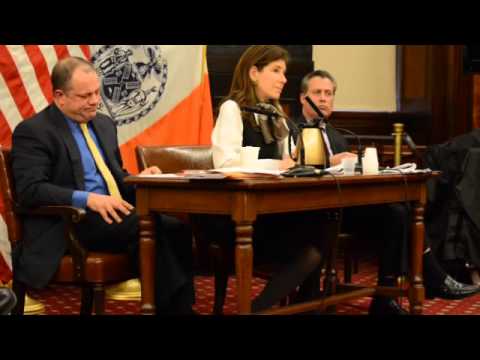
Thomas Galante testifies before NYC Council
1:16
Galante faced questions from Councilwoman Crowley over spending 30,000 dollars on a PR firm.
Tags:
Added: 1 year ago
From: nydailynews
Views: 144

From nydailynews.com:

Queens Library chief Thomas Galante placed on paid leave pending results of city and federal investigations
BY Kerry Burke, Ginger Adams Otis
NEW YORK DAILY NEWS
Published: Thursday, September 11, 2014, 11:33 PM

The story of embattled Queens library chief Thomas Galante entered a new chapter Thursday night after he was put on indefinite leave by the board.

Galante, who has headed up the Queens public library since 2003, will get full pay while he is out on leave, board members said after a heated session behind closed doors.

But he's banished from the library pending the results of a full financial audit by City Controller Scott Stringer and the outcome of a probe of the library's construction projects by the FBI and the city's Department of Investigation.

The library chief, who makes $392,000, got in hot water after a series of Daily News' articles revealed his side jobs and liberal use of library money to renovate his office, among other perks.

Galante, 53, appeared at the meeting briefly Thursday night while basic library business was conducted.

But when the board moved to go into executive session - away from members of the press and public - he skedaddled.

The board went into its private meeting at 7:21 p.m. and didn't emerge until after 9:30 p.m.

Some shouting and raised voices could be heard through the door, with one woman demanding several times, "I want to see the report!"

The vote to put the scandal-scarred library chief on leave followed a tumultuous summer in which 10 trustees, all Galante supporters, were forced off the nonprofit group's 19-member board by Queens Borough President Melinda Katz and Mayor de Blasio.

Eight were removed directly by the mayor and Katz on July 23, only weeks after the Legislature approved a law giving city officials more oversight over the library. Two other pro-Galante trustees resigned.

Since then, Katz and de Blasio have each appointed two trustees, bringing the current board membership to 13 - enough to approve any major changes.

The new board voted to put Galante on leave by a wide margin, with only a few dissenters.

One board member who spoke on condition of anonymity said many members wanted to ban Galante without pay, but didn't have cause.

The old board, stacked with Galante's supporters, had always signed off his side jobs, the new member noted.

It was also decided that the library would turn over all personnel and financial records to Controller Stringer's office.

The interim president and CEO to replace Galante is Bridget Quinn-Carey, the library's chief operations officer.

As The News first revealed months ago, Galante had built a $27,000 private smoking deck adjacent to his executive offices; was holding down a private consulting job for a Long Island school district that paid him more than $100,000 a year; and had awarded millions of dollars in lucrative library renovation projects to a longtime acquaintance connected to the same Long Island school district.

The revelations triggered a public outcry, City Council oversight hearings, the Stringer audit and the criminal probe. The old board had refused to provide all the financial records Stringer requested as part of his audit.

Stringer applauded the new board for its action Thursday night, saying it ended "months of frustration and misdirection" by opening its books.

"My audit will seek to tell the full story behind what has been a sordid series of reports of alleged poor governance and irresponsible spending at the Queens Library. Placing President and CEO Thomas Galante on administrative leave is a necessary step to move the library forward toward comprehensive governance reforms," Stringer said.

---

From dailymail.co.uk:

How a New York library boss blew $40,000 of taxpayers' money on European trips, Coldplay tickets and steak dinners
By Louise Boyle for MailOnline
Published: 16:59 EST, 11 December 2014 | Updated: 18:02 EST, 11 December 2014

A library boss in New York City faces losing his job after he allegedly went on a rampant $40,000 spending spree, blowing cash on lavish dinners, concert tickets and trips abroad.

Thomas Galante, director of Queens Library, could be axed next Wednesday after a newly-installed board of trustees found he was using his corporate credit card to expense trips on alleged library business to Barcelona, Amsterdam, Athens, Helsinki, Aspen and Newport Beach in California.

He also charged $23,000 to a furniture store which went to kit out his executive office and a rooftop smoking deck at the library, the Daily News reported.

The blowouts, which are documented in records back to 2011, also included restaurant tabs to the tune of thousands of dollars and bills run up at casinos and liquor stores.

According to the NYDN, Galante spent $2,740 at Morton's Wacker Place Steakhouse in Chicago on June 30 this year; $5,620 at Vetro Restaurant and Lounge in Howard Beach, Queens; and $3,480 at Dazies in Sunnyside, Queens.

In December 2011, $1,100 was spent on tickets to see Coldplay.

Galante also reportedly hit the credit card for daily runs to Dunkin Donuts and Starbucks along with washing his car and auto repairs.

Hundreds of dollars of cookies were ordered from a gourmet company on the card.

John Hyslop, president of library workers Local 1321, told MailOnline on Thursday: 'The hubris and excess of Thomas Galante is disgraceful and is so detrimental to the Queens Library, its customers and staff - especially because we've been pleading for more funds to hire more people and serve the public.'

Although it is assumed that many of the large purchases were made due to library business, the volume of charges, in particular for lavish dinners, attracted attention.

Galante was placed on leave in September as the review took place but was still being paid $392,000.

Sources told the NYDN that it is expected that Galante's dismissal will come recommended. The library is 85 per cent public-funded.

Mr Hyslop claimed that while Galante was in charge, he contracted out the positions for custodians, claiming that the library could not afford them with its budget.

He also said that a public staff member had not been hired since 2008, meaning library opening hours were cut back.

Mr Hyslop added that library workers - some of whom have salaries around $29,000 - were forced to pay out of pocket to attend conferences because their budget would not cover entire trips.

However he added that the library trustees and interim director had moved on from the reported scandal.

'We are committed to transparency and integrity at the Queens Library,' Mr Hyslop said.

'We want the best for our customers.'

MailOnline was awaiting a comment on Thursday from the officer of Queens Borough President, Melinda Katz.

A comment from Mr Galante's lawyer, Thomas Martini, was also sought.

---

From ny1.com:

The head of the Queens Public Library is now under a federal investigation, a probe that is expected to take a deep look at how much money it spends on renovations, but nonetheless, the library's CEO was at the City Council Tuesday to make his case for more public dollars in the city budget. NY1's Courtney Gross filed the following report.

Thomas Galante, the head of the Queens Library, walked into City Hall Tuesday prepared to ask for more money.

"There is still more to do, including investments needed to protect and maintain libraries by replacing roofs and heating and air conditioning systems," Galante said.

He left in a swarm of reporters, firing off questions about private attorneys and subpoenas.

"No comment, guys. You can just boogie, OK?" he said.

Galante is under federal investigation. It's a scandal that overshadowed a routine budget hearing at the City Council, and it's one chapter in the now controversial saga of Galante's tenure at the helm of the Queens Library system.

First, it was a question of his salary, which is upwards of $400,000 a year. Then, there were questions about a costly renovation of his library office, which included a smoking deck. Now, Galante is being eyed for alleged ties he has with the library's contractor.

On Tuesday, Galante assured the Council that any lawyers hired on his behalf were not being paid for with public dollars.

City Councilwoman Elizabeth Crowley of Queens: Are we using city dollars, tax levy dollars to pay for private attorneys?
Galante: No. There was no vote on any private attorneys or anything of the like of what you just said.

He said that the library's recent decision to hire a public relations firm had nothing to do with the scandal.

"There was a $30,000 appropriation for a public relations firm, which is part of an ongoing work that we're doing to promote the services that we offer," he said.

This is the second appearance for Galante before the City Council in about a month. So far, members say the investigation needs to continue, and none have called for his resignation.

"I think that we should allow those investigations to proceed and conclude before calling for anyone's resignation," said City Councilman James Van Bramer of Queens.

In fact, council members told NY1 that they plan to bring Galante back to the chamber, with the expectation that they will get more detailed answers to their questions.

Case Study No. 2039: Mrs. Ether

Black Mold and the library
1:02
black mold librarian horror trailer
Tags: Mrs ether and the black mold in library
Added: 3 years ago
From: gordoholland
Views: 338

["Fun Guy Productions" appears on screen]
[scene opens with several shots of the Penhold School Library (Alberta Canada), as ominous music plays]
[cut to the older female librarian (short blonde hair, glasses, brown sweater) sitting at the front desk]
["Based on true events" appears on screen]
[cut to a panning shot of one of the library's bookshelves]
["Every library has a dark secret" appears on screen]
[cut to another shot of the bookshelf]
["Different from the rest" appears on screen]
[cut to another shot of the librarian]
["The Dewey Decimal System of Death" appears on screen]
[cut to a shot of a sculpture (featuring a fairy reading a book) sitting on top of one of the bookshelves]
["Sign if out if you dare" appears on screen]
[cut to another shot of the fairy sculpture]
["And discover the secrets hidden within" appears on screen]
[cut to more shots of bookshelves, as dramatic music starts to play]
[cut to more shots of the librarian]
[cut to another shot of the fairy sculpture]
["Black mold - it's on you" appears on screen]

iMovie and Fun Guy Productions present
A Fun Guy Productions production in association with iMovie

A Mush Room Film

Black Mold

Edited by
Dr. Death

Production Designer
Dirt

Director of Photography
Lichen

Casting by
Cheese in the Fridge

Music by
iTunes

Costume Designer
Bleach

Executive Producer
Mr. Holland

Written by
Fun Gus

Directed by
Mush Room